Song Rig
Everyday
Buddy Holly · Chirping Crickets · 1957
Tone Overview
What Makes This Sound Unique
A song with no guitar — Everyday is notable for what Buddy didn't play. The rhythm is provided by a celesta and a patted knee (percussion), with no guitar present on the recording. Buddy is best known for this as a vocal and melodic composition rather than a guitar piece, but it represents his range beyond electric rock and roll.
Signal Chain
- 1No guitar on original recording (celesta and knee-slapping percussion)
- 2Live versions: Fender Stratocaster (rhythm chords)
Amp Settings
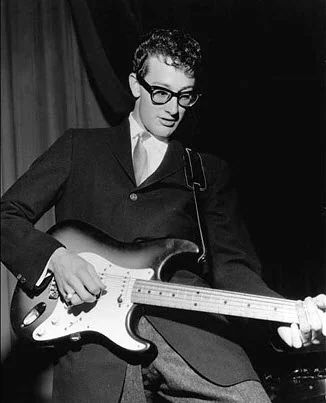
In live contexts, Buddy played clean Strat chords to accompany the melody — the tone is simply clean and supportive. The guitar's role is harmonic background, not melodic lead.
Technique
How to Play It
Simple chord accompaniment — when played live with guitar, Everyday uses basic major chord strumming in a simple 4/4 pattern. The challenge is restraint: playing supportively rather than competing with the vocal melody.
Budget Alternative
Achievable With
Stratocaster → any clean amp → simple open chord strumming. The musical interest is entirely in the vocal melody and chord progression — keep the guitar simple and out of the way.
Your Gear
Adapt to My Amp
More from Buddy Holly
Other Song Rigs
That'll Be the Day
The "Chirping" Crickets · 1957
One of the foundational rock 'n' roll guitar tones — Buddy Holly's Fender Strato…
View rig →Peggy Sue
Buddy Holly · 1957
Distinctive for its steady, unwavering triplet arpeggio pattern on the guitar — …
View rig →Oh Boy!
The "Chirping" Crickets · 1957
Bouncing, energetic early rock 'n' roll — the guitar tone is quintessentially Bu…
View rig →Not Fade Away
The Crickets: "The Chirping" Crickets · 1957
The Bo Diddley beat applied to Buddy Holly — a percussive guitar tone where the …
View rig →Rave On
Rave On · 1958
Buddy Holly's most energetic recording — a driving rock and roll track with a sh…
View rig →