Song Rig
Rave On
Buddy Holly · Rave On · 1958
Tone Overview
What Makes This Sound Unique
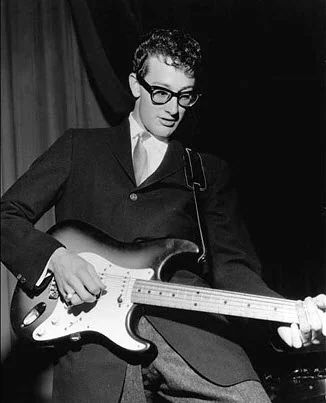
Buddy Holly's most energetic recording — a driving rock and roll track with a sharp, aggressive Strat tone that influenced the British Invasion groups extensively. The recording's energy and the guitar's bright, cutting attack made it a template for early rock and roll guitar production.
Signal Chain
- 1Fender Stratocaster (bridge pickup)
- 2Fender Deluxe or Tremolux (pushed)
- 3Norman Petty Studios recording (Clovis, New Mexico)
Amp Settings
The Norman Petty studio sound — a specific bright, clean-to-slightly-broken tone achieved by the combination of Buddy's Strat, the small Fender amp, and the studio's particular reverb and microphone placement.
Technique
How to Play It
Fast, energetic strumming with short staccato chord hits — the driving feel of Rave On comes from precise rhythm control where each chord is struck cleanly and then immediately dampened, creating a choppy forward momentum.
Budget Alternative
Achievable With
Stratocaster bridge pickup → Fender Deluxe Reverb pushed to natural breakup → bright settings (treble 8) → practice staccato chord strumming: hit the chord firmly and release left-hand pressure immediately to cut the sustain.
Your Gear
Adapt to My Amp
More from Buddy Holly
Other Song Rigs
That'll Be the Day
The "Chirping" Crickets · 1957
One of the foundational rock 'n' roll guitar tones — Buddy Holly's Fender Strato…
View rig →Peggy Sue
Buddy Holly · 1957
Distinctive for its steady, unwavering triplet arpeggio pattern on the guitar — …
View rig →Oh Boy!
The "Chirping" Crickets · 1957
Bouncing, energetic early rock 'n' roll — the guitar tone is quintessentially Bu…
View rig →Not Fade Away
The Crickets: "The Chirping" Crickets · 1957
The Bo Diddley beat applied to Buddy Holly — a percussive guitar tone where the …
View rig →Everyday
Chirping Crickets · 1957
A song with no guitar — Everyday is notable for what Buddy didn't play. The rhyt…
View rig →