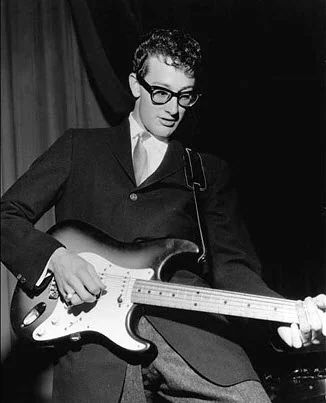
Song Rig
Oh Boy!
Buddy Holly · The "Chirping" Crickets · 1957
Tone Overview
What Makes This Sound Unique
Bouncing, energetic early rock 'n' roll — the guitar tone is quintessentially Buddy Holly: Stratocaster bright, slightly pushed amp, short melodic fills between vocal phrases. The intro features a descending guitar lick that became a template for 1950s rock and roll fills.
Signal Chain
- 1Fender Stratocaster (bridge pickup for fills)
- 2Fender or Gibson amp (slightly pushed)
Amp Settings
Energetic, moderately-pushed amp tone — slightly grittier than Peggy Sue. Bridge pickup adds more bite for the fills. The 1957 recording warmth comes from the period recording technology and the Strat's natural character.
Technique
How to Play It
Short, melodic descending fills between vocal phrases — Buddy Holly plays in the gaps left by the vocal. The fills are economical: 3–5 notes maximum, always melodically motivated. This call-and-response between vocal and guitar is a fundamental technique of early rock and roll.
Budget Alternative
Achievable With
Stratocaster or Telecaster bridge pickup → any Fender-style amp at moderate volume. Focus on phrasing: plays the spaces between vocal lines, not over them.
Your Gear
Adapt to My Amp
More from Buddy Holly
Other Song Rigs
That'll Be the Day
The "Chirping" Crickets · 1957
One of the foundational rock 'n' roll guitar tones — Buddy Holly's Fender Strato…
View rig →Peggy Sue
Buddy Holly · 1957
Distinctive for its steady, unwavering triplet arpeggio pattern on the guitar — …
View rig →Not Fade Away
The Crickets: "The Chirping" Crickets · 1957
The Bo Diddley beat applied to Buddy Holly — a percussive guitar tone where the …
View rig →Everyday
Chirping Crickets · 1957
A song with no guitar — Everyday is notable for what Buddy didn't play. The rhyt…
View rig →Rave On
Rave On · 1958
Buddy Holly's most energetic recording — a driving rock and roll track with a sh…
View rig →