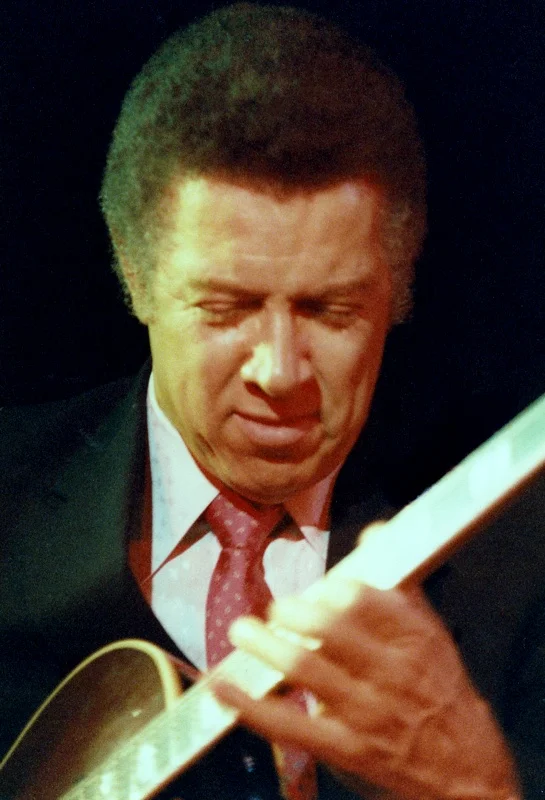
Kenny Burrell Pedalboard
Full effects breakdown — core pedals, signal chain order, and budget alternatives
Kenny Burrell's tone is primarily amp-driven — the guitar signal runs direct to the amp with minimal processing. The colour comes from the amp's own gain staging, speaker response, and the interaction between the guitar's pickups and the amp's input impedance.
Optional / Contextual Effects
Burrell uses these situationally — great to have but not required for the core sound.
Pedalboard at Every Budget
The effects chain scales with budget — budget tiers keep the essential categories intact with less expensive alternatives.
Signal Chain Order
For Burrell's signal chain, the order keeps the tone responsive at each stage — each effect receives the right input impedance and signal character from the preceding stage.
- Guitar
- Amp
Related Gear
Similar Guitarists
FAQ
Kenny Burrell Pedalboard — Common Questions
Kenny Burrell uses a selection of overdrive, delay, and reverb pedals. The exact pedalboard varies between tours and recording sessions.
The standard signal chain for Kenny Burrell's pedalboard follows the professional convention: guitar → tuner → wah (if used) → compression → overdrive/distortion → amp → modulation (chorus/flanger) → delay → reverb. For Burrell's signal chain, the order keeps the tone responsive at each stage — each effect receives the right input impedance and signal character from the preceding stage.
Kenny Burrell typically uses a transparent overdrive or boost to push the amp's front end rather than relying on a dedicated distortion pedal.
Building a Kenny Burrell-style pedalboard depends on budget. At £200 you can cover the essentials (~£205 for the full rig). At £500 the pedalboard includes . At £1,000 (full rig: ~£1,010) all the key pedals are covered.
Kenny Burrell's delay is handled by a dedicated delay pedal placed at the end of the signal chain (or in the amp's effects loop). Common choices include the Boss DD series, TC Electronic Flashback, or MXR Carbon Copy.