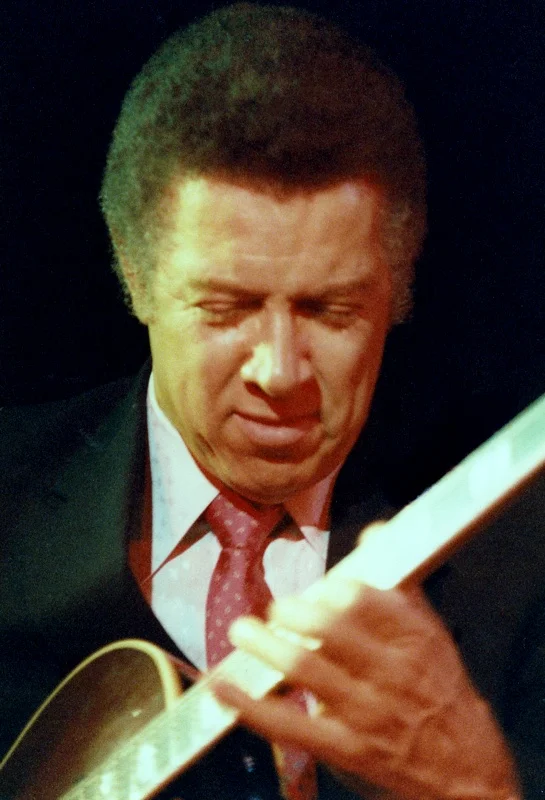
Kenny Burrell — £2,500 · Premium Tone
Kenny Burrell's nuanced and harmonically sophisticated tone took shape during the dawn of rock and roll and remains one of the most sought-after sounds on guitar. Kenny Burrell is the complete jazz guitarist — impeccable bebop technique combined with deep blues feeling, a sound that anchored countless Blue Note and Verve Records sessions and a warmth that has influenced every generation of jazz guitarists since. At the £2,500 · Premium mark — a premium build targeting the most accurate recreation possible — the build centres on a Epiphone ES-175 running through a Carr Rambler 1×12 Combo, totalling ~£2498.
Build Kenny Burrell's £2,500 · Premium Rig
2 pieces · Total ~$3,172
What guitar does Burrell use?
Burrell is primarily associated with hollow style guitars. At a £2,500 budget, Epiphone ES-175 delivers the essential tonal character.
What to Buy
£2,500 · Premium — Complete Gear List
Why This Rig Works
How Kenny Burrell's gear choices create the signature tone
Epiphone ES-175
The Epiphone ES-175 provides the tonal foundation for the entire rig — its character shapes everything that follows.
Carr Rambler 1×12 Combo
The Carr Rambler 1×12 Combo converts the guitar signal into audible sound and adds its own tonal character — EQ shaping, natural gain, and the overall feel of the final tone.
The Combined Tone
Kenny Burrell's tone is a benchmark for warm jazz guitar: a Gibson ES-175 or ES-335, neck pickup, into a clean amplifier kept just loud enough to let the guitar's natural acoustics translate. His sound is round, unhurried, and never harsh — even on fast bebop lines there is a softness to his attack that reflects his deep blues roots. No effects, no distortion. The guitar does all the work: thick strings, a high action that rewards controlled fretting-hand pressure, and a picking angle that produces a full-bodied thwack on each note.
Tone Tips
Getting the Sound Right
- At the £2,500 tier the Epiphone ES-175 has enough tonal character to reward small adjustments — pickup height, tone knob position (start at 7, not 10), and pick gauge all interact with the amp in ways that are clearly audible at this quality level.
- Play with the neck pickup and tone rolled to about 7 for warm, rounded clarity
- Use slightly heavier strings (12–52) for fuller tone and bending resistance
- Vibrato is reserved for the final note of a phrase — Burrell applies vibrato selectively at phrase endings rather than on every sustained note. This makes each vibrato occurrence a deliberate expressive choice rather than an involuntary reflex applied to everything
- Study 'Midnight Blue' — this album represents the perfect balance of blues directness and jazz harmonic sophistication. Every track demonstrates a different facet of Burrell's vocabulary within the same emotional register, and it is the most efficient single-album study of his style
- The right hand combines alternating plectrum strokes and occasional fingerpicking — single-string bebop lines use the plectrum while chord-melody passages switch to fingers for simultaneous note control across multiple strings that a plectrum cannot produce
- Long phrase arcs that span eight bars are more characteristic than short two-bar responses — Burrell builds phrases that develop over extended lengths rather than responding immediately to each chord change. Develop the ability to sustain a single evolving musical thought for eight full bars
Avoid These Pitfalls
Common Mistakes When Chasing This Tone
- Playing at high volume without managing feedback — hollow-body guitars are acoustically live and will feedback freely at stage volumes. Amp positioning and pickup height affect this dramatically.
- Running multiple pedals into the input — boutique amps are designed for the natural guitar signal. Too many pedals before the input changes the input impedance and alters the amp's response.
- Adding compression to fix flat clean tone — a flat, lifeless clean tone usually means the amp gain or presence is wrong, not that compression is needed. Compression on a flat tone just makes it louder.
- Choosing a pick that is too heavy — thin to medium picks give edge noise and articulation that heavier picks smooth away. That edge is part of the sound.
- Setting amp gain at 5 or higher — blues tone lives at the edge of breakup (gain 3-4), not in full saturation. High gain compresses away all the dynamic feel.
Budget Alternatives
Same Tone, Different Budget
FAQ
Kenny Burrell Tone — Common Questions
Burrell is primarily associated with hollow style guitars. At a £2,500 budget, Epiphone ES-175 delivers the essential tonal character.
Burrell's amp is boutique clean voiced — clean to moderate gain. At the £2,500 level, Carr Rambler 1×12 Combo is the closest match.
The £2,500 tier uses Burrell's actual gear choices or direct equivalents. Total: £2,498. The tonal step up from £1,000 is real but diminishing — worth it for regular performers and studio work.
Burrell's tone is defined by cool-jazz, hollow-body, chord-single-note-balance. The combination of hollow guitar and boutique clean amp creates a sound that is immediately recognisable.
Burrell's gain approach is very clean — minimal distortion even at volume. The tone comes from the amp's natural warmth. At £2,500, this is replicated through Carr Rambler 1×12 Combo.
Kenny Burrell — £2,500 · Premium Complete Rig
~£2498Guitar
Epiphone ES-175
Amp
Carr Rambler 1×12 Combo
Tone Match
Closest Real-World Tone Match
If you like Kenny Burrell's tone, these players use a similar approach — same gear philosophy, comparable sound characteristics.
Related Tones