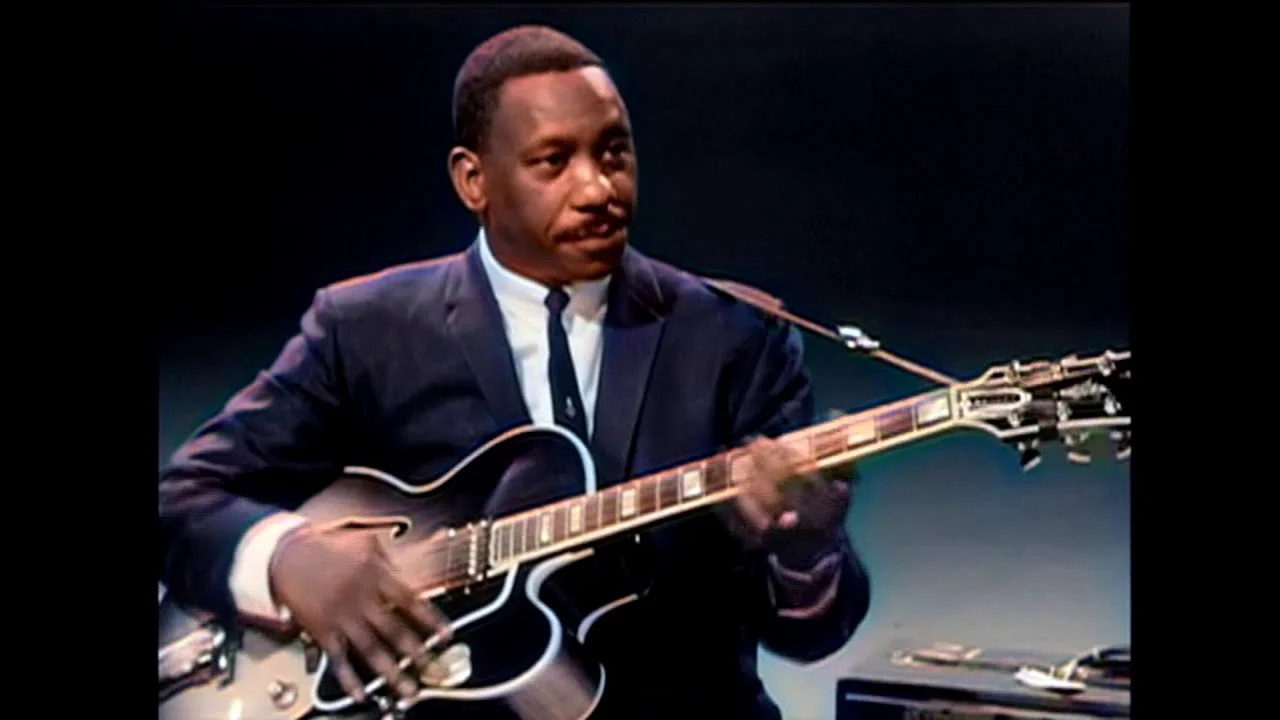
Wes Montgomery — £2,500 · Premium Tone
At £2,500 · Premium, Wes Montgomery's nuanced and harmonically sophisticated tone is more accessible than most players expect. Rooted in the dawn of rock and roll, their sound — Wes Montgomery is the most influential jazz guitarist of all time — he invented the thumb-only plucking technique, pioneered octave playing as a compositional device and swung with a fluency and warmth that no subsequent player has equalled. — starts with Epiphone ES-175 and Carr Rambler 1×12 Combo, totalling ~£2498. That combination captures the defining characteristics without the premium price tag.
Build Wes Montgomery's £2,500 · Premium Rig
2 pieces · Total ~$3,172
What guitar does Wes Montgomery use?
Wes Montgomery is primarily associated with hollow style guitars. At a £2,500 budget, Epiphone ES-175 delivers the essential tonal character.
What to Buy
£2,500 · Premium — Complete Gear List
Why This Rig Works
How Wes Montgomery's gear choices create the signature tone
Epiphone ES-175
The Epiphone ES-175 provides the tonal foundation for the entire rig — its character shapes everything that follows.
Carr Rambler 1×12 Combo
The Carr Rambler 1×12 Combo converts the guitar signal into audible sound and adds its own tonal character — EQ shaping, natural gain, and the overall feel of the final tone.
The Combined Tone
Gibson L-5 or ES-175 into a clean Fender or Gibson amplifier. No pick — Montgomery played exclusively with his right-hand thumb, producing a dark, mellow tone impossible to replicate with a standard pick. The tone is pure neck-pickup warmth with almost no treble brightness.
Tone Tips
Getting the Sound Right
- At the £2,500 tier the Epiphone ES-175 has enough tonal character to reward small adjustments — pickup height, tone knob position (start at 7, not 10), and pick gauge all interact with the amp in ways that are clearly audible at this quality level.
- Play with the thumb only — the mellow, dark tone is entirely due to using the fleshy thumb pad rather than a hard plastic pick. A pick will not produce the same character
- Neck pickup always — any other position is too bright for the Wes tone
- The tempo is always relaxed — Montgomery's playing feels unhurried even at fast tempos. Never rush a phrase
- The thumb technique replaces the plectrum entirely — Montgomery never used a pick, and the softness of the thumb is the entire basis of his tone. Develop the thumb as the primary plucking tool for jazz playing. The warmth and roundness that define the sound cannot be replicated with a plectrum
- Structure each solo in three escalating sections: single-note melody, octave playing, then block chords — Montgomery used this natural arc across most extended solos, giving improvised performances a composed feeling. Apply the three-section structure to your own solos even when the progression does not change
- Chromatic approach notes (one or two semitones below the target chord tone) connect phrases and create forward momentum — Wes links his phrases with these approach notes, which are almost inaudible individually but create the flowing, connected quality of longer lines. Transcribe two or three Wes phrases and identify every approach note
Avoid These Pitfalls
Common Mistakes When Chasing This Tone
- Using high-gain distortion — hollowbody guitars are designed for clean and light-drive use. High gain causes uncontrollable acoustic resonance that the pickup amplifies as noise.
- Using the amp's volume at less than 4 — boutique clean amps are designed to be played at certain output levels. At very low volumes the tone is compressed and flat compared to full-level operation.
- Expecting a clean tone to cover all playing dynamics — clean tone requires picking technique to do all the work. Lazy picking dynamics become very audible on a clean signal.
- Using spring reverb heavily — spring reverb has a metallic wobble quality that is characteristic of rock and country, not jazz. A subtle plate or room reverb is more appropriate.
- Keeping the tone knob at 10 — full treble on a jazz guitar gives a nasal, honky quality that sounds nothing like the warm round jazz ideal.
Budget Alternatives
Same Tone, Different Budget
FAQ
Wes Montgomery Tone — Common Questions
Wes Montgomery is primarily associated with hollow style guitars. At a £2,500 budget, Epiphone ES-175 delivers the essential tonal character.
Wes Montgomery's amp is boutique clean voiced — clean to moderate gain. At the £2,500 level, Carr Rambler 1×12 Combo is the closest match.
The £2,500 tier uses Wes Montgomery's actual gear choices or direct equivalents. Total: £2,498. The tonal step up from £1,000 is real but diminishing — worth it for regular performers and studio work.
Wes Montgomery's tone is defined by thumb-picking, octave-playing, warm-jazz. The combination of hollow guitar and boutique clean amp creates a sound that is immediately recognisable.
Wes Montgomery's gain approach is very clean — minimal distortion even at volume. The tone comes from the amp's natural warmth. At £2,500, this is replicated through Carr Rambler 1×12 Combo.
Wes Montgomery — £2,500 · Premium Complete Rig
~£2498Guitar
Epiphone ES-175
Amp
Carr Rambler 1×12 Combo
Tone Match
Closest Real-World Tone Match
If you like Wes Montgomery's tone, these players use a similar approach — same gear philosophy, comparable sound characteristics.
Related Tones