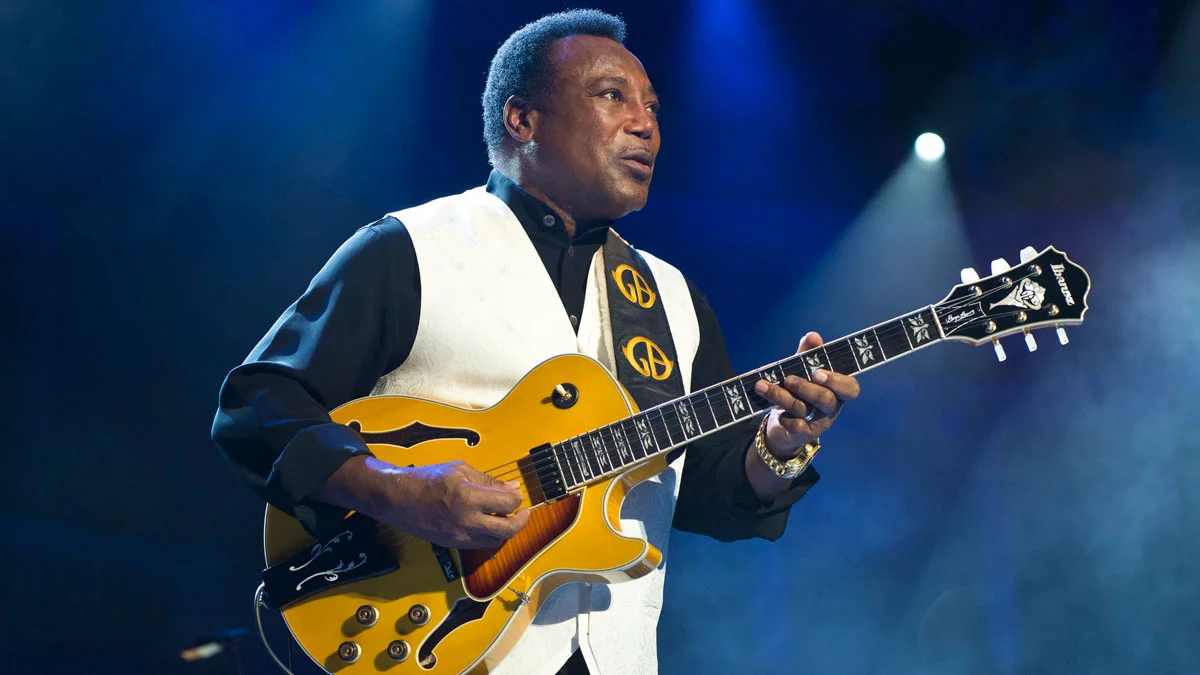
George Benson — £2,500 · Premium Tone
At £2,500 · Premium, George Benson's nuanced and harmonically sophisticated tone is more accessible than most players expect. Rooted in the golden age of electric guitar innovation, their sound — George Benson bridges jazz virtuosity and pop accessibility — his Ibanez archtop through a clean amp produces the warm, smooth jazz tone, while his right-hand technique (simultaneous picking and humming/scatting in unison) creates a uniquely vocal quality. — starts with Gretsch G5420T Electromatic and Fender Deluxe Reverb (Reissue), totalling ~£2495. That combination captures the defining characteristics without the premium price tag.
Build George Benson's £2,500 · Premium Rig
5 pieces · Total ~$3,169
What guitar does George Benson use?
George Benson is primarily associated with hollow style guitars. At a £2,500 budget, Gretsch G5420T Electromatic delivers the essential tonal character.
What to Buy
£2,500 · Premium — Complete Gear List
Can't find one? See alternatives:
Why This Rig Works
How George Benson's gear choices create the signature tone
Gretsch G5420T Electromatic
The Gretsch G5420T Electromatic provides the tonal foundation for the entire rig — its character shapes everything that follows.
- CompressionEmpress Effects Compressor
- ChorusBoss CE-2W Chorus
- ReverbStrymon Flint
Fender Deluxe Reverb (Reissue)
The Fender Deluxe Reverb (Reissue) converts the guitar signal into audible sound and adds its own tonal character — EQ shaping, natural gain, and the overall feel of the final tone.
The Combined Tone
Ibanez GB10 archtop into a clean Polytone or Fender combo amplifier. The tone is warm, dark and round — pure archtop character with zero brightness. Benson picks with a thumb-and-index combination rather than a standard three-finger pick hold, contributing to the smooth attack.
Tone Tips
Getting the Sound Right
- The Fender Deluxe Reverb (Reissue) stays cleaner longer than a Marshall-style amp — push it with a low-gain overdrive (gain at 2–3, level up) rather than cranking its own gain. Set treble at 6, bass at 4, and let the guitar's volume knob handle the dynamics.
- Scat singing in unison with the guitar line is Benson's most recognisable technique — practice humming the notes exactly as you play them. The pitch coordination takes significant practice
- Octave playing in the Wes Montgomery tradition — Benson studied Montgomery directly and developed his own octave approach. Parallel octaves create a thicker, more impactful single-note line
- Keep the amp gain at zero — any distortion removes the articulation and warmth that defines the Benson tone
- Hum along with every note you play — Benson is famous for singing his solos note-for-note as he plays. This vocalization shapes phrasing, note duration, and dynamics in ways that purely mechanical practice cannot. The humming should match the exact pitch, not approximate it
- Octave playing uses the thumb and index finger to pluck an octave pair simultaneously — the two notes must begin at exactly the same moment and have identical duration. If the timing of the two strings differs by even 5ms, the blend falls apart. Practice with a close microphone to hear the timing
- Bebop vocabulary over jazz-funk grooves is the core synthesis — Benson plays genuine bebop lines over James Brown-influenced rhythmic backings. Transcribe phrases from 'Breezin'' and play them over a funk backing track to hear how both influences sound in the same phrase
Avoid These Pitfalls
Common Mistakes When Chasing This Tone
- Using high-gain distortion — hollowbody guitars are designed for clean and light-drive use. High gain causes uncontrollable acoustic resonance that the pickup amplifies as noise.
- Using the amp's volume at less than 4 — boutique clean amps are designed to be played at certain output levels. At very low volumes the tone is compressed and flat compared to full-level operation.
- Compression before a drive pedal at high settings — heavy compression before overdrive removes the pick attack that drive pedals respond to. The overdrive then has a flat, lifeless character.
- High-gain or distortion of any kind — even a slight overdrive in a jazz context sounds wrong. The amp should be absolutely clean at all playing volumes.
- Playing next to the bridge — the metallic, brittle quality near the bridge pickup is a jazz tone destroyer. Move your picking hand closer to the neck.
Budget Alternatives
Same Tone, Different Budget
FAQ
George Benson Tone — Common Questions
George Benson is primarily associated with hollow style guitars. At a £2,500 budget, Gretsch G5420T Electromatic delivers the essential tonal character.
George Benson's amp is boutique clean voiced — clean to moderate gain. At the £2,500 level, Fender Deluxe Reverb (Reissue) is the closest match.
The £2,500 tier uses George Benson's actual gear choices or direct equivalents. Total: £2,495. The tonal step up from £1,000 is real but diminishing — worth it for regular performers and studio work.
George Benson's essential pedals include Compression. At the £2,500 tier: Empress Effects Compressor, Boss CE-2W Chorus, Strymon Flint. Compression is the most important pedal — the others add nuance.
George Benson's tone is defined by smooth-jazz, hollow-body-warmth, octave-playing. The combination of hollow guitar and boutique clean amp creates a sound that is immediately recognisable.
George Benson's gain approach is very clean — minimal distortion even at volume. The tone comes from the amp's natural warmth. At £2,500, this is replicated through Fender Deluxe Reverb (Reissue) paired with Empress Effects Compressor.
George Benson — £2,500 · Premium Complete Rig
~£2495Guitar
Gretsch G5420T Electromatic
Compression
Empress Effects Compressor
Chorus
Boss CE-2W Chorus
Amp
Fender Deluxe Reverb (Reissue)
Reverb
Strymon Flint
Tone Match
Closest Real-World Tone Match
If you like George Benson's tone, these players use a similar approach — same gear philosophy, comparable sound characteristics.
Related Tones