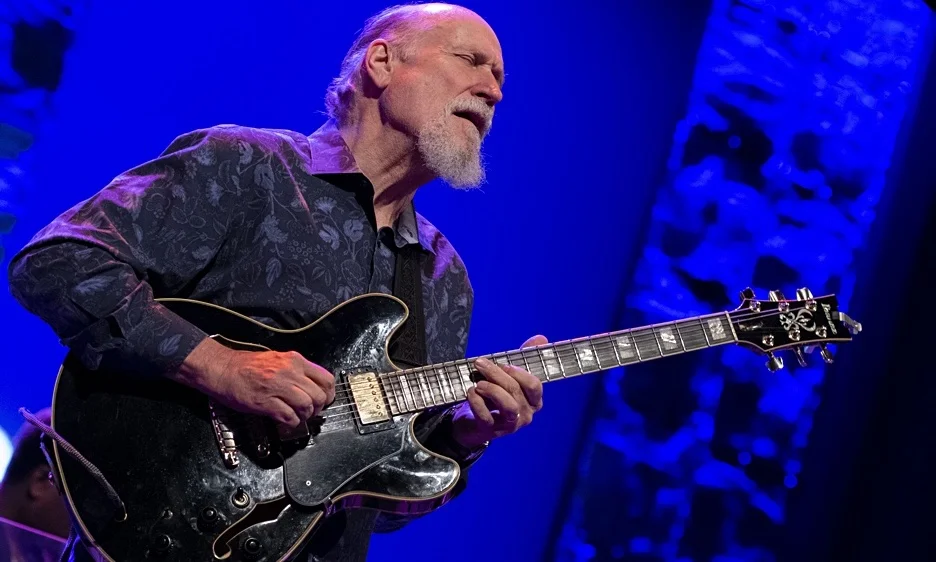
John Scofield — £2,500 · Premium Tone
The £2,500 · Premium build for John Scofield's nuanced and harmonically sophisticated sound opens with Epiphone ES-339 — the tonal foundation that defines the character. Into Fender Deluxe Reverb (Reissue) paired with Empress Effects Compressor and Boss BD-2 Blues Driver, the rig comes to ~£2464 and delivers the essential elements. John Scofield combines jazz harmony sophistication with blues feeling and funk rhythm — his tone is warm and slightly overdriven, his note choice deliberately "outside" at times, and his rhythmic feel is unmistakably swung even in fusion contexts.
Build John Scofield's £2,500 · Premium Rig
6 pieces · Total ~$3,129
What guitar does John Scofield use?
John Scofield is primarily associated with semi hollow style guitars. At a £2,500 budget, Epiphone ES-339 delivers the essential tonal character.
What to Buy
£2,500 · Premium — Complete Gear List
Can't find one? See alternatives:
Why This Rig Works
How John Scofield's gear choices create the signature tone
Epiphone ES-339
The Epiphone ES-339 provides the tonal foundation for the entire rig — its character shapes everything that follows.
- CompressionEmpress Effects Compressor
- OverdriveBoss BD-2 Blues Driver
- DelayStrymon Timeline
- ReverbBoss RV-6 Reverb
Fender Deluxe Reverb (Reissue)
The Fender Deluxe Reverb (Reissue) converts the guitar signal into audible sound and adds its own tonal character — EQ shaping, natural gain, and the overall feel of the final tone.
The Combined Tone
Ibanez AS200 semi-hollow into a clean amp with a light overdrive — the tone is warm but with a slight edge from the overdrive. Unlike pure clean jazz, Scofield's tone has some grit that gives the blues vocabulary additional bite. A Boss CE-2 chorus adds slight width on some recordings.
Tone Tips
Getting the Sound Right
- The Fender Deluxe Reverb (Reissue) stays cleaner longer than a Marshall-style amp — push it with a low-gain overdrive (gain at 2–3, level up) rather than cranking its own gain. Set treble at 6, bass at 4, and let the guitar's volume knob handle the dynamics.
- The slightly overdriven clean is the key difference from pure jazz — just enough gain to give the blues notes some bite without obscuring the jazz articulation
- "Outside" note choices are deliberate — Scofield plays notes that do not belong to the scale and resolves them to target tones. The dissonance is intentional and controlled
- Funk rhythm playing is as important as leads — his comping (rhythm guitar) behind soloists demonstrates the full "pops and chops" funk vocabulary
- The bluesy vocabulary mixed with jazz harmony is the core synthesis — Scofield's whole-step bends and bluesy note choices occur within jazz harmonic contexts. Practising standard blues licks over jazz ii-V-I progressions is the practical exercise that builds this vocabulary
- Playing behind the beat intentionally creates tension against the rhythm section — Scofield delays each phrase slightly, then resolves it to the beat. Playing along with his recordings and consciously delaying phrases by 10-20ms trains the physical feeling of the behind-the-beat placement
- Altered chord arpeggios (b9, #9, b13) produce the 'outside' tension — Scofield builds tension by playing altered chord tones over dominant 7ths before resolving to the I. This is the standard jazz technique for tension-and-release in ii-V-I progressions, applied to blues contexts
Avoid These Pitfalls
Common Mistakes When Chasing This Tone
- Using the same amp EQ as for a solid-body guitar — semi-hollow guitars have natural warmth that makes amp bass and treble settings behave differently. Start flat and adjust from there.
- Using the amp's volume at less than 4 — boutique clean amps are designed to be played at certain output levels. At very low volumes the tone is compressed and flat compared to full-level operation.
- Ignoring the guitar volume knob — rolling back to 6-7 is your rhythm setting; 10 is for leads. Most players leave it at 10 and miss the entire dynamic vocabulary.
- Using a humbucker where single coils are needed — the quack, string definition, and high-frequency air of single coils cannot be EQ'd into a humbucker
Budget Alternatives
Same Tone, Different Budget
FAQ
John Scofield Tone — Common Questions
John Scofield is primarily associated with semi hollow style guitars. At a £2,500 budget, Epiphone ES-339 delivers the essential tonal character.
John Scofield's amp is boutique clean voiced — clean with headroom, pushed by an overdrive pedal. At the £2,500 level, Fender Deluxe Reverb (Reissue) is the closest match.
The £2,500 tier uses John Scofield's actual gear choices or direct equivalents. Total: £2,464. The tonal step up from £1,000 is real but diminishing — worth it for regular performers and studio work.
John Scofield's essential pedals include Overdrive, Compression. At the £2,500 tier: Empress Effects Compressor, Boss BD-2 Blues Driver, Strymon Timeline. Overdrive is the most important pedal — the others add nuance.
John Scofield's tone is defined by jazz-blues, funky, semi-hollow-warmth. The combination of semi hollow guitar and boutique clean amp creates a sound that is immediately recognisable.
John Scofield's gain approach is clean-boosted — a clean amp pushed by an overdrive pedal. The pedal adds colour; the amp adds body. At £2,500, this is replicated through Fender Deluxe Reverb (Reissue) paired with Empress Effects Compressor.
John Scofield — £2,500 · Premium Complete Rig
~£2464Guitar
Epiphone ES-339
Compression
Empress Effects Compressor
Overdrive
Boss BD-2 Blues Driver
Amp
Fender Deluxe Reverb (Reissue)
Delay
Strymon Timeline
Reverb
Boss RV-6 Reverb
Tone Match
Closest Real-World Tone Match
If you like John Scofield's tone, these players use a similar approach — same gear philosophy, comparable sound characteristics.
Related Tones