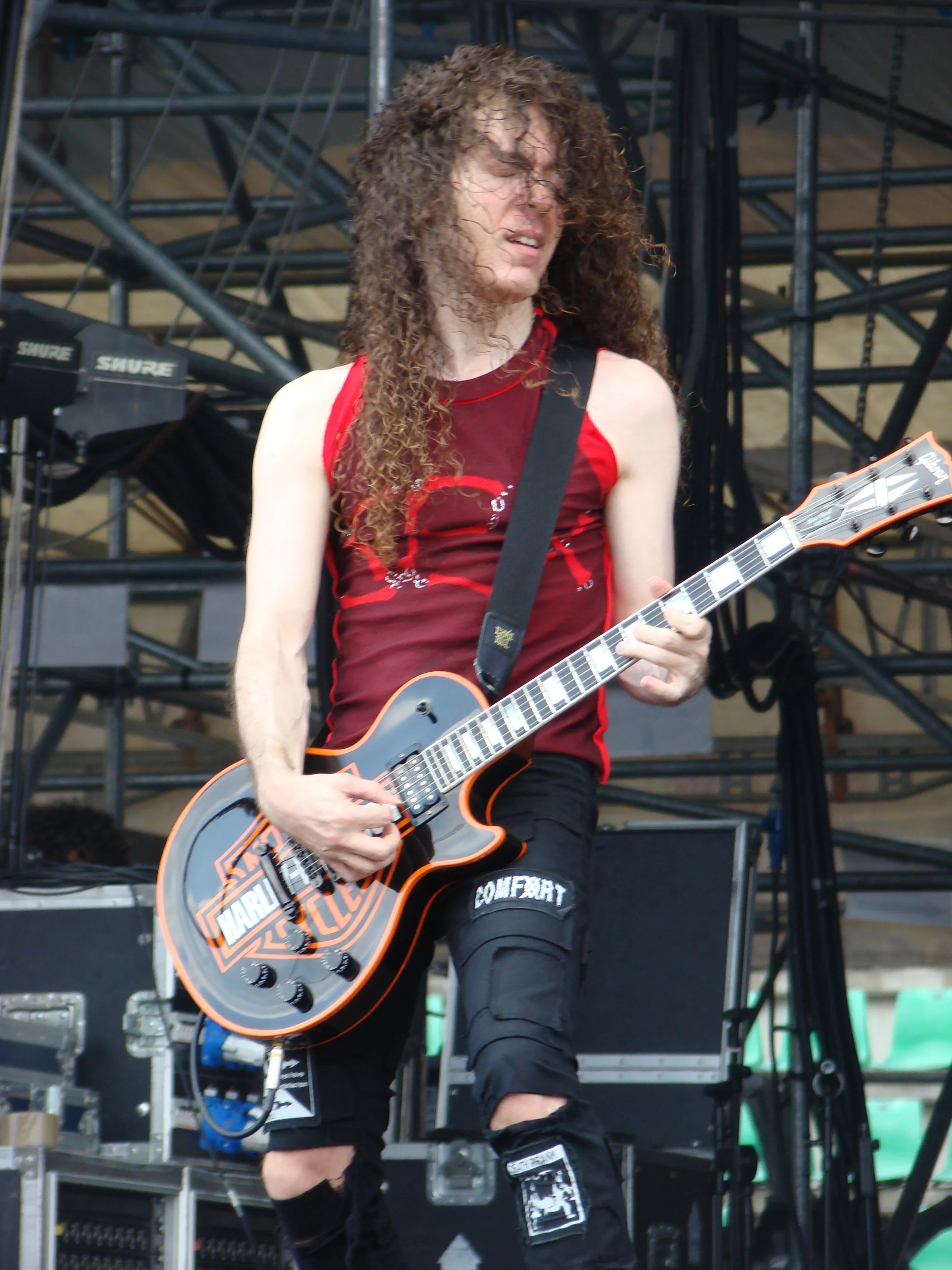
Marty Friedman Pedalboard
Full effects breakdown — core pedals, signal chain order, and budget alternatives
Marty Friedman's signal chain centres on 3 essential effects: Delay, Reverb, Wah. The resulting sound: Jackson or Ibanez signature guitar into a Mesa/Boogie Mark series or similar high-gain amp. The delay adds spatial depth and a sense of space around the notes without clouding the underlying tone — at the right mix level it is almost inaudible individually but immediately missed if removed. The delay is set to tempo and at a low mix level — repeats reinforce the rhythm rather than impose a second guitar part. Set delay time first, then mix until the effect disappears into the natural decay.
Essential Pedals
These effects are non-negotiable for Marty Friedman's tone. Skip any one and the signature sound is lost.
Optional / Contextual Effects
Marty Friedman uses these situationally — great to have but not required for the core sound.
£1,000 Pedalboard Breakdown
Specific gear recommendations at the £1,000 budget tier.
Pedalboard at Every Budget
The effects chain scales with budget — budget tiers keep the essential categories intact with less expensive alternatives.
Signal Chain Order
Delay last in the chain (or in the effects loop) ensures the repeats are clean reproductions of the effected signal. Running delay before drive would create driven, distorted repeats that accumulate into an indistinct wall. Reverb last: the decay of a reverb tail fed into a drive pedal creates an ever-building wash of sustained noise. Reverb after drive keeps the decay clean and controlled.
- Guitar
- Wah (before dirt for classic wah-wah sound)
- Delay (after modulation, before reverb)
- Reverb (last in chain before amp)
- Amp
Related Gear
Similar Guitarists
FAQ
Marty Friedman Pedalboard — Common Questions
Marty Friedman's pedalboard includes: Boss MT-2 Metal Zone. The core effects in Marty Friedman's sound are Delay, Reverb, Wah.
The standard signal chain for Marty Friedman's pedalboard follows the professional convention: guitar → tuner → wah (if used) → compression → overdrive/distortion → amp → modulation (chorus/flanger) → delay → reverb. Delay last in the chain (or in the effects loop) ensures the repeats are clean reproductions of the effected signal. Running delay before drive would create driven, distorted repeats that accumulate into an indistinct wall. Reverb last: the decay of a reverb tail fed into a drive pedal creates an ever-building wash of sustained noise. Reverb after drive keeps the decay clean and controlled.
Marty Friedman typically uses a transparent overdrive or boost to push the amp's front end rather than relying on a dedicated distortion pedal.
Building a Marty Friedman-style pedalboard depends on budget. At £200 you can cover the essentials (~£298 for the full rig). At £500 the pedalboard includes Boss MT-2 Metal Zone. At £1,000 (full rig: ~£1,063) all the key pedals are covered.
Marty Friedman's delay is handled by a dedicated delay pedal placed at the end of the signal chain (or in the amp's effects loop). Common choices include the Boss DD series, TC Electronic Flashback, or MXR Carbon Copy.