Song Rig
The Seeker
Pete Townshend · Odds and Sods · 1970
Tone Overview
What Makes This Sound Unique
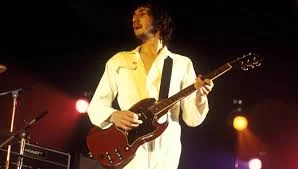
One of The Who's most straightforward rock tracks — Townshend strips away the orchestral complexity of Tommy and plays a direct, driving rhythm part through a Marshall. The guitar is loud, slightly distorted, and rhythmically aggressive, showcasing his rhythm guitar playing without the theatrics of the feedback and windmill techniques.
Signal Chain
- 1Gibson SG Special (P90 pickups)
- 2Marshall Super Lead 100W
- 3Marshall 4×12
Amp Settings
Moderate Marshall gain for a driving rock rhythm — The Seeker predates the more heavily distorted rock sounds of the mid-1970s. The P90 pickups add single-coil bite to the otherwise humbucker-voiced SG.
Technique
How to Play It
Precise chord strumming with consistent downstroke emphasis on every beat — Townshend's rhythm guitar playing prioritises consistent timing over tonal variation, creating a metronomic foundation for Entwistle's bass and Moon's drums.
Budget Alternative
Achievable With
SG with P90 pickups → Marshall Origin or JCM800 at moderate gain → no effects. Townshend's power is entirely in his right-hand consistency and left-hand chord precision.
Your Gear
Adapt to My Amp
More from Pete Townshend
Other Song Rigs
Won't Get Fooled Again
Who's Next · 1971
Power chords through a heavily overdriven Marshall — the defining statement of h…
View rig →Pinball Wizard
Tommy · 1969
Townshend's most accomplished acoustic guitar performance — the opening twelve-s…
View rig →Baba O'Riley
Who's Next · 1971
The synthesiser introduction was performed by Townshend on an ARP synthesizer be…
View rig →My Generation
My Generation · 1965
Feedback as music — Townshend deliberately exploited amplifier feedback as a com…
View rig →Behind Blue Eyes
Who's Next · 1971
The acoustic/electric contrast within one song — the quiet verse uses a 12-strin…
View rig →