Sound Like Brian May
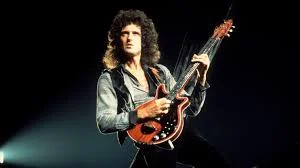
Brian May stands as one of rock's most enduring tonal references — powerful and driving by nature and endlessly studied. Brian May built his guitar — the "Red Special" — from an oak fireplace mantelpiece with his father. Paired with a sixpence coin pick and a Dallas Rangemaster treble booster into Vox AC30s, it produces one of the most harmonically rich and immediately recognisable tones in rock history. These complete rig guides at four budget levels show exactly what gear it takes to get there.
Quick Answer
To sound like Brian May, start with a Squier Classic Vibe 60s Jaguar into a Vox VT20X Valvetronix.
Tone Analysis
Brian May's Guitar Tone — In Depth
Tone Philosophy
Brian May built his own guitar at age seventeen from a Victorian fireplace surround, two pieces of oak, and various found components. That instrument — the Red Special — has been his primary guitar for his entire career. This is not sentimentality; it is a statement about the relationship between sound, invention, and self-sufficiency that defines his entire approach to music.
The Signature Sound
The Queen guitar tone — Bohemian Rhapsody, We Will Rock You, Brighton Rock — is the Red Special through an AC30 Vox amplifier with a Dallas Rangemaster Treble Booster or equivalent in the signal chain. The Rangemaster cuts bass frequencies and boosts the treble, compensating for the Red Special's pickup character and pushing the AC30 into controlled saturation. The distinctive layered guitar approach on Queen records comes from May's studio technique of overdubbing multiple identical parts with slightly different pickup selector positions to create a semi-choral guitar sound.
Key Gear
The Red Special has fixed pickups (Burns Tri-Sonic replacements) and a vibrato arm designed by May himself. The AC30 Vox amplifier provides the clean platform. A Dallas Rangemaster Treble Booster (or the Pete Cornish replica May uses) is the primary signal shaper.
Playing Approach
May's right-hand technique uses an old sixpence coin as a pick — a rigid, small coin that produces a specific attack character different from conventional plastic picks. His layered orchestral guitar approach in the studio, building up multiple tracked parts to create a guitar orchestra, was innovative and became a significant influence on progressive rock production.
Legacy
Queen's music and May's guitar playing remain among the most widely recognised sounds in popular culture. His self-built instrument and specific amplifier chain, maintained and replicated precisely throughout his career, is one of the most distinctive and consistent guitar rigs in rock history.
Budget Comparison
Pick Your Budget Level
£500 · Sweet Spot
~£498
- GuitarSquier Classic Vibe 60s Jaguar
- AmpVox VT20X Valvetronix
£1,000 · Pro-Level
~£927
- GuitarBrian May Guitars Mini
- AmpVox AC30C2
- BoostElectro-Harmonix LPB-1 Linear Power Booster
£2,500 · Premium
~£2484
- GuitarEpiphone ES-339
- BoostElectro-Harmonix LPB-1 Linear Power Booster
- EQMXR M108S 10-Band EQ
- ModulationWalrus Audio Julia
- AmpVox AC30C2
- DelayStrymon Timeline
Shop Now
Buy the Key Gear — £500 Sweet Spot
Guitar, amp and essential effects for the authentic Brian May sound. The guitar and amp together account for 80% of the tone.
Complete the Rig
Essentials Every Guitarist Needs
These aren't exciting — but every rig needs them. Buy once, sorted forever.
Tone Profile
Brian May's Sound
The Red Special (three Burns Tri-Sonic pickups, out-of-phase switching) into a Dallas Rangemaster treble booster into Vox AC30s. The treble booster sharpens the top end and drives the AC30 into harmonic saturation — the result is bright, complex and layered. May uses a sixpence coin as a pick for a brighter, more articulated attack.
Modeling Amps
Get Brian May's Tone on Your Modeler
Targeting Vox AC30. Use these amp models and IRs as your starting point — dial in from there using the knob settings above.
Cut is the key knob on a Vox — cut it high for brightness
Treble booster block before the amp for chime and cut
Song Match
Which Brian May Songs Suit Your Amp
Tone Match
Closest Real-World Tone Match
If you like Brian May's tone, these players use a similar approach — same gear philosophy, comparable sound characteristics.
Weekly Tone Tips
One setting, one artist insight, one gear pick. No noise.