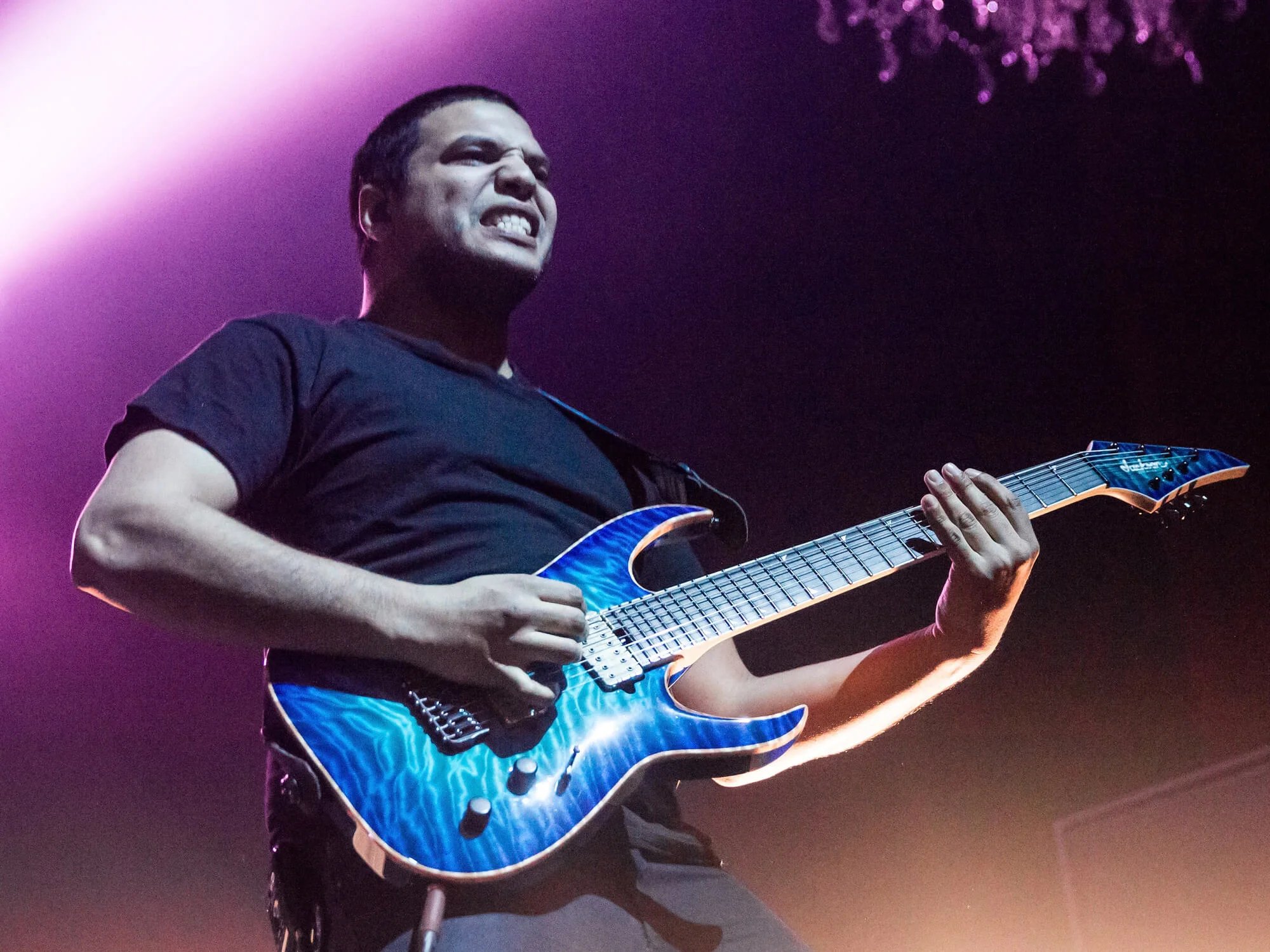
Sound Like Misha Mansoor
Misha Mansoor is one of the most recognisable voices in progressive — a layered and compositionally bold player who shaped the sound of a generation pushing the boundaries of modern guitar. Misha Mansoor (Periphery) defined the djent sound — ultra-tight 7-string palm muting through an Axe-Fx modeller with extreme low-end precision. Where Tosin Abasi leans toward fusion and arrangement, Mansoor's focus is heavy: massive riff construction, complex time signatures and a production-first approach to tone that blurs the line between guitarist and producer. Below are complete rig guides at four budget levels, so you can start building their sound whether you're just starting out or ready to invest in the full setup.
Quick Answer
To sound like Misha Mansoor, start with a Ibanez RG421 EX into a Boss Katana 50 MkII, with a Boss GE-7 Graphic EQ as your key effect.
Tone Analysis
Misha Mansoor's Guitar Tone — In Depth
Tone Philosophy
Misha Mansoor is the primary architect of the Periphery sound — a specific combination of extended-range guitar, modern production technique, and progressive rock composition that created the djent subgenre. His meticulous approach to tone in the studio (he is also Periphery's primary producer and recording engineer) has produced some of the most precisely recorded and mixed metal guitar tones in contemporary music.
The Signature Sound
Periphery's tone — Icarus Lives, Scarlet, Ragnarok — is a Strandberg Boden or a Mayones guitar (seven or eight strings) through a Fractal Audio Axe-FX or similar amp modeling unit with extreme gain and a very specific EQ curve: tight low end, scooped but present mids, clear high-mids for pick attack definition. The bass is always tight and punchy rather than loose.
Key Gear
Strandberg Boden and Mayones guitars are primary instruments. Fractal Audio Axe-FX provides all amplifier simulation. His studio setup involves extensive post-processing of the guitar tone through plugin chains.
Playing Approach
Mansoor's rhythm guitar work demonstrates the primary technical skill of djent: extremely precise timing and pitch control on palm-muted low-string riffs at moderate to high tempo. The tone must have sufficient gain to sustain but sufficient clarity to maintain rhythmic definition.
Legacy
Mansoor's influence on modern progressive metal production and the specific guitar tone associated with djent is foundational. His online presence and tutorial content has educated a generation of players in extended-range guitar technique and production.
Budget Comparison
Pick Your Budget Level
£500 · Sweet Spot
~£557
- GuitarIbanez RG421 EX
- EQBoss GE-7 Graphic EQ
- AmpBoss Katana 50 MkII
£1,000 · Pro-Level
~£987
- GuitarJackson JS22 DKA Dinky
- EQSource Audio EQ2
- AmpBlackstar HT Stage 60 MkII
£2,500 · Premium
~£2447
- GuitarIbanez Prestige RG5121
- EQEmpress ParaEQ
- AmpMarshall DSL40CR
Shop Now
Buy the Key Gear — £500 Sweet Spot
Guitar, amp and essential effects for the authentic Misha Mansoor sound. The guitar and amp together account for 80% of the tone.
Complete the Rig
Essentials Every Guitarist Needs
These aren't exciting — but every rig needs them. Buy once, sorted forever.
Tone Profile
Misha Mansoor's Sound
Tight, compressed high-gain through a 7-string — every palm mute is a precise, percussive event. The low B string must be clear and tight, not flabby: a noise gate and careful amp gain staging are essential. Clean passages contrast starkly with heavy riffs, often using chorus and light reverb. Mansoor's tone is as much a studio construction as a live sound.
Modeling Amps
Get Misha Mansoor's Tone on Your Modeler
Targeting Clean + Overdrive rig. Use these amp models and IRs as your starting point — dial in from there using the knob settings above.
Adjust presence and master to taste for this artist's era
Use Fractal's Tone Match feature against reference tracks for accuracy
Song Match
Which Misha Mansoor Songs Suit Your Amp
Tone Match
Closest Real-World Tone Match
If you like Misha Mansoor's tone, these players use a similar approach — same gear philosophy, comparable sound characteristics.
Weekly Tone Tips
One setting, one artist insight, one gear pick. No noise.