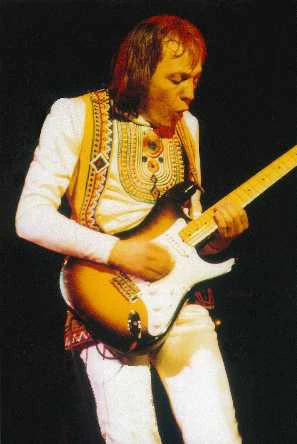
How to Sound Like Robin Trower
Why does Robin Trower sound like Robin Trower? Fender Stratocaster (various) into a Marshall Super Bass or Hiwatt with a Uni-Vibe pedal running throughout. The Uni-Vibe imparts a slow, rotating, almost tremolo-like depth; combined with Trower's thick, physical pick attack and Hendrix-influenced chord voicings, the result is dense and enveloping. Replicating that raw and emotionally charged tone requires understanding the signal chain — guitar first, then amp, then effects — and dialling in each stage correctly. This guide works through the process in order.
Based on the £500 rig · Total: ~£477
To sound like Robin Trower, you need a Squier Classic Vibe 60s Stratocaster (guitar), a Boss Katana 50 MkII (amp), and a Joyo Vintage Overdrive (key effect). Follow these 4 steps: Choose your guitar: Squier Classic Vibe 60s Stratocaster; Dial in your amp: Boss Katana 50 MkII; Add essential effects: Joyo Vintage Overdrive; Fine-tune your tone. Total budget: ~£477.
⚡ Quick Answer
Uni-Vibe is always on — set speed to medium-slow (around 3Hz) for the signature depth
Step-by-Step Guide
Building Robin Trower's Tone
- 1
Step 1 — Choose your guitar: Squier Classic Vibe 60s Stratocaster
The foundation of Robin Trower's raw and emotionally charged sound is the guitar. For this budget build, a Squier Classic Vibe 60s Stratocaster provides the right tonal character — the pickup configuration and body resonance both point in the right direction.
- 2
Step 2 — Dial in your amp: Boss Katana 50 MkII
The amp is where much of Robin Trower's character lives. A Boss Katana 50 MkII at this budget level gives you the clean headroom or natural breakup needed to start shaping the tone. Set the gain and EQ to match the characteristic sound before adding any effects.
- 3
Step 3 — Add essential effects: Joyo Vintage Overdrive
The effects chain completes the picture. For Robin Trower's sound, Joyo Vintage Overdrive is the most important addition — it provides the tonal signature that defines the style.
- 4
Step 4 — Fine-tune your tone
Uni-Vibe is always on — set speed to medium-slow (around 3Hz) for the signature depth Play slightly behind the beat with a heavy, deliberate pick attack
£500 Reference Rig
Complete Parts List
Why This Rig Works
How Robin Trower's gear choices create the signature tone
Squier Classic Vibe 60s Stratocaster
The alnico V pickups are the real deal — they deliver genuine Strat chime, quack and warmth that responds naturally to pick attack. An ideal foundation for Hendrix, Mayer, Gilmour or SRV tones.
Joyo Vintage Overdrive
Joyo Vintage Overdrive — overdrive coloring added to the signal.
Boss Katana 50 MkII
Its 'Brown' amp character at low gain is an excellent approximation of the Fender-style clarity that Hendrix, Mayer, Gilmour and SRV all relied on. Built-in effects mean you're a few knob turns away from the right tone.
The Combined Tone
Fender Stratocaster (various) into a Marshall Super Bass or Hiwatt with a Uni-Vibe pedal running throughout. The Uni-Vibe imparts a slow, rotating, almost tremolo-like depth; combined with Trower's thick, physical pick attack and Hendrix-influenced chord voicings, the result is dense and enveloping.
Tone Science
Why This Combination Works
The Squier Classic Vibe 60s Stratocaster uses single-coil pickups — these produce a bright, clear, and slightly glassy tone with natural string noise and picking dynamics. The high-frequency content is what gives this style its sparkle and note separation.
The Boss Katana 50 MkII digitally models classic amp circuits — the key is selecting the right model and keeping the gain at a level that matches the original's dynamics. The tone is in the model selection more than the physical amp topology.
The Joyo Vintage Overdrive functions as a signal booster and light overdrive rather than a heavy distortion — it pushes the amp's input harder, causing the amp's own tubes to clip more. This preserves the amp's natural character while adding sustain and compressing the dynamics. This is more transparent-sounding than a distortion pedal would be.
Reference Listening
Songs to Study Before Buying
Listen to these specific tracks to hear the target tone before you shop. Each song demonstrates a different aspect of the rig.
Bridge of Sighs— Bridge of Sighs
Strat into Marshall with Univibe — the swirling, watery modulation his whole sound is built on; slow it down to hear the effect.
Too Rolling Stoned— Bridge of Sighs
More aggressive — the Strat crunch without as much modulation, showing the core amp-driven tone.
Daydream— Bridge of Sighs
Slower melodic playing — the sustain from his medium-high gain setting and Strat neck pickup character.
Avoid These Pitfalls
Common Mistakes to Avoid
- ✗
Setting the TS9 gain above 5 into a clean amp — at high gain settings the TS becomes a distortion pedal that colours the tone heavily. Below 4, it's a boost and focus pedal. Single coils into a TS above 5 gets nasal and harsh
- ✗
Leaving the wah pedal engaged but stationary between rocking it — a cocked wah (fixed position, not moving) acts as a midrange filter that changes the core tone. Either rock it expressively or bypass it completely; a cocked wah changes the sound in ways that are often unintended
- ✗
Leaving the guitar volume at 10 — single coil brightness at full volume can be harsh. Rolling back to 8-9 tames the top end without killing output.
- ✗
Scooping the mids on a Marshall-style amp — the upper midrange emphasis is what makes British amps cut through. Mid-scoop EQ sounds good alone but disappears in a band mix.
- ✗
Using too much gain on the drive pedal — pedal-driven tone works best with the amp providing some character and the pedal adding focus and saturation, not replacing the amp entirely.
- ✗
Not setting delay to song tempo — a delay that doesn't match the song tempo creates a rhythmic clash that builds and becomes increasingly obvious. Tap the tempo every time.
- ✗
Ignoring the guitar volume knob — rolling back to 6-7 is your rhythm setting; 10 is for leads. Most players leave it at 10 and miss the entire dynamic vocabulary.
- ✗
Using a humbucker where single coils are needed — the quack, string definition, and high-frequency air of single coils cannot be EQ'd into a humbucker
Robin Trower — £500 · Sweet Spot Complete Rig
~£477Guitar
Squier Classic Vibe 60s Stratocaster
Overdrive
Joyo Vintage Overdrive
Amp
Boss Katana 50 MkII
Tone Match
Similar Players to Robin Trower
If you like Robin Trower's tone, these players use a similar approach — same gear philosophy, comparable sound characteristics.
Related Guides
Similar Players
FAQ
How to Sound Like Robin Trower — Common Questions
The guitar body type (strat) and amp character (british) are non-negotiable. Technique — specifically hendrix-influenced — accounts for 30% of the sound.
Yes. Robin Trower's exact gear (Squier Classic Vibe 60s Stratocaster, Boss Katana 50 MkII) is one path, but any guitar and amp in the same tonal family will work. The tone is defined by pickup type, amp voicing, and gain structure — not the brand on the headstock.
The gear side is immediate — the right setup delivers the signature tone from day one. The technique side (vibrato, pick dynamics, phrasing) takes 6-18 months to develop meaningfully. Most players underestimate how much Robin Trower's actual playing style contributes to the sound.