Sound Like Stevie Ray Vaughan
Stevie Ray Vaughan stands as one of blues's most enduring tonal references — soulful and deeply expressive by nature and endlessly studied. SRV's tone is the pinnacle of Texas blues — a heavy-strung Strat with raw aggression, warm Fender sparkle and a Tube Screamer used as a clean boost. Everything in his tone came from his hands. These complete rig guides at four budget levels show exactly what gear it takes to get there.
Quick Answer
To sound like Stevie Ray Vaughan, start with a Squier Classic Vibe 60s Stratocaster into a Boss Katana 50 MkII, with a Ibanez TS9 Tube Screamer as your key effect.
Tone Analysis
Stevie Ray Vaughan's Guitar Tone — In Depth
Tone Philosophy
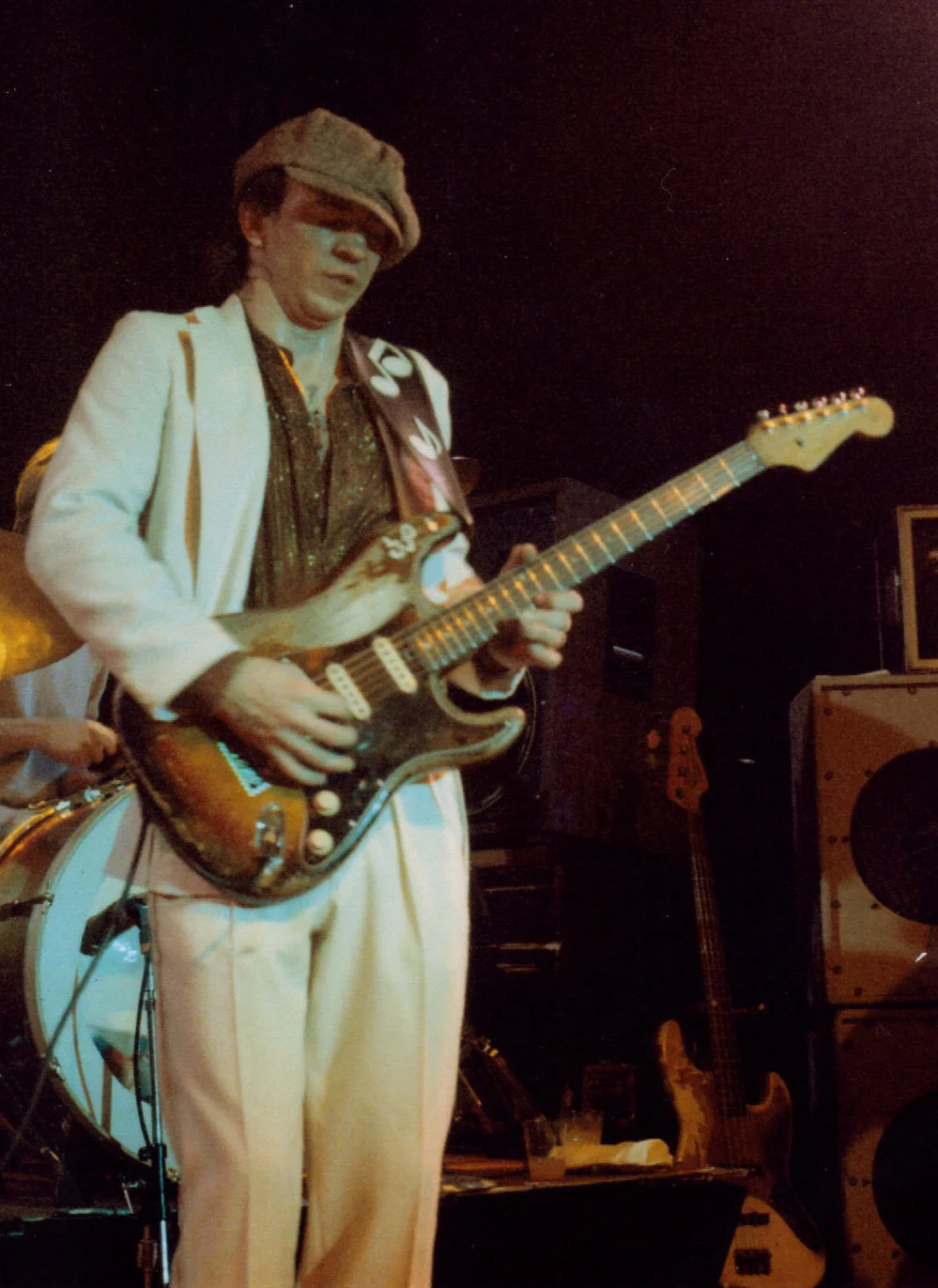
Stevie Ray Vaughan's approach to tone was fundamentally physical. Where many guitarists work within the comfortable zone of standard string gauges and moderate amplifier settings, SRV sought maximum response from the instrument by maximising the forces involved. Heavy strings — .013 gauge rather than the standard .009 or .010 — produced more signal from the pickups, more fundamental in the low end, and more sustain on bent notes. Cranked amplifiers produced natural tube saturation that no pedal could fully replicate. The Tube Screamer was not his distortion source; it was a boost that made already-saturated amplifiers work harder.
The Signature Sound
The defining characteristic of SRV's tone is the combination of weight and clarity. His bottom strings have a fullness and authority that lighter-strung players cannot achieve. His bends — wide, physically demanding, and held precisely in pitch — have a bloom and sustain that is partly the heavy strings' increased fundamental and partly the natural compression of cranked Fender Vibroverb amplifiers. The Tube Screamer TS-808 at low gain and high level provides the midrange push that makes the lead tone cut through any mix.
Key Gear
His primary guitar, Number One, was a 1963 Stratocaster assembled from vintage parts and strung with .013-.058 gauge strings, tuned a half step down to Eb to reduce tension slightly. His amplifier setup typically ran multiple units simultaneously: a Fender Vibroverb with a single 15-inch speaker (the most important amp for lead tone), a Fender Super Reverb through four 10-inch speakers, and in later years, a Marshall Major. The layered sound of these amplifiers running together is part of what makes his live recordings so large and present.
Playing Approach
SRV drew heavily from Albert King, who played a left-handed guitar in right-handed position — which means the physical mechanics of King's string bends are different from conventional technique. SRV studied and adapted these bends, particularly the pull-down bends that produce a different intonation curve from the conventional push-up approach. Combined with his aggressive picking dynamics — he attacked the strings with more force than almost any other guitarist at his level — the result was a tone that sounded loud even in quiet passages.
Legacy
Stevie Ray Vaughan revived the blues guitar tradition at a moment when it had largely been eclipsed by pop and new wave. His success in the early 1980s demonstrated that technically demanding, emotionally direct blues guitar playing had a mainstream audience. He influenced a generation of blues-rock players including John Mayer, Gary Clark Jr., and Kenny Wayne Shepherd, and remains the primary reference for Texas blues guitar tone.
Budget Comparison
Pick Your Budget Level
£500 · Sweet Spot
~£547
- GuitarSquier Classic Vibe 60s Stratocaster
- OverdriveIbanez TS9 Tube Screamer
- AmpBoss Katana 50 MkII
£1,000 · Pro-Level
~£996
- GuitarSquier Classic Vibe 60s Stratocaster
- WahDunlop Cry Baby 535Q
- OverdriveIbanez TS9 Tube Screamer
- AmpFender Blues Junior IV
£2,500 · Premium
~£2485
- GuitarFender Player Stratocaster
- WahWilson Effects MkII Wah
- OverdriveIbanez TS9 Tube Screamer
- AmpFender Blues DeVille
- ReverbElectro-Harmonix Holy Grail Nano
Shop Now
Buy the Key Gear — £500 Sweet Spot
Guitar, amp and essential effects for the authentic SRV sound. The guitar and amp together account for 80% of the tone.
Complete the Rig
Essentials Every Guitarist Needs
These aren't exciting — but every rig needs them. Buy once, sorted forever.
Tone Profile
SRV's Sound
Heavy strings on a Strat (.13s) through a loud Fender Vibroverb or Super Reverb, with a Tube Screamer boosting the already-clean amp. The tone is thick, dynamic and full of character — because SRV's attack was so physical.
Modeling Amps
Get SRV's Tone on Your Modeler
Targeting Fender (Twin Reverb / Deluxe Reverb). Use these amp models and IRs as your starting point — dial in from there using the knob settings above.
Set volume high for natural breakup; add a TS-style drive in front for lead
Bright switch on for sparkle; use a clean boost for lead push
Song Match
Which SRV Songs Suit Your Amp
Tone Match
Closest Real-World Tone Match
If you like Stevie Ray Vaughan's tone, these players use a similar approach — same gear philosophy, comparable sound characteristics.
Weekly Tone Tips
One setting, one artist insight, one gear pick. No noise.