How to Sound Like Rory Gallagher
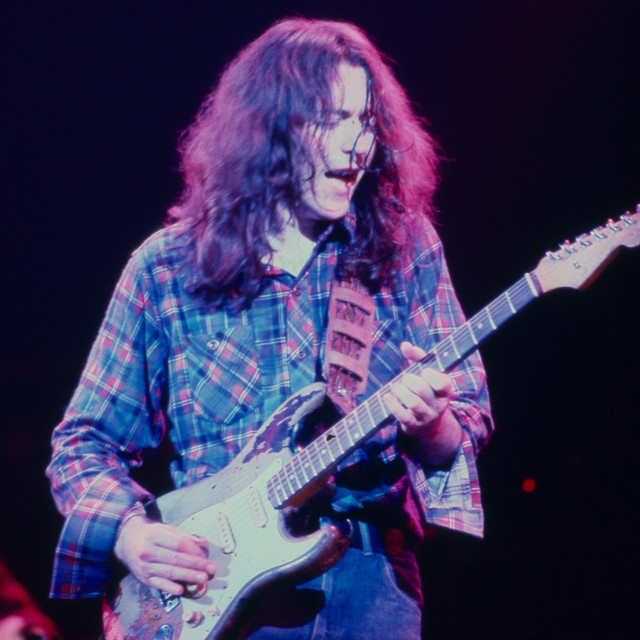
Getting Rory Gallagher's raw and emotionally charged tone means understanding what makes it unique and working through each element of the signal chain methodically. Heavily worn 1961 Fender Stratocaster into a Marshall Super Lead or Vox AC30, sometimes with a Rangemaster treble booster. The worn guitar has developed its own resonance over decades. An Ampeg Jet tape echo or treble booster are occasional additions. Gallagher's tone is characterised by his aggressive, physical pick attack. This step-by-step guide starts with Squier Classic Vibe 60s Stratocaster — the foundation of the sound — and builds out from there through amp selection, key effects, and the settings that bring it all together.
Based on the £500 rig · Total: ~£477
To sound like Rory Gallagher, you need a Squier Classic Vibe 60s Stratocaster (guitar), a Boss Katana 50 MkII (amp), and a Joyo Vintage Overdrive (key effect). Follow these 4 steps: Choose your guitar: Squier Classic Vibe 60s Stratocaster; Dial in your amp: Boss Katana 50 MkII; Add essential effects: Joyo Vintage Overdrive; Fine-tune your tone. Total budget: ~£477.
⚡ Quick Answer
Pick hard with a heavy attack — Gallagher's aggression comes from the right hand
Step-by-Step Guide
Building Rory Gallagher's Tone
- 1
Step 1 — Choose your guitar: Squier Classic Vibe 60s Stratocaster
The foundation of Rory Gallagher's raw and emotionally charged sound is the guitar. For this budget build, a Squier Classic Vibe 60s Stratocaster provides the right tonal character — the pickup configuration and body resonance both point in the right direction.
- 2
Step 2 — Dial in your amp: Boss Katana 50 MkII
The amp is where much of Rory Gallagher's character lives. A Boss Katana 50 MkII at this budget level gives you the clean headroom or natural breakup needed to start shaping the tone. Set the gain and EQ to match the characteristic sound before adding any effects.
- 3
Step 3 — Add essential effects: Joyo Vintage Overdrive
The effects chain completes the picture. For Rory Gallagher's sound, Joyo Vintage Overdrive is the most important addition — it provides the tonal signature that defines the style.
- 4
Step 4 — Fine-tune your tone
Pick hard with a heavy attack — Gallagher's aggression comes from the right hand Middle or bridge pickup on the Strat for the raw, cutting lead tones
£500 Reference Rig
Complete Parts List
Why This Rig Works
How Rory Gallagher's gear choices create the signature tone
Squier Classic Vibe 60s Stratocaster
The alnico V pickups are the real deal — they deliver genuine Strat chime, quack and warmth that responds naturally to pick attack. An ideal foundation for Hendrix, Mayer, Gilmour or SRV tones.
Joyo Vintage Overdrive
Joyo Vintage Overdrive — overdrive coloring added to the signal.
Boss Katana 50 MkII
Its 'Brown' amp character at low gain is an excellent approximation of the Fender-style clarity that Hendrix, Mayer, Gilmour and SRV all relied on. Built-in effects mean you're a few knob turns away from the right tone.
The Combined Tone
Heavily worn 1961 Fender Stratocaster into a Marshall Super Lead or Vox AC30, sometimes with a Rangemaster treble booster. The worn guitar has developed its own resonance over decades. An Ampeg Jet tape echo or treble booster are occasional additions. Gallagher's tone is characterised by his aggressive, physical pick attack.
Tone Science
Why This Combination Works
The Squier Classic Vibe 60s Stratocaster uses single-coil pickups — these produce a bright, clear, and slightly glassy tone with natural string noise and picking dynamics. The high-frequency content is what gives this style its sparkle and note separation.
The Boss Katana 50 MkII digitally models classic amp circuits — the key is selecting the right model and keeping the gain at a level that matches the original's dynamics. The tone is in the model selection more than the physical amp topology.
The Joyo Vintage Overdrive functions as a signal booster and light overdrive rather than a heavy distortion — it pushes the amp's input harder, causing the amp's own tubes to clip more. This preserves the amp's natural character while adding sustain and compressing the dynamics. This is more transparent-sounding than a distortion pedal would be.
Reference Listening
Songs to Study Before Buying
Listen to these specific tracks to hear the target tone before you shop. Each song demonstrates a different aspect of the rig.
Messin' with the Kid— Live in Europe
Battered 1961 Stratocaster into a worn Vox AC30 — raw, un-processed tone where wood and amp age define the sound.
Tattoo'd Lady— Tattoo
Slide guitar — completely different texture from his standard playing, shows how one guitar covers multiple tones.
A Million Miles Away— Tattoo
Sensitive ballad — dynamic range from gentle single-note to aggressive pick attack on the same Strat.
Avoid These Pitfalls
Common Mistakes to Avoid
- ✗
Setting the TS9 gain above 5 into a clean amp — at high gain settings the TS becomes a distortion pedal that colours the tone heavily. Below 4, it's a boost and focus pedal. Single coils into a TS above 5 gets nasal and harsh
- ✗
Leaving the wah pedal engaged but stationary between rocking it — a cocked wah (fixed position, not moving) acts as a midrange filter that changes the core tone. Either rock it expressively or bypass it completely; a cocked wah changes the sound in ways that are often unintended
- ✗
Using a humbucker guitar as a substitute — the quack, string noise, and bright attack of single coils are irreplaceable. No amount of EQ on a humbucker produces the same result.
- ✗
Scooping the mids on a Marshall-style amp — the upper midrange emphasis is what makes British amps cut through. Mid-scoop EQ sounds good alone but disappears in a band mix.
- ✗
Using a distortion pedal to replace amp saturation — amp-driven tone has a specific feel (dynamics, touch sensitivity, natural compression) that pedal distortion cannot replicate. The source of gain matters.
- ✗
Setting gain too high on the overdrive pedal — most overdrive pedals are most useful at gain settings of 2-5, where they add character without dominating the tone. High gain settings on an OD pedal become a distortion, not an overdrive.
- ✗
Using a humbucker where single coils are needed — the quack, string definition, and high-frequency air of single coils cannot be EQ'd into a humbucker
- ✗
Adding a compressor before the amp "for more tone" — it kills the natural attack variation that defines the style. Blues tone is uncompressed and dynamic.
Rory Gallagher — £500 · Sweet Spot Complete Rig
~£477Guitar
Squier Classic Vibe 60s Stratocaster
Overdrive
Joyo Vintage Overdrive
Amp
Boss Katana 50 MkII
Tone Match
Similar Players to Rory Gallagher
If you like Rory Gallagher's tone, these players use a similar approach — same gear philosophy, comparable sound characteristics.
Related Guides
Similar Players
FAQ
How to Sound Like Rory Gallagher — Common Questions
The guitar body type (strat) and amp character (british) are non-negotiable. Technique — specifically raw — accounts for 30% of the sound.
Yes. Rory Gallagher's exact gear (Squier Classic Vibe 60s Stratocaster, Boss Katana 50 MkII) is one path, but any guitar and amp in the same tonal family will work. The tone is defined by pickup type, amp voicing, and gain structure — not the brand on the headstock.
The gear side is immediate — the right setup delivers the signature tone from day one. The technique side (vibrato, pick dynamics, phrasing) takes 6-18 months to develop meaningfully. Most players underestimate how much Rory Gallagher's actual playing style contributes to the sound.