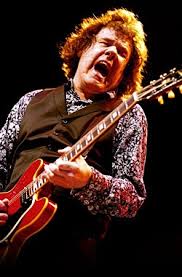
How to Sound Like Gary Moore
Getting Gary Moore's raw and emotionally charged tone means understanding what makes it unique and working through each element of the signal chain methodically. Gibson Les Paul Standard (including Peter Green's original 1959 burst for a period) into a Marshall 100W. The tone is thick, hot and articulate — mid-heavy with aggressive pick attack and dramatic sustained vibrato. No heavy effects; the emotion is entirely in the hands. This step-by-step guide starts with Epiphone Les Paul Standard — the foundation of the sound — and builds out from there through amp selection, key effects, and the settings that bring it all together.
Based on the £500 rig · Total: ~£507
To sound like Gary Moore, you need a Epiphone Les Paul Standard (guitar), a Boss Katana 50 MkII (amp), and a Joyo Vintage Overdrive (key effect). Follow these 4 steps: Choose your guitar: Epiphone Les Paul Standard; Dial in your amp: Boss Katana 50 MkII; Add essential effects: Joyo Vintage Overdrive; Fine-tune your tone. Total budget: ~£507.
⚡ Quick Answer
Wide, slow-starting vibrato that gradually increases in width — mimics a singer's natural swell
Step-by-Step Guide
Building Gary Moore's Tone
- 1
Step 1 — Choose your guitar: Epiphone Les Paul Standard
The foundation of Gary Moore's raw and emotionally charged sound is the guitar. For this budget build, a Epiphone Les Paul Standard provides the right tonal character — the pickup configuration and body resonance both point in the right direction.
- 2
Step 2 — Dial in your amp: Boss Katana 50 MkII
The amp is where much of Gary Moore's character lives. A Boss Katana 50 MkII at this budget level gives you the clean headroom or natural breakup needed to start shaping the tone. Set the gain and EQ to match the characteristic sound before adding any effects.
- 3
Step 3 — Add essential effects: Joyo Vintage Overdrive
The effects chain completes the picture. For Gary Moore's sound, Joyo Vintage Overdrive is the most important addition — it provides the tonal signature that defines the style.
- 4
Step 4 — Fine-tune your tone
Wide, slow-starting vibrato that gradually increases in width — mimics a singer's natural swell Extreme string bends — Moore bent strings further than almost any other player
£500 Reference Rig
Complete Parts List
Why This Rig Works
How Gary Moore's gear choices create the signature tone
Epiphone Les Paul Standard
The set-neck construction and ProBucker humbuckers deliver the sustain, thickness and mid-forward push of the genuine article. Bridge pickup into a crunch amp is the authentic hard rock formula.
Joyo Vintage Overdrive
Joyo Vintage Overdrive — overdrive coloring added to the signal.
Boss Katana 50 MkII
Its 'Brown' amp character at low gain is an excellent approximation of the Fender-style clarity that Hendrix, Mayer, Gilmour and SRV all relied on. Built-in effects mean you're a few knob turns away from the right tone.
The Combined Tone
Gibson Les Paul Standard (including Peter Green's original 1959 burst for a period) into a Marshall 100W. The tone is thick, hot and articulate — mid-heavy with aggressive pick attack and dramatic sustained vibrato. No heavy effects; the emotion is entirely in the hands.
Tone Science
Why This Combination Works
The Epiphone Les Paul Standard's humbucking pickups produce a warmer, thicker output with more midrange presence and higher output than single coils. This drives the amp harder and creates the fat, sustaining quality associated with this style.
The Boss Katana 50 MkII digitally models classic amp circuits — the key is selecting the right model and keeping the gain at a level that matches the original's dynamics. The tone is in the model selection more than the physical amp topology.
The Joyo Vintage Overdrive functions as a signal booster and light overdrive rather than a heavy distortion — it pushes the amp's input harder, causing the amp's own tubes to clip more. This preserves the amp's natural character while adding sustain and compressing the dynamics. This is more transparent-sounding than a distortion pedal would be.
Reference Listening
Songs to Study Before Buying
Listen to these specific tracks to hear the target tone before you shop. Each song demonstrates a different aspect of the rig.
Still Got the Blues— Still Got the Blues
Les Paul into Marshall — his defining blues tone, sustain and vibrato at their most emotional; the single most-studied Gary Moore performance.
Parisienne Walkways— Back on the Streets
Slow melodic blues: the Gibson sustain in a sparse arrangement — every note choice is a lesson in melodic blues economy.
Over the Hills and Far Away— Wild Frontier
Celtic rock: Les Paul into Marshall with a more aggressive rhythm approach — the hard-rock side of his rig rather than the blues sustain.
Avoid These Pitfalls
Common Mistakes to Avoid
- ✗
Not exploring the JCM800 alone before adding pedals — a Les Paul or humbucker guitar into a British amp is already a near-complete overdrive system. Adding drive pedals on top is often unnecessary and muddies the amp's natural character
- ✗
Leaving the wah pedal engaged but stationary between rocking it — a cocked wah (fixed position, not moving) acts as a midrange filter that changes the core tone. Either rock it expressively or bypass it completely; a cocked wah changes the sound in ways that are often unintended
- ✗
Expecting a Les Paul to sound like a Strat with EQ adjustments — the mahogany body, set neck, and humbuckers produce a fundamentally different character that cannot be EQ'd away.
- ✗
Scooping the mids on a Marshall-style amp — the upper midrange emphasis is what makes British amps cut through. Mid-scoop EQ sounds good alone but disappears in a band mix.
- ✗
Using too much gain on the drive pedal — pedal-driven tone works best with the amp providing some character and the pedal adding focus and saturation, not replacing the amp entirely.
- ✗
Setting gain too high on the overdrive pedal — most overdrive pedals are most useful at gain settings of 2-5, where they add character without dominating the tone. High gain settings on an OD pedal become a distortion, not an overdrive.
- ✗
Too many repeats at high mix — more than 3 repeats makes the delay effect accumulate and overwhelm the dry guitar signal. Keep it to 2-3 repeats at a subtle mix level.
- ✗
Ignoring the guitar volume knob — rolling back to 6-7 is your rhythm setting; 10 is for leads. Most players leave it at 10 and miss the entire dynamic vocabulary.
Gary Moore — £500 · Sweet Spot Complete Rig
~£507Guitar
Epiphone Les Paul Standard
Overdrive
Joyo Vintage Overdrive
Amp
Boss Katana 50 MkII
Tone Match
Similar Players to Gary Moore
If you like Gary Moore's tone, these players use a similar approach — same gear philosophy, comparable sound characteristics.
Related Guides
Similar Players
FAQ
How to Sound Like Gary Moore — Common Questions
The guitar body type (les paul) and amp character (british) are non-negotiable. Technique — specifically singing-sustain — accounts for 30% of the sound.
Yes. Gary Moore's exact gear (Epiphone Les Paul Standard, Boss Katana 50 MkII) is one path, but any guitar and amp in the same tonal family will work. The tone is defined by pickup type, amp voicing, and gain structure — not the brand on the headstock.
The gear side is immediate — the right setup delivers the signature tone from day one. The technique side (vibrato, pick dynamics, phrasing) takes 6-18 months to develop meaningfully. Most players underestimate how much Gary Moore's actual playing style contributes to the sound.