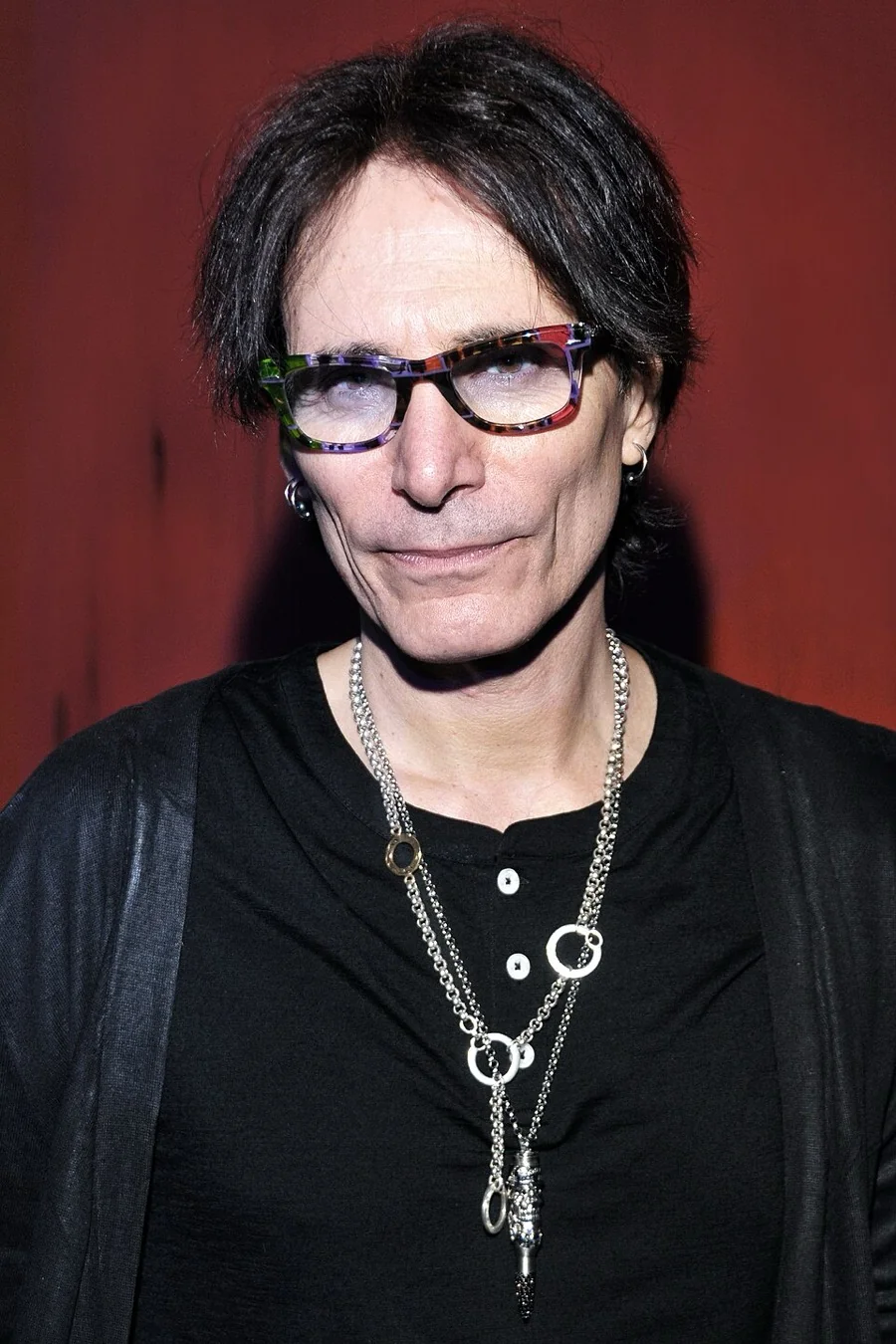
Sound Like Steve Vai
Steve Vai is one of the most recognisable voices in rock — a powerful and driving player who shaped the sound of the decade of guitar virtuosity and arena rock. Steve Vai is the most technically ambitious guitarist alive — composing, arranging and executing music that pushes the limits of the instrument in every dimension. His Ibanez JEM, with its monkey grip cutaway and floral inlays, is instantly recognisable, as is his ability to make extreme technique sound lyrical and emotional. Below are complete rig guides at four budget levels, so you can start building their sound whether you're just starting out or ready to invest in the full setup.
Quick Answer
To sound like Steve Vai, start with a Ibanez RG421 EX into a Boss Katana 50 MkII.
Tone Analysis
Steve Vai's Guitar Tone — In Depth
Tone Philosophy
Steve Vai approaches the guitar as a vehicle for maximum expressiveness — technically, emotionally, and sonically. His years with Frank Zappa taught him that the guitar could do anything that any other instrument could do if the technique and musical imagination were sufficient. His subsequent solo career has been a systematic demonstration of that principle, exploring vocabulary from extreme legato to classical composition to Eastern music.
The Signature Sound
The Passion and Warfare era tone — For the Love of God, The Audience Is Listening, Erotic Nightmares — is the Ibanez JEM777 through a Carvin Legacy amplifier with the gain set to maximum sustain without losing note clarity. Vai's note control at high gain — each note perfectly defined despite the saturation — is the product of extremely precise left-hand technique. His whammy bar technique goes beyond rock convention into vocal-quality pitch modulation.
Key Gear
The Ibanez JEM (originally the JEM777LG, later various signature models with a handle routed into the body) is his primary instrument. His DiMarzio Evolution pickups are designed for maximum clarity under high gain. The Carvin Legacy amplifier was designed with Vai's input. He uses a DigiTech Whammy, Boss digital delay, and Eventide harmonizer in his signal chain.
Playing Approach
Vai practices for ten or more hours per day at his peak — a level of commitment that produced technique well beyond what is necessary for conventional music. His approach to music theory is comprehensive and unconventional: he studies odd time signatures, microtonal tunings, and non-Western scales not as exotic additions but as fundamental vocabulary.
Legacy
Vai's influence on technically-oriented electric guitar playing since the mid-1980s is immense. His work with David Lee Roth (Yankee Rose), Whitesnake, and Frank Zappa demonstrates the range of his musicianship beyond pure virtuosity. G3 — his touring concert series with Satriani and rotating guest players — has been an important platform for guitar education and community.
Budget Comparison
Pick Your Budget Level
£1,000 · Pro-Level
~£995
- GuitarJackson JS22 DKA Dinky
- WahWilson Effects MkII Wah
- ModulationMXR Phase 90
- AmpBoss Katana 100 MkII
- DelayBoss DD-3T Digital Delay
£2,500 · Premium
~£2495
- GuitarIbanez RG550 Genesis Collection
- WahWilson Effects MkII Wah
- ModulationStrymon Mobius
- AmpMarshall DSL40CR
- DelayBoss DD-3T Digital Delay
Shop Now
Buy the Key Gear — £500 Sweet Spot
Guitar, amp and essential effects for the authentic Steve Vai sound. The guitar and amp together account for 80% of the tone.
Complete the Rig
Essentials Every Guitarist Needs
These aren't exciting — but every rig needs them. Buy once, sorted forever.
Tone Profile
Steve Vai's Sound
Ibanez JEM (DiMarzio Evolution pickups, floating Edge tremolo) into a Carvin Legacy VL100 or Marshall. Very high gain, smooth and compressed on leads with enormous sustain. DigiTech Whammy and Roland VG-8 for pitch effects; the floating trem is used for dramatic whammy bar work and subtle vibrato simultaneously.
Modeling Amps
Get Steve Vai's Tone on Your Modeler
Targeting Mesa/Boogie (Dual Rectifier / Mark series). Use these amp models and IRs as your starting point — dial in from there using the knob settings above.
Cali Rectifire Modern for modern heavy; Ch1 for clean/crunch
Bass at 7+, treble restrained — Mesa preamp is very active
Song Match
Which Steve Vai Songs Suit Your Amp
Tone Match
Closest Real-World Tone Match
If you like Steve Vai's tone, these players use a similar approach — same gear philosophy, comparable sound characteristics.
Weekly Tone Tips
One setting, one artist insight, one gear pick. No noise.