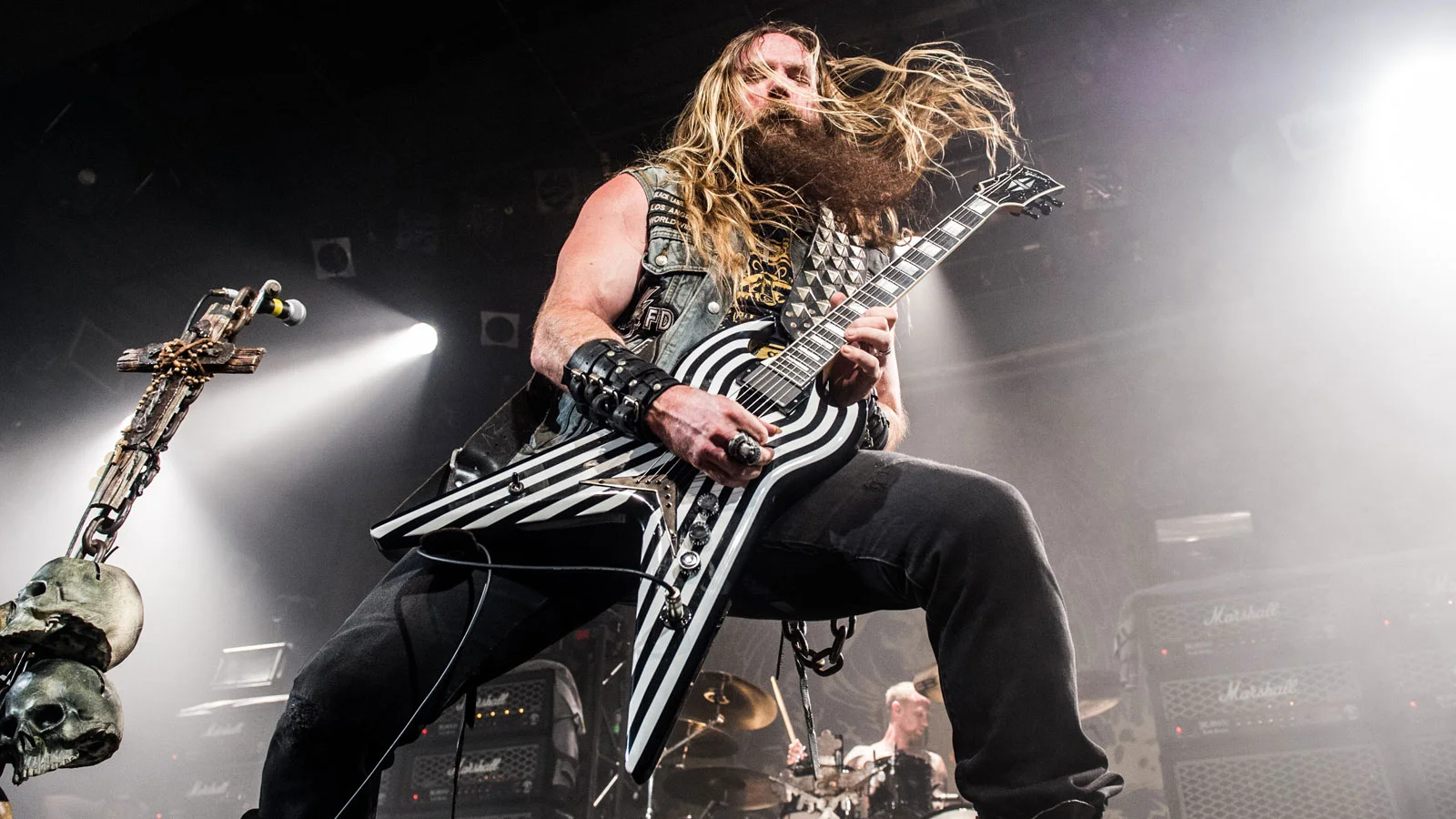
Sound Like Zakk Wylde
During the decade of guitar virtuosity and arena rock, Zakk Wylde redefined what aggressive and precise electric guitar could sound like — and their influence on heavy metal has never faded. Zakk Wylde's tone is the definition of sustained, high-gain Les Paul aggression — a "bullseye" Les Paul through a Marshall JCM800 boosted by a Boss SD-1 delivers screaming pinch harmonics and infinite sustain. His berserker technique combines power and precision at extreme gain levels. Whether you're starting out or ready to invest, the rig guides below cover every budget from £200 to £2,500.
Quick Answer
To sound like Zakk Wylde, start with a Epiphone Les Paul Standard into a Boss Katana 50 MkII.
Tone Analysis
Zakk Wylde's Guitar Tone — In Depth
Tone Philosophy
Zakk Wylde's approach is a direct continuation of the heavy blues-rock tradition of Cream and the early Sabbath/Zeppelin era, filtered through his years with Ozzy Osbourne. His Gibson Les Paul through a Marshall stack is a direct linear descendant of Clapton's Bluesbreakers setup, with the gain dramatically increased and the blues vocabulary replaced by metal vocabulary while the fundamental signal chain logic remains the same.
The Signature Sound
The Black Label Society and Ozzy Osbourne lead tone is a Gibson Les Paul (often the bullseye-finish signature model) through a Marshall JCM800 or custom JCM-series amp, with a Boss OS-2 or MXR ZW-44 Wylde Overdrive providing additional gain. The pinch harmonic — a technique he uses more extensively than any other metal guitarist — produces the characteristic high-pitched squeal that has become a cliché in metal guitar but which Wylde executes with melodic intention.
Key Gear
His signature Gibson Les Paul models and an Epiphone Graveyard Disciple are his primary instruments. Marshall amplifiers have been central to his sound throughout his career. MXR and Boss pedals appear in his effects setup.
Playing Approach
Wylde's pentatonic lead vocabulary is enhanced by modal substitutions and occasional jazz-influenced outside notes that he absorbed from his formal music education. His vibrato is wide and slightly heavy — more metal in character than the subtle blues vibrato of Clapton or Mayer.
Legacy
Wylde's work with Ozzy Osbourne across multiple albums (No More Tears, Ozzmosis) maintained the guitarist-as-lead-voice role that Randy Rhoads had established. His influence on metal lead playing is primarily on players working in the hard rock and heavy blues-rock tradition.
Budget Comparison
Pick Your Budget Level
£500 · Sweet Spot
~£478
£1,000 · Pro-Level
~£882
- GuitarEpiphone Les Paul Standard
- AmpMarshall DSL40CR
- OverdriveBoss SD-1 Super OverDrive
£2,500 · Premium
~£2499
- GuitarGibson Les Paul Junior
- WahDunlop GCB95 Cry Baby Wah
- BoostXotic EP Booster
- EQEmpress ParaEQ
- OverdriveBoss SD-1 Super OverDrive
- AmpMarshall DSL40CR
- DelayStrymon Timeline
Shop Now
Buy the Key Gear — £500 Sweet Spot
Guitar, amp and essential effects for the authentic Zakk Wylde sound. The guitar and amp together account for 80% of the tone.
Complete the Rig
Essentials Every Guitarist Needs
These aren't exciting — but every rig needs them. Buy once, sorted forever.
Tone Profile
Zakk Wylde's Sound
Gibson Les Paul Custom (EMG 81/85 pickups) into a Marshall JCM800 with a Boss SD-1 Super OverDrive boosting the front end (gain low, volume high). The result is very high gain with a tight low end and compressed, harmonically saturated lead tone. Pinch harmonics pop out naturally at these gain levels.
Modeling Amps
Get Zakk Wylde's Tone on Your Modeler
Targeting Marshall (Plexi / JCM800). Use these amp models and IRs as your starting point — dial in from there using the knob settings above.
Low master, drive at 6–7 for Plexi crunch; Brit 2204 for JCM800 lead
Keep presence at 5, let the amp breathe — avoid over-EQing
Song Match
Which Zakk Wylde Songs Suit Your Amp
Tone Match
Closest Real-World Tone Match
If you like Zakk Wylde's tone, these players use a similar approach — same gear philosophy, comparable sound characteristics.
Weekly Tone Tips
One setting, one artist insight, one gear pick. No noise.