ProgressiveMetal1990s–present
Adam Jones — £1,000 · Pro-Level Rig
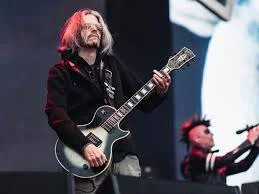
Gibson Les Paul (various) into a Diezel VH4 or Marshall head, tuned down to Eb or D. The tone is dense and saturated with a mid-forward character — not scooped. An MXR Phase 90 runs almost constantly on slower songs. The attack is mid-tempo and deliberate; Tool riffs are never rushed.
Signal Path
Signal Chain
Full signal path
GuitarLP Special
EQBoss EQ-200
DistProCo RAT2
AmpBlackstar HT
Full Gear List
£1,000 · Pro-Level — Complete Rig
●● Mid-Range$215

● Budget$126

Tone Tips
Getting the Sound Right
- Tune to Eb or D standard — Tool songs exist in a lower register that creates the "baritone without a baritone" quality
- Play behind the beat intentionally — Tool's rhythmic feel is heavy because the notes come slightly after the expected beat, not on it
- The Phase 90 runs very slow and at low mix — it's not obvious but adds movement to sustained notes
- Odd time signatures (7/8, 11/8, 5/4) require counting rather than feeling — practise subdivisions with a metronome at very slow tempos
- The Diezel VH4 is mid-heavy, not scooped — if the amp sounds too bright or too bassy, it's the wrong direction. Mid-forward is the target
- Les Paul bridge pickup for all rhythm work — the humbucker character and sustain are essential. A Stratocaster cannot produce this tone
- Feedback is used structurally — hold sustained notes against the amp and let them feed back naturally rather than cutting them short
- Use a heavier pick (1.0mm or above) and angle it 45 degrees for the distinctive pick attack that leads into each note
Avoid These Pitfalls
Common Mistakes When Chasing This Tone
- Not using a gate on the Marshall DSL's high-gain channel — self-noise at this gain level is continuous and audible between notes. A noise gate is not a style choice; it is functional equipment for this gain level
- Not exploring the Marshall DSL alone before adding pedals — a Les Paul or humbucker guitar into a British amp is already a near-complete overdrive system. Adding drive pedals on top is often unnecessary and muddies the amp's natural character
- Setting the amp bass too high — the inherent warmth of mahogany means you need less bass EQ than with a Strat. Starting at 5 rather than 7 prevents low-end mud.
- Running amp gain at 10 — above 8 on most high-gain channels, the signal becomes a compressed, indistinct wall. Moderate-high gain with a boost pedal in front gives better results.
- Skipping the Tube Screamer-style boost — this pedal before the amp's high-gain channel is not optional for many players. It tightens the low end, not adds gain. Gain on the pedal at 0.
- Scooping mids to "sound heavier" — a guitar with mids removed disappears under bass and drums. Metal tone cuts through a mix, and that requires midrange.
- Using single-coil pickups — the lack of output and mid-frequency push makes it impossible to achieve the tightness needed for high-gain rhythm playing.
Tone Profile
Adam Jones's Sound
Gibson Les Paul (various) into a Diezel VH4 or Marshall head, tuned down to Eb or D. The tone is dense and saturated with a mid-forward character — not scooped. An MXR Phase 90 runs almost constantly on slower songs. The attack is mid-tempo and deliberate; Tool riffs are never rushed.