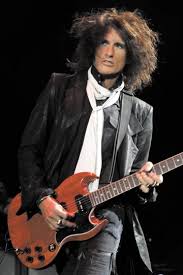
Hard RockBlues-Rock1970s–present
Joe Perry — £1,000 · Pro-Level Rig
Joe Perry signature Les Paul or vintage Gibson into a Marshall Super Lead or JMP head at moderate to high gain. The tone is warm and mid-heavy — not trebly. A light overdrive pushes leads above the rhythm. Perry's right-hand technique is loose and swinging, adding natural dynamics the gear alone cannot produce.
Signal Path
Signal Chain
Full signal path
GuitarLP Special
WahVox V847
ODAnalogman Modded
AmpDSL20
Full Gear List
£1,000 · Pro-Level — Complete Rig
££ Mid-Range£169

£ Budget£109
££ Mid-Range£219
Tone Tips
Getting the Sound Right
- Les Paul bridge pickup for the main Aerosmith crunch — the warm humbucker into a driven Marshall is the entire recipe
- The Marshall runs at medium-to-high gain, not maximum — Perry's sound has headroom that allows pick dynamics to change the amount of breakup
- "Walk This Way" is all in the right hand — the choppy, funky right-hand strumming is more important than the notes themselves
- Slides are a major component of his lead work — use a glass slide on the ring finger over the standard Eb or open G tuning
- The tone is never trebly or bright — cut the treble to 5-6 and let the midrange do the work. A bright tone sounds nothing like Aerosmith
- Bending is expressive rather than precise — Perry bends to pitch but the time taken to reach pitch varies, creating a loose, blues-influenced feel
- Volume knob at 10 at all times for Aerosmith tones — the dynamics come from pick attack, not volume control
- Open G tuning appears in some slide parts — "Milk Cow Blues" and similar tracks use the open G approach from Keith Richards / slide blues tradition
Avoid These Pitfalls
Common Mistakes When Chasing This Tone
- Scooping mids on the Marshall Super Lead with humbuckers — the mid-forward character of British amps with humbuckers is the central sound of classic rock. A mid scoop removes the fundamental voice of the combination
- Placing a tuner or buffered pedal before the fuzz pedal — most fuzz circuits (especially germanium ones) are sensitive to the impedance of the signal feeding them. A buffered pedal before the fuzz changes how the guitar volume knob responds. Run fuzz first in the chain
- Setting the amp bass too high — the inherent warmth of mahogany means you need less bass EQ than with a Strat. Starting at 5 rather than 7 prevents low-end mud.
- Using a high-gain distortion pedal instead of amp gain — British crunch amps have a specific harmonic character when driven from their own gain stage. A pedal changes this character.
- Playing at bedroom volume expecting amp-driven tone — the power-tube saturation that defines this gain structure only occurs when the amp is working at substantial output. This is not replicable at low volumes.
- Setting gain too high on the overdrive pedal — most overdrive pedals are most useful at gain settings of 2-5, where they add character without dominating the tone. High gain settings on an OD pedal become a distortion, not an overdrive.
- Leaving the wah in a fixed position (cocked) between uses — a cocked wah acts as a midrange filter and changes the tone. If not using the wah expressively, take it out of the chain.
- Ignoring the guitar volume knob — rolling back to 6-7 is your rhythm setting; 10 is for leads. Most players leave it at 10 and miss the entire dynamic vocabulary.
Tone Profile
Joe Perry's Sound
Joe Perry signature Les Paul or vintage Gibson into a Marshall Super Lead or JMP head at moderate to high gain. The tone is warm and mid-heavy — not trebly. A light overdrive pushes leads above the rhythm. Perry's right-hand technique is loose and swinging, adding natural dynamics the gear alone cannot produce.