FlamencoJazz1960s–2010s
Paco de Lucía — £500 · Sweet Spot Rig
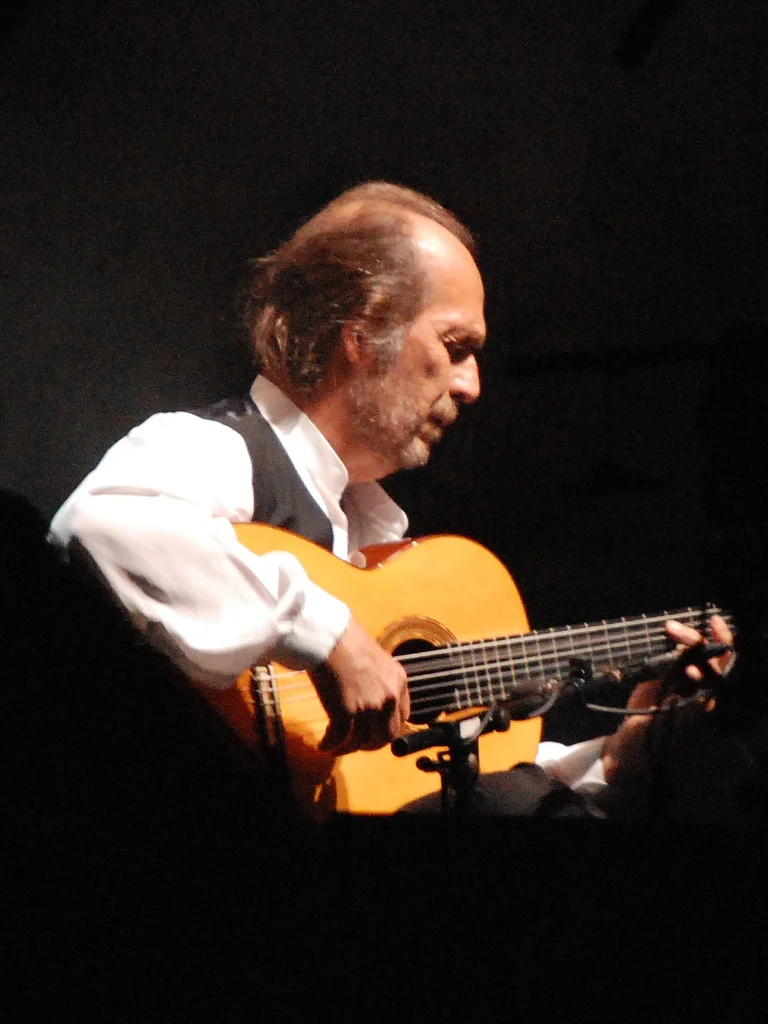
Handmade Spanish flamenco guitar (cypress/spruce, blanca) played acoustically or with very light amplification. The tone is dry, percussive and nasal compared to a classical guitar — the cypress back and sides give flamenco guitars a brighter, more immediate sound. No sustain pedals, no amplification effects.
Signal Path
Signal Chain
Full signal path
GuitarYamaha LL6
Full Gear List
£500 · Sweet Spot — Complete Rig

Tone Tips
Getting the Sound Right
- Rasgueado technique: fan the four fingers outward across the strings in rapid succession — little finger first, then ring, middle, index — creating a rolling strumming effect
- Picado (single-note scales): use rest stroke technique — the finger follows through and rests on the next string, producing the sharp, percussive attack
- Golpe (tap on the guitar body): tap the index or ring finger on the soundboard in rhythm alongside playing. This provides percussive rhythm from the guitar itself
- The capo (cejilla) is used in almost every flamenco piece — different positions change the key without changing the finger patterns, transposing Phrygian mode to different pitches
- Phrygian mode is the harmonic foundation of flamenco — the flamenco system ("por arriba" = E Phrygian, "por medio" = A Phrygian) uses the Phrygian dominant scale over specific chord progressions
- The flamenco guitar produces a drier, more percussive tone than a classical guitar — a classical guitar is not an adequate substitute for serious flamenco study
- Compás (rhythm) is more important than notes — flamenco rhythm forms (Soleá, Alegrías, Bulería, Tientos) each have specific rhythmic cycles that must be internalised before improvising
- Study "Entre dos Aguas" and "Zyryab" for the accessible entry point to Paco's style — these pieces demonstrate his approach to rhythm, melody and harmony
Avoid These Pitfalls
Common Mistakes When Chasing This Tone
- Running the tone knob at 10 the entire time — the tone control on a Strat is an expressive tool. Rolling it back changes the character of the sound in ways that affect how you phrase.
- Running multiple pedals into the input — boutique amps are designed for the natural guitar signal. Too many pedals before the input changes the input impedance and alters the amp's response.
- Adding compression to fix flat clean tone — a flat, lifeless clean tone usually means the amp gain or presence is wrong, not that compression is needed. Compression on a flat tone just makes it louder.
- High-gain or distortion of any kind — even a slight overdrive in a jazz context sounds wrong. The amp should be absolutely clean at all playing volumes.
- Playing next to the bridge — the metallic, brittle quality near the bridge pickup is a jazz tone destroyer. Move your picking hand closer to the neck.
Tone Profile
Paco de Lucía's Sound
Handmade Spanish flamenco guitar (cypress/spruce, blanca) played acoustically or with very light amplification. The tone is dry, percussive and nasal compared to a classical guitar — the cypress back and sides give flamenco guitars a brighter, more immediate sound. No sustain pedals, no amplification effects.