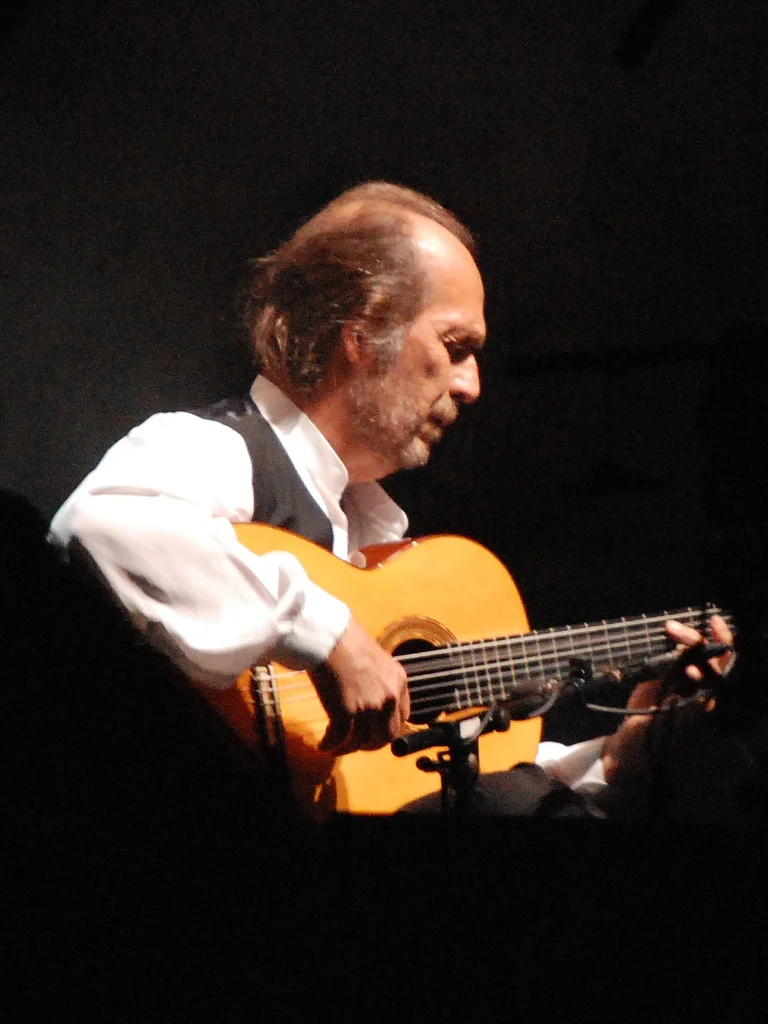
Paco de Lucía — £2,500 · Premium Tone
Paco de Lucía was the greatest flamenco guitarist of the 20th century — bringing the traditional Andalusian art form to international concert halls, collaborating with John McLaughlin and Al Di Meola, and developing a speed and precision on nylon string guitar never seen before. Replicating that passionate and percussively expressive sound at the £2,500 · Premium mark means Martin 000-28 Standard into the right amp. This build totals ~£1899 and captures the core character — a premium build targeting the most accurate recreation possible.
Build Paco de Lucía's £2,500 · Premium Rig
1 piece · Total ~$2,412
What guitar does Paco de Lucía use?
Paco de Lucía is primarily associated with acoustic style guitars. At a £2,500 budget, Martin 000-28 Standard delivers the essential tonal character.
What to Buy
£2,500 · Premium — Complete Gear List
Technique Guide
Paco's tone lives entirely in flamenco technique, not amplification
Paco de Lucía played custom flamenco guitars built by luthier Antonio Marin Montero, typically unamplified or through a simple DI for larger venues. Flamenco tone is fundamentally acoustic — shaped by nails, finger position relative to the sound hole (closer = brighter and more percussive), and the percussive body tap called golpe.
Strings
Nylon strings at normal tension — Savarez or D'Addario Pro-Arte. Flamenco guitars prefer slightly lower action and lighter strings than classical, which aids the snappy, percussive response.
Mic / DI Setup
For live or studio: a pair of small-diaphragm condensers positioned 12–18 inches from the sound hole, angled slightly to avoid the direct blast of percussive attacks. A simple DI from the saddle pickup blends well with acoustic mics.
Technique Highlights
- Rasgueado — rapid multi-finger strum producing a machine-gun rhythmic effect
- Picado — single-note technique using rest strokes for projection and clarity
- Golpe — percussive tap on the guitar top (a golpeador protects the body)
- Alzapúa — thumb technique combining plucking and strumming in alternation
- Compás — deeply internalised flamenco rhythm patterns (soleá, bulería, farruca)
Tone Tips
Getting the Sound Right
- At the £2,500 tier the Martin 000-28 Standard has enough tonal character to reward small adjustments — pickup height, tone knob position (start at 7, not 10), and pick gauge all interact with the amp in ways that are clearly audible at this quality level.
- Rasgueado technique: fan the four fingers outward across the strings in rapid succession — little finger first, then ring, middle, index — creating a rolling strumming effect
- Picado (single-note scales): use rest stroke technique — the finger follows through and rests on the next string, producing the sharp, percussive attack
- Thumb and fingers work completely independently in flamenco — the thumb handles bass strings while the fingers handle rasgueado and picado simultaneously
- Rasgueado technique requires each finger to be conditioned independently before the full multi-finger roll is attempted — begin with single-finger rasgueado (index alone, then middle, then ring, then little) before combining into the rolling four-finger fan stroke that crosses all strings
- Alzapúa (simultaneous melody and bass with alternating thumb direction) moves the thumb both upward AND downward — unlike standard guitar where the thumb only strokes downward, alzapúa uses both directions to produce a rapid bass-melody alternation that sounds like two instruments playing simultaneously
- Study 'Entre dos aguas' for the rumba flamenco style that brought Paco mainstream recognition — this track demonstrates how flamenco rhythm, rasgueado, and picado (single-note scale runs) can be applied to an accessible song structure while maintaining the full integrity of classical flamenco technique
Avoid These Pitfalls
Common Mistakes When Chasing This Tone
- Running the tone knob at 10 the entire time — the tone control on a Strat is an expressive tool. Rolling it back changes the character of the sound in ways that affect how you phrase.
- Running multiple pedals into the input — boutique amps are designed for the natural guitar signal. Too many pedals before the input changes the input impedance and alters the amp's response.
- Adding compression to fix flat clean tone — a flat, lifeless clean tone usually means the amp gain or presence is wrong, not that compression is needed. Compression on a flat tone just makes it louder.
- High-gain or distortion of any kind — even a slight overdrive in a jazz context sounds wrong. The amp should be absolutely clean at all playing volumes.
- Playing next to the bridge — the metallic, brittle quality near the bridge pickup is a jazz tone destroyer. Move your picking hand closer to the neck.
Budget Alternatives
Same Tone, Different Budget
FAQ
Paco de Lucía Tone — Common Questions
Paco de Lucía is primarily associated with acoustic style guitars. At a £2,500 budget, Martin 000-28 Standard delivers the essential tonal character.
The £2,500 tier uses Paco de Lucía's actual gear choices or direct equivalents. Total: £1,899. The tonal step up from £1,000 is real but diminishing — worth it for regular performers and studio work.
Paco de Lucía's tone is defined by flamenco, rapid-rasgueado, classical-nylon. The combination of acoustic guitar and boutique clean amp creates a sound that is immediately recognisable.
Paco de Lucía — £2,500 · Premium Complete Rig
~£1899Guitar
Martin 000-28 Standard
Tone Match
Closest Real-World Tone Match
If you like Paco de Lucía's tone, these players use a similar approach — same gear philosophy, comparable sound characteristics.
Related Tones