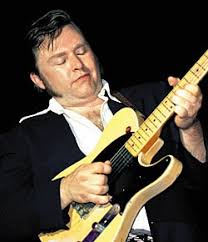
Danny Gatton — £500 · Sweet Spot Tone
Fender Telecaster through a tweed Fender amp — Gatton's ability to spontaneously switch between country, jazz, blues and rockabilly mid-solo earned him the title "the world's greatest unknown guitarist." Replicating that crisp and articulate sound at the £500 · Sweet Spot mark means Squier Classic Vibe 60s Telecaster into Boss Katana 50 MkII. The effects — MXR Dyna Comp — add the finishing texture. This build totals ~£497 and captures the core character — the sweet spot — enough to get genuinely close to the sound without breaking the bank.
Build Danny Gatton's £500 · Sweet Spot Rig
3 pieces · Total ~£497
What guitar does Danny Gatton use?
Danny Gatton is primarily associated with tele style guitars. At a £500 budget, Squier Classic Vibe 60s Telecaster delivers the essential tonal character.
What to Buy
£500 · Sweet Spot — Complete Gear List
Why This Rig Works
How Danny Gatton's gear choices create the signature tone
Squier Classic Vibe 60s Telecaster
The alnico V bridge pickup delivers genuine Telecaster cut and brightness without harshness. Knopfler's fingerstyle neck-pickup sound, country chicken-pickin' and crisp blues-rock rhythm all live here.
MXR Dyna Comp
MXR Dyna Comp — compression coloring added to the signal.
Boss Katana 50 MkII
Its 'Brown' amp character at low gain is an excellent approximation of the Fender-style clarity that Hendrix, Mayer, Gilmour and SRV all relied on. Built-in effects mean you're a few knob turns away from the right tone.
The Combined Tone
Fender Telecaster through a tweed Fender amp — Gatton's ability to spontaneously switch between country, jazz, blues and rockabilly mid-solo earned him the title "the world's greatest unknown guitarist."
Tone Tips
Getting the Sound Right
- Single coils into a compressor into a Deluxe Reverb: keep the compressor ratio below 4:1. Higher ratios make the dynamics so flat that the playing sounds robotic. The compressor should even out extremes, not eliminate all variation
- The bridge pickup on a Tele is intentionally bright and cutting — do not dark it up with EQ; lean into the twang
- The sweet spot on a pushed vintage amp is just before the point of full saturation — back the volume off slightly from maximum and the note clarity returns
- A tube screamer or Klon-type pedal set with gain at zero and level high acts as a preamp push, not a distortion — the character comes from the amp, not the pedal
- Sustain (release) time determines how quickly the compressor lets go — too fast causes pumping; too slow squashes the natural decay
- Reverb at the end of the signal chain (last in the chain or in the effects loop) produces cleaner, more defined spatial sound
Avoid These Pitfalls
Common Mistakes When Chasing This Tone
- Setting the compressor ratio too high with single coils — above 4:1, the compressor eliminates the natural pick attack dynamics that give single-coil playing its expressiveness. The compressor should even out the extremes, not remove all variation
- Ignoring the neck pickup position as a usable tone — the neck pickup on a Tele produces a warm, jazz-like sound completely unlike the bridge. It is not an afterthought.
- Using a distortion pedal instead of pushing the amp — vintage-voiced amps create better overdrive by being pushed hard than by a pedal circuit. Let the amp do the work.
- Setting the boost level too high relative to the base tone — a boost for solos should raise the presence of the guitar, not cause a volume jump that overwhelms the mix. Level matching matters.
- Setting compression ratio too high — a 6:1 or higher compression ratio completely homogenises the playing dynamics. The effect should be subtle and felt, not obviously audible on individual notes.
- Ignoring the dynamic interplay between volume knob and amp — fusion players often use the guitar volume knob as an additional tonal tool. Leaving it at 10 the whole time loses expressiveness.
- Excessive vibrato width — fusion vibrato should be controlled and musical. Wide, fast vibrato appropriate for rock feels out of place in jazz-influenced sections.
Budget Alternatives
Same Tone, Different Budget
FAQ
Danny Gatton Tone — Common Questions
Danny Gatton is primarily associated with tele style guitars. At a £500 budget, Squier Classic Vibe 60s Telecaster delivers the essential tonal character.
Danny Gatton's amp is vintage blues voiced — clean with headroom, pushed by an overdrive pedal. At the £500 level, Boss Katana 50 MkII is the closest match.
Yes — £500 covers a real guitar and amp in the right tonal family. This rig totals £497 and captures the essential character. The guitar and amp account for 80% of the tone; pedals are secondary at this budget.
Danny Gatton's essential pedals include Compression, Reverb. At the £500 tier: MXR Dyna Comp. Compression is the most important pedal — the others add nuance.
Danny Gatton's tone is defined by tele-virtuoso, country-jazz-blues, chicken-picking. The combination of tele guitar and vintage blues amp creates a sound that is immediately recognisable.
Danny Gatton's gain approach is clean-boosted — a clean amp pushed by an overdrive pedal. The pedal adds colour; the amp adds body. At £500, this is replicated through Boss Katana 50 MkII paired with MXR Dyna Comp.
Danny Gatton — £500 · Sweet Spot Complete Rig
~£497Guitar
Squier Classic Vibe 60s Telecaster
Compression
MXR Dyna Comp
Amp
Boss Katana 50 MkII
Tone Match
Closest Real-World Tone Match
If you like Danny Gatton's tone, these players use a similar approach — same gear philosophy, comparable sound characteristics.
Related Tones