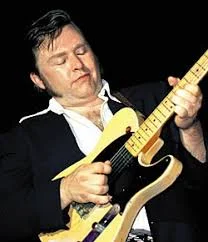
Danny Gatton — £2,500 · Premium Tone
Danny Gatton was dubbed "The World's Greatest Unknown Guitarist" — a Fender Telecaster virtuoso who blended rockabilly, country, jazz, and blues into a single blazing style that no one else has replicated, and whose career remained frustratingly outside the mainstream until his death in 1994. Replicating that brash and rhythmically alive sound at the £2,500 · Premium mark means Fender Player Telecaster into Fender Blues DeVille. The effects — Origin Effects Cali76 Compact, Strymon Flint — add the finishing texture. This build totals ~£2496 and captures the core character — a premium build targeting the most accurate recreation possible.
Build Danny Gatton's £2,500 · Premium Rig
4 pieces · Total ~$3,170
What guitar does Gatton use?
Gatton is primarily associated with tele style guitars. At a £2,500 budget, Fender Player Telecaster delivers the essential tonal character.
What to Buy
£2,500 · Premium — Complete Gear List
Can't find one? See alternatives:
Why This Rig Works
How Danny Gatton's gear choices create the signature tone
Fender Player Telecaster
Where the Squier approximates the Tele voice, the Player Telecaster *is* the Tele voice. Noticeably more articulate and dynamic, with the bridge pickup delivering the iconic snap and cut that defines the instrument.
- CompressionOrigin Effects Cali76 Compact
- ReverbStrymon Flint
Fender Blues DeVille
The Fender Blues DeVille converts the guitar signal into audible sound and adds its own tonal character — EQ shaping, natural gain, and the overall feel of the final tone.
The Combined Tone
Danny Gatton's Telecaster tone is a benchmark: a 1953 Fender Telecaster with a lipstick tube pickup in the neck and a standard bridge single coil, running into a clean Fender Deluxe Reverb at modest volume, with no effects except the amp's natural spring reverb. The tone is bright, punchy and incredibly transparent — every nuance of his hybrid picking, banjo rolls, behind-the-nut string bends, and bottle neck slides comes through without any compression from overdrive. His manipulation of the Telecaster's controls mid-performance — rolling off the tone for a cocked-wah effect — became part of his trademark sound.
Tone Tips
Getting the Sound Right
- The Fender Blues DeVille stays cleaner longer than a Marshall-style amp — push it with a low-gain overdrive (gain at 2–3, level up) rather than cranking its own gain. Set treble at 6, bass at 4, and let the guitar's volume knob handle the dynamics.
- Roll the Telecaster tone knob slowly while playing for a cocked-wah vocal effect
- Practice behind-the-nut bends — push strings between the nut and tuning pegs for a pedal steel effect
- The Leslie 145 rotating cabinet was a consistent element — Gatton ran a Telecaster through a real rotating cabinet rather than a rotary simulator, giving the vibrato a genuine Doppler frequency shift unavailable from any pedal-based alternative
- Study 'Elmira Street Boogie' and 'Harley's Blues' for the full vocabulary — these compositions demonstrate how Gatton combined Illinois blues, Nashville country, and jazz harmony within single arrangements that sound effortless despite their technical complexity
- The signal chain stays clean: guitar into amplifier. Gatton's complexity came entirely from his hands — pick angle, hybrid picking, behind-the-nut bends — not from effects. Develop the core technique before adding any signal processing
- Fast bebop phrases over country chord sequences is the core synthesis — practice jazz chord changes at 180bpm using country licks, then insert bebop substitute phrases. This forced combination replicates what Gatton did intuitively
Avoid These Pitfalls
Common Mistakes When Chasing This Tone
- Setting the compressor ratio too high with single coils — above 4:1, the compressor eliminates the natural pick attack dynamics that give single-coil playing its expressiveness. The compressor should even out the extremes, not remove all variation
- Ignoring the neck pickup position as a usable tone — the neck pickup on a Tele produces a warm, jazz-like sound completely unlike the bridge. It is not an afterthought.
- Choosing a pick that is too heavy — thin to medium picks give edge noise and articulation that heavier picks smooth away. That edge is part of the sound.
- Setting amp gain at 5 or higher — blues tone lives at the edge of breakup (gain 3-4), not in full saturation. High gain compresses away all the dynamic feel.
Budget Alternatives
Same Tone, Different Budget
FAQ
Danny Gatton Tone — Common Questions
Gatton is primarily associated with tele style guitars. At a £2,500 budget, Fender Player Telecaster delivers the essential tonal character.
Gatton's amp is vintage blues voiced — clean with headroom, pushed by an overdrive pedal. At the £2,500 level, Fender Blues DeVille is the closest match.
The £2,500 tier uses Gatton's actual gear choices or direct equivalents. Total: £2,496. The tonal step up from £1,000 is real but diminishing — worth it for regular performers and studio work.
Gatton's essential pedals include Compression, Reverb. At the £2,500 tier: Origin Effects Cali76 Compact, Strymon Flint. Compression is the most important pedal — the others add nuance.
Gatton's tone is defined by tele-virtuoso, country-jazz-blues, chicken-picking. The combination of tele guitar and vintage blues amp creates a sound that is immediately recognisable.
Gatton's gain approach is clean-boosted — a clean amp pushed by an overdrive pedal. The pedal adds colour; the amp adds body. At £2,500, this is replicated through Fender Blues DeVille paired with Origin Effects Cali76 Compact.
Danny Gatton — £2,500 · Premium Complete Rig
~£2496Guitar
Fender Player Telecaster
Compression
Origin Effects Cali76 Compact
Amp
Fender Blues DeVille
Reverb
Strymon Flint
Tone Match
Closest Real-World Tone Match
If you like Danny Gatton's tone, these players use a similar approach — same gear philosophy, comparable sound characteristics.
Related Tones