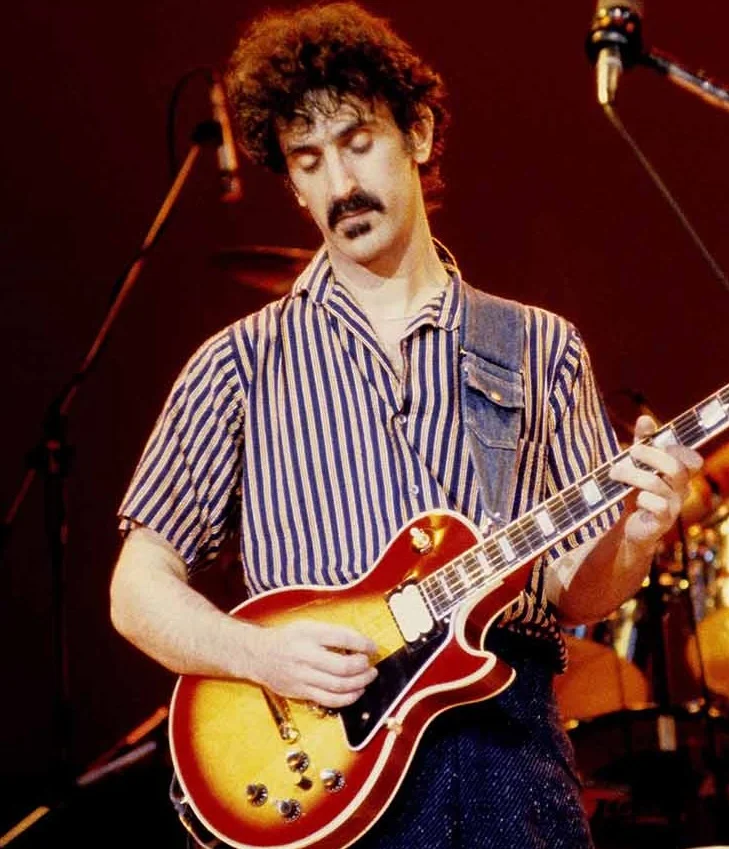
Frank Zappa — £1,000 · Pro-Level Tone
At £1,000 · Pro-Level, Frank Zappa's distinctive and influential tone is more accessible than most players expect. Rooted in the golden age of electric guitar innovation, their sound — Frank Zappa is the most intellectually complex figure in American rock music — a prolific composer, satirist, and self-taught guitar virtuoso whose guitar solos (all improvised) combined jazz vocabulary, rock energy, and a genuinely eccentric musical mind into something utterly irreplaceable. — starts with Squier Classic Vibe 60s Stratocaster and Boss Katana 100 MkII, totalling ~£986. That combination captures the defining characteristics without the premium price tag.
Build Frank Zappa's £1,000 · Pro-Level Rig
4 pieces · Total ~$1,252
What guitar does Zappa use?
Zappa is primarily associated with strat style guitars. At a £1,000 budget, Squier Classic Vibe 60s Stratocaster delivers the essential tonal character.
What to Buy
£1,000 · Pro-Level — Complete Gear List
Can't find one? See alternatives:
Why This Rig Works
How Frank Zappa's gear choices create the signature tone
Squier Classic Vibe 60s Stratocaster
The alnico V pickups are the real deal — they deliver genuine Strat chime, quack and warmth that responds naturally to pick attack. An ideal foundation for Hendrix, Mayer, Gilmour or SRV tones.
- WahVox V847 Wah
- DelayStrymon El Capistan
Boss Katana 100 MkII
The extra headroom lets you push the clean channel harder before it breaks up, essential for loud-amp technique. More speaker excursion gives a fuller, more three-dimensional clean.
The Combined Tone
Frank Zappa's guitar tone shifted across his career, but his most celebrated solo tone is a Gibson SG or Stratocaster running through a Fender amp (often a 1950s Bassman) with the preamp pushed into natural saturation — a crunchy, warm overdrive that stays articulate at extreme speeds. His later Synclavier work moved him into digital composition, but live, his guitar solos were always improvisational and human. He used a Cry Baby wah pedal expressively, an MXR Phase 90 for psychedelic textures, and relied on the amp's natural tone rather than stacked pedals. The hallmark is: absolute unpredictability at the highest technical level.
Tone Tips
Getting the Sound Right
- On the Boss Katana 100 MkII: use the Brown channel — the closest model to a Marshall-voiced preamp at this price. Set character to 8, gain to 5. For Zappa's lead volume jump, use the Boost mode rather than adding a separate boost pedal.
- Let the amp do the work — push the preamp volume until the output stage begins to saturate
- Use the wah as a filter, not a sweep — hold it at a fixed position for a cocked-wah midrange emphasis
- A Phase 90 before the amp adds harmonic movement to held notes without reverb
- The Les Paul or SG through a Marshall modified by Bob Dean is the primary Zappa lead tone — the modification added more gain and changed the EQ character, producing a thicker and more sustaining tone than a stock Marshall and enabling the complex sustained lines on 'Apostrophe' and 'Shut Up 'n Play Yer Guitar'
- Modal scales beyond the major and minor system appear regularly — Zappa used Lydian mode (sharp 4th) for specific harmonic brightness and the diminished and whole-tone scales for unresolved, floating harmonic effects. Study these scales independently before attempting to identify them in transcribed Zappa solos
- The wah pedal is used aggressively throughout solos — Zappa's wah technique involves rapid, rhythmically precise movements synced to the underlying rhythmic framework of each composition. The wah is a rhythmic instrument in his hands, not purely a tonal filter applied for colour
Avoid These Pitfalls
Common Mistakes When Chasing This Tone
- Leaving the wah pedal engaged but stationary between rocking it — a cocked wah (fixed position, not moving) acts as a midrange filter that changes the core tone. Either rock it expressively or bypass it completely; a cocked wah changes the sound in ways that are often unintended
- Leaving the guitar volume at 10 — single coil brightness at full volume can be harsh. Rolling back to 8-9 tames the top end without killing output.
- Moving the wah too fast — wah is a filter effect that needs time to sweep through its range musically. Fast rocking produces a quacking sound; musical use is slower and more deliberate.
- Not setting delay to song tempo — a delay that doesn't match the song tempo creates a rhythmic clash that builds and becomes increasingly obvious. Tap the tempo every time.
- Adding too many pedals — complex rigs with multiple switches require full attention to operate. Start with less and add only when a specific gap is identified.
Budget Alternatives
Same Tone, Different Budget
FAQ
Frank Zappa Tone — Common Questions
Zappa is primarily associated with strat style guitars. At a £1,000 budget, Squier Classic Vibe 60s Stratocaster delivers the essential tonal character.
Zappa's amp is british crunch voiced — the amp running hot, providing natural tube saturation. At the £1,000 level, Boss Katana 100 MkII is the closest match.
The £1,000 tier adds noticeably better build quality and tonal nuance over the £500 rig. This build totals £986 with Squier Classic Vibe 60s Stratocaster, Boss Katana 100 MkII, 2 effects. This is the tier where the tone becomes genuinely convincing for gigging and recording.
Zappa's essential pedals include Wah, Delay. At the £1,000 tier: Vox V847 Wah, Strymon El Capistan. Wah is the most important pedal — the others add nuance.
Zappa's tone is defined by avant-garde, wah-heavy, blues-derived. The combination of strat guitar and british crunch amp creates a sound that is immediately recognisable.
Zappa's gain approach is amp-driven — natural tube saturation from pushing the amp hard, not from distortion pedals. At £1,000, this is replicated through Boss Katana 100 MkII paired with Vox V847 Wah.
Frank Zappa — £1,000 · Pro-Level Complete Rig
~£986Guitar
Squier Classic Vibe 60s Stratocaster
Wah
Vox V847 Wah
Amp
Boss Katana 100 MkII
Delay
Strymon El Capistan
Tone Match
Closest Real-World Tone Match
If you like Frank Zappa's tone, these players use a similar approach — same gear philosophy, comparable sound characteristics.
Related Tones