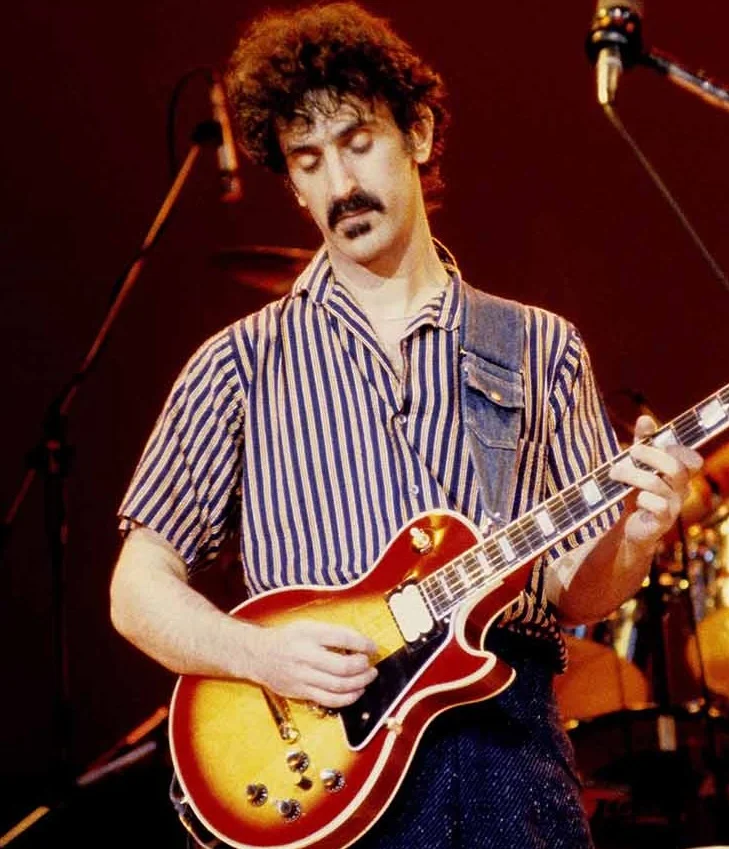
Frank Zappa — £2,500 · Premium Tone
At £2,500 · Premium, Frank Zappa's distinctive and influential tone is more accessible than most players expect. Rooted in the golden age of electric guitar innovation, their sound — Frank Zappa is the most intellectually complex figure in American rock music — a prolific composer, satirist, and self-taught guitar virtuoso whose guitar solos (all improvised) combined jazz vocabulary, rock energy, and a genuinely eccentric musical mind into something utterly irreplaceable. — starts with Fender Player Stratocaster and Marshall DSL40CR, totalling ~£2495. That combination captures the defining characteristics without the premium price tag.
Build Frank Zappa's £2,500 · Premium Rig
5 pieces · Total ~$3,169
What guitar does Zappa use?
Zappa is primarily associated with strat style guitars. At a £2,500 budget, Fender Player Stratocaster delivers the essential tonal character.
What to Buy
£2,500 · Premium — Complete Gear List
Can't find one? See alternatives:
Why This Rig Works
How Frank Zappa's gear choices create the signature tone
Fender Player Stratocaster
Where the Squier approximates the Strat voice, the Player Strat *is* the Strat voice. Noticeably more articulate and dynamic, responding to every nuance of pick attack.
- WahWilson Effects MkII Wah
- OverdriveFulltone OCD Overdrive
- DelayStrymon Timeline
Marshall DSL40CR
The Marshall DSL40CR converts the guitar signal into audible sound and adds its own tonal character — EQ shaping, natural gain, and the overall feel of the final tone.
The Combined Tone
Frank Zappa's guitar tone shifted across his career, but his most celebrated solo tone is a Gibson SG or Stratocaster running through a Fender amp (often a 1950s Bassman) with the preamp pushed into natural saturation — a crunchy, warm overdrive that stays articulate at extreme speeds. His later Synclavier work moved him into digital composition, but live, his guitar solos were always improvisational and human. He used a Cry Baby wah pedal expressively, an MXR Phase 90 for psychedelic textures, and relied on the amp's natural tone rather than stacked pedals. The hallmark is: absolute unpredictability at the highest technical level.
Tone Tips
Getting the Sound Right
- The Marshall DSL40CR delivers power-tube saturation at master volume 6–7 — this compression and sag is what separates amp-driven tone from pedal tone. Set the master first, then dial back the channel gain to taste rather than the other way around.
- Let the amp do the work — push the preamp volume until the output stage begins to saturate
- Use the wah as a filter, not a sweep — hold it at a fixed position for a cocked-wah midrange emphasis
- Compositional control over solos — many famous Zappa solos were composed rather than improvised, down to pitch and duration of every note. When improvising in Zappa-style contexts, treat each solo as a composition by selecting specific note choices before playing rather than reacting in the moment
- Study 'Watermelon in Easter Hay' — this is the most melodically direct Zappa solo and demonstrates that complexity elsewhere is a choice, not a technical limitation. The restrained, singing phrases reveal the fundamental melodic language beneath all the theoretical and technical complexity
- Irregular meter changes are compositional devices rather than demonstrations of technical ability — Zappa used 7/8, 19/16, and other unusual meters to serve specific musical ideas. Practice hearing beat groups of 3, 4, and 5 within passages that don't have a regular pulse before attempting to play in unusual meters
- The guitar is a compositional instrument in Zappa's work, not a solo vehicle — even prominent guitar solos exist within dense, orchestrated arrangements. Transcribing the full band arrangement reveals how precisely each guitar phrase was designed to fit within the surrounding ensemble texture
Avoid These Pitfalls
Common Mistakes When Chasing This Tone
- Leaving the wah pedal engaged but stationary between rocking it — a cocked wah (fixed position, not moving) acts as a midrange filter that changes the core tone. Either rock it expressively or bypass it completely; a cocked wah changes the sound in ways that are often unintended
- Leaving the guitar volume at 10 — single coil brightness at full volume can be harsh. Rolling back to 8-9 tames the top end without killing output.
- Not setting delay to song tempo — a delay that doesn't match the song tempo creates a rhythmic clash that builds and becomes increasingly obvious. Tap the tempo every time.
- Adding too many pedals — complex rigs with multiple switches require full attention to operate. Start with less and add only when a specific gap is identified.
- Setting up only the lead tone and leaving the clean tone as an afterthought — audiences hear the dynamic contrast, and a poor clean tone undermines the entire performance.
Budget Alternatives
Same Tone, Different Budget
FAQ
Frank Zappa Tone — Common Questions
Zappa is primarily associated with strat style guitars. At a £2,500 budget, Fender Player Stratocaster delivers the essential tonal character.
Zappa's amp is british crunch voiced — the amp running hot, providing natural tube saturation. At the £2,500 level, Marshall DSL40CR is the closest match.
The £2,500 tier uses Zappa's actual gear choices or direct equivalents. Total: £2,495. The tonal step up from £1,000 is real but diminishing — worth it for regular performers and studio work.
Zappa's essential pedals include Wah, Delay. At the £2,500 tier: Wilson Effects MkII Wah, Fulltone OCD Overdrive, Strymon Timeline. Wah is the most important pedal — the others add nuance.
Zappa's tone is defined by avant-garde, wah-heavy, blues-derived. The combination of strat guitar and british crunch amp creates a sound that is immediately recognisable.
Zappa's gain approach is amp-driven — natural tube saturation from pushing the amp hard, not from distortion pedals. At £2,500, this is replicated through Marshall DSL40CR paired with Wilson Effects MkII Wah.
Frank Zappa — £2,500 · Premium Complete Rig
~£2495Guitar
Fender Player Stratocaster
Wah
Wilson Effects MkII Wah
Overdrive
Fulltone OCD Overdrive
Amp
Marshall DSL40CR
Delay
Strymon Timeline
Tone Match
Closest Real-World Tone Match
If you like Frank Zappa's tone, these players use a similar approach — same gear philosophy, comparable sound characteristics.
Related Tones