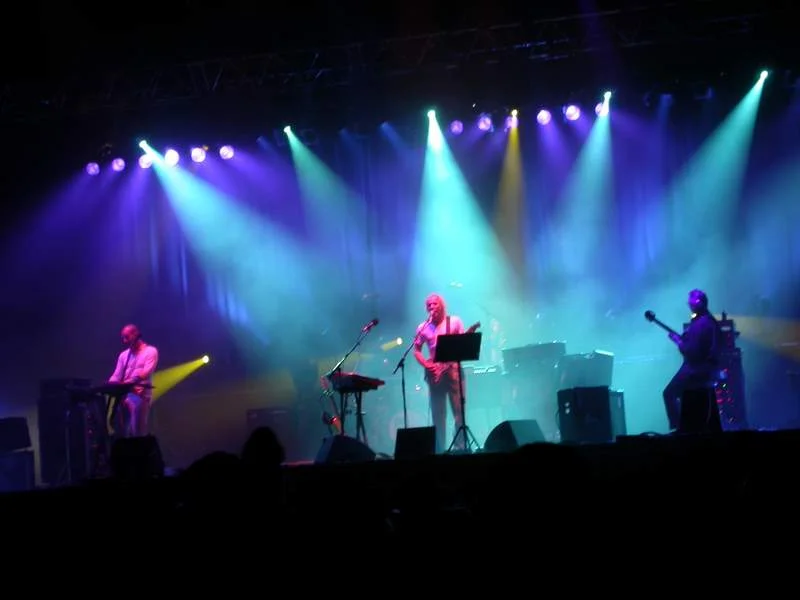
Robert Fripp — £2,500 · Premium Tone
Robert Fripp is the founding guitarist and architect of King Crimson — a musician who invented Frippertronics (solo tape loop concerts), developed the Guitar Craft school of technique, and has influenced experimental guitarists from Andy Belew to Jonny Greenwood. Replicating that experimental and textural sound at the £2,500 · Premium mark means Gibson Les Paul Junior into Marshall DSL40CR. The effects — Keeley Compressor Plus, Joyo Vintage Overdrive — add the finishing texture. This build totals ~£2474 and captures the core character — a premium build targeting the most accurate recreation possible.
Build Robert Fripp's £2,500 · Premium Rig
6 pieces · Total ~$3,142
What guitar does Fripp use?
Fripp is primarily associated with lp style guitars. At a £2,500 budget, Gibson Les Paul Junior delivers the essential tonal character.
What to Buy
£2,500 · Premium — Complete Gear List
Can't find one? See alternatives:
Why This Rig Works
How Robert Fripp's gear choices create the signature tone
Gibson Les Paul Junior
The Gibson Les Paul Junior delivers warm humbucker thickness and singing sustain — the classic foundation for rock and blues tones.
- CompressionKeeley Compressor Plus
- OverdriveJoyo Vintage Overdrive
- DelayStrymon Timeline
- ReverbStrymon Flint
Marshall DSL40CR
The Marshall DSL40CR converts the guitar signal into audible sound and adds its own tonal character — EQ shaping, natural gain, and the overall feel of the final tone.
The Combined Tone
Robert Fripp's tone varies wildly across his career, but his signature sound is a massive, sustaining Gibson Les Paul through a bank of Fender amps into real-time tape delay loops. He plays seated in a strictly upright posture developed through Guitar Craft, using a very small pick held at the tip for precise articulation. His lead tone on King Crimson records — "21st Century Schizoid Man", "Starless" — is visceral and distorted, carved by amp drive rather than pedals. His ambient Frippertronics work uses long tape echoes to build evolving harmonic landscapes.
Tone Tips
Getting the Sound Right
- The Marshall DSL40CR delivers power-tube saturation at master volume 6–7 — this compression and sag is what separates amp-driven tone from pedal tone. Set the master first, then dial back the channel gain to taste rather than the other way around.
- Sit upright and play with a relaxed, efficient technique — avoid shoulder and wrist tension
- Use real tape echo or a long delay pedal to build Frippertronics-style loop layers
- Guitar Craft discipline emphasises posture and physical relaxation as prerequisites — the player's physical state directly affects the quality of the sound produced. Develop a seated posture where the guitar rests in a stable position without any muscular holding. Tension above the instrument creates tension in the sound
- New Standard Tuning (C-G-D-A-E-G, low to high) was Fripp's alternative to standard tuning — this tuning provides consistent major-second intervals between adjacent strings. The scale and chord shapes are completely different from standard tuning and require learning the fretboard from scratch
- Sustained notes that crescendo over time come from allowing the loop volume to build while maintaining a consistent guitar output — the increasing level comes from additional passes through the loop system, not from adjusting any volume control during the sustained passage
- Silence has equal compositional weight to notes — Fripp's compositions contain extended silences that are precisely placed and measured. When practising improvisation, impose a rule that 50% of each measure must be silence to develop the discipline of spacing that his music demands
Avoid These Pitfalls
Common Mistakes When Chasing This Tone
- Not exploring the Marshall DSL alone before adding pedals — a Les Paul or humbucker guitar into a British amp is already a near-complete overdrive system. Adding drive pedals on top is often unnecessary and muddies the amp's natural character
- Ignoring the individual pickup volume and tone controls — the two-pickup switching options on a Les Paul give you four distinct tones within a single setting. Most players only use two.
- Ignoring the room or PA system — prog guitar changes tone dramatically in different acoustic environments. Dialling in EQ in isolation gives a different result than through a full PA.
- Adding too many pedals — complex rigs with multiple switches require full attention to operate. Start with less and add only when a specific gap is identified.
Budget Alternatives
Same Tone, Different Budget
FAQ
Robert Fripp Tone — Common Questions
Fripp is primarily associated with lp style guitars. At a £2,500 budget, Gibson Les Paul Junior delivers the essential tonal character.
Fripp's amp is boutique clean voiced — clean with headroom, pushed by an overdrive pedal. At the £2,500 level, Marshall DSL40CR is the closest match.
The £2,500 tier uses Fripp's actual gear choices or direct equivalents. Total: £2,474. The tonal step up from £1,000 is real but diminishing — worth it for regular performers and studio work.
Fripp's essential pedals include Delay, Reverb, Compression. At the £2,500 tier: Keeley Compressor Plus, Joyo Vintage Overdrive, Strymon Timeline. Delay is the most important pedal — the others add nuance.
Fripp's tone is defined by sparse, sustained, avant-garde. The combination of lp guitar and boutique clean amp creates a sound that is immediately recognisable.
Fripp's gain approach is clean-boosted — a clean amp pushed by an overdrive pedal. The pedal adds colour; the amp adds body. At £2,500, this is replicated through Marshall DSL40CR paired with Keeley Compressor Plus.
Robert Fripp — £2,500 · Premium Complete Rig
~£2474Guitar
Gibson Les Paul Junior
Compression
Keeley Compressor Plus
Overdrive
Joyo Vintage Overdrive
Amp
Marshall DSL40CR
Delay
Strymon Timeline
Reverb
Strymon Flint
Tone Match
Closest Real-World Tone Match
If you like Robert Fripp's tone, these players use a similar approach — same gear philosophy, comparable sound characteristics.
Related Tones