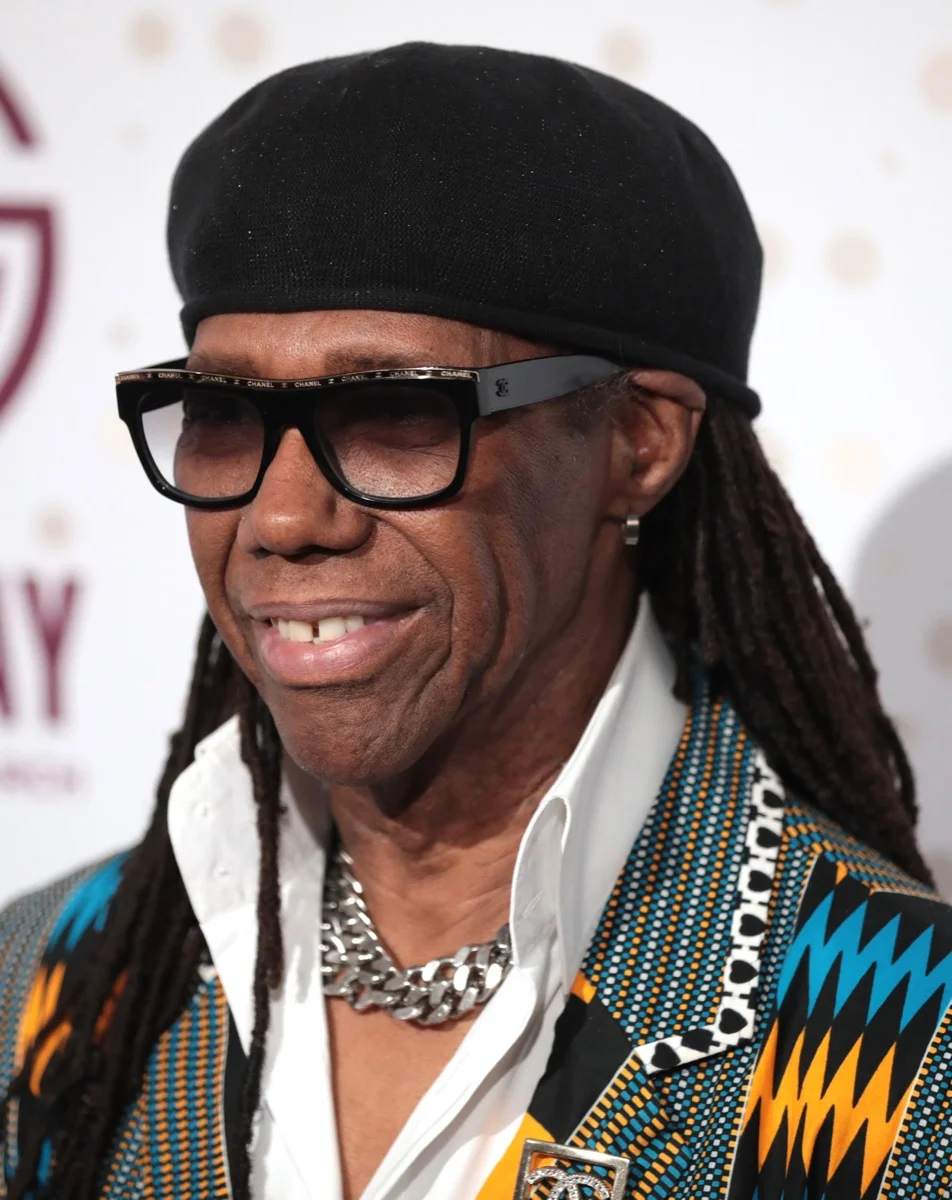
Nile Rodgers — £1,000 · Pro-Level Tone
At £1,000 · Pro-Level, Nile Rodgers's rhythmic and deeply groovy tone is more accessible than most players expect. Rooted in the era that defined hard rock and blues-rock, their sound — Nile Rodgers of Chic co-produced and played rhythm guitar on some of the most commercially successful records ever made — his "Hitmaker" Stratocaster and the "chucking" rhythm technique he perfected appear on records by David Bowie, Madonna, Daft Punk and Diana Ross. — starts with Fender Player Stratocaster and Boss Katana 50 MkII, totalling ~£1,048. That combination captures the defining characteristics without the premium price tag.
Build Nile Rodgers's £1,000 · Pro-Level Rig
4 pieces · Total ~$1,227
What guitar does Nile Rodgers use?
Nile Rodgers is primarily associated with strat style guitars. At a £1,000 budget, Fender Player Stratocaster delivers the essential tonal character.
What to Buy
£1,000 · Pro-Level — Complete Gear List
Why This Rig Works
How Nile Rodgers's gear choices create the signature tone
Fender Player Stratocaster
Where the Squier approximates the Strat voice, the Player Strat *is* the Strat voice. Noticeably more articulate and dynamic, responding to every nuance of pick attack.
- ChorusTC Electronic Corona Chorus
- CompressorMXR M102 Dyna Comp Compressor
Boss Katana 50 MkII
Its 'Brown' amp character at low gain is an excellent approximation of the Fender-style clarity that Hendrix, Mayer, Gilmour and SRV all relied on. Built-in effects mean you're a few knob turns away from the right tone.
The Combined Tone
Fender Stratocaster "Hitmaker" (1960s, maple neck) into a clean DI or small clean amp. Almost no effects — the tone is pure Strat into a clean signal. The music is entirely in the right hand. The "chucking" technique: downstroke with muted release on the upbeat, creating a syncopated percussive pattern.
Tone Tips
Getting the Sound Right
- On the Boss Katana 50 MkII: use the Brown channel — the closest model to a Marshall-voiced preamp at this price. Set character to 8, gain to 5. For Nile Rodgers's lead volume jump, use the Boost mode rather than adding a separate boost pedal.
- The "chucking" technique: play a downstroke chord, then immediately release the fretting pressure on the upbeat to create a muted "ch" sound — not a full up-strum, but a dampened scratch
- No sustain in funk rhythm — every chord rings for only a fraction of its theoretical value. Mute immediately after the attack
- The Hitmaker's maple neck and single-coil bridge pickup provides brightness — if using a humbucker guitar, the tone will be fundamentally different
- Study "Le Freak" and "Good Times" for the textbook chucking patterns — these two songs contain the entire vocabulary
- No vibrato, no bends — Rodgers' approach is purely rhythmic. Pitch expression is not part of funk rhythm guitar
- The bridge pickup is always used — the bright, snappy character of the Strat bridge pickup cutting through the mix is non-negotiable for this style
Avoid These Pitfalls
Common Mistakes When Chasing This Tone
- Leaving the wah pedal engaged but stationary between rocking it — a cocked wah (fixed position, not moving) acts as a midrange filter that changes the core tone. Either rock it expressively or bypass it completely; a cocked wah changes the sound in ways that are often unintended
- Setting the compressor ratio too high with single coils — above 4:1, the compressor eliminates the natural pick attack dynamics that give single-coil playing its expressiveness. The compressor should even out the extremes, not remove all variation
- Expecting a clean tone to cover all playing dynamics — clean tone requires picking technique to do all the work. Lazy picking dynamics become very audible on a clean signal.
- Compression before a drive pedal at high settings — heavy compression before overdrive removes the pick attack that drive pedals respond to. The overdrive then has a flat, lifeless character.
- Leaving the wah in a fixed position (cocked) between uses — a cocked wah acts as a midrange filter and changes the tone. If not using the wah expressively, take it out of the chain.
Budget Alternatives
Same Tone, Different Budget
FAQ
Nile Rodgers Tone — Common Questions
Nile Rodgers is primarily associated with strat style guitars. At a £1,000 budget, Fender Player Stratocaster delivers the essential tonal character.
Nile Rodgers's amp is clean fender voiced — clean to moderate gain. At the £1,000 level, Boss Katana 50 MkII is the closest match.
The £1,000 tier adds noticeably better build quality and tonal nuance over the £500 rig. This build totals £966 with Fender Player Stratocaster, Boss Katana 50 MkII, 2 effects. This is the tier where the tone becomes genuinely convincing for gigging and recording.
Nile Rodgers's essential pedals include Compression, Wah. At the £1,000 tier: TC Electronic Corona Chorus, MXR M102 Dyna Comp Compressor. Compression is the most important pedal — the others add nuance.
Nile Rodgers's tone is defined by funky, percussive, staccato-chords. The combination of strat guitar and clean fender amp creates a sound that is immediately recognisable.
Nile Rodgers's gain approach is very clean — minimal distortion even at volume. The tone comes from the amp's natural warmth. At £1,000, this is replicated through Boss Katana 50 MkII paired with TC Electronic Corona Chorus.
Nile Rodgers — £1,000 · Pro-Level Complete Rig
~£1,048Guitar
Fender Player Stratocaster
Amp
Boss Katana 50 MkII
Chorus
TC Electronic Corona Chorus
Compressor
MXR M102 Dyna Comp Compressor
Tone Match
Closest Real-World Tone Match
If you like Nile Rodgers's tone, these players use a similar approach — same gear philosophy, comparable sound characteristics.
Related Tones