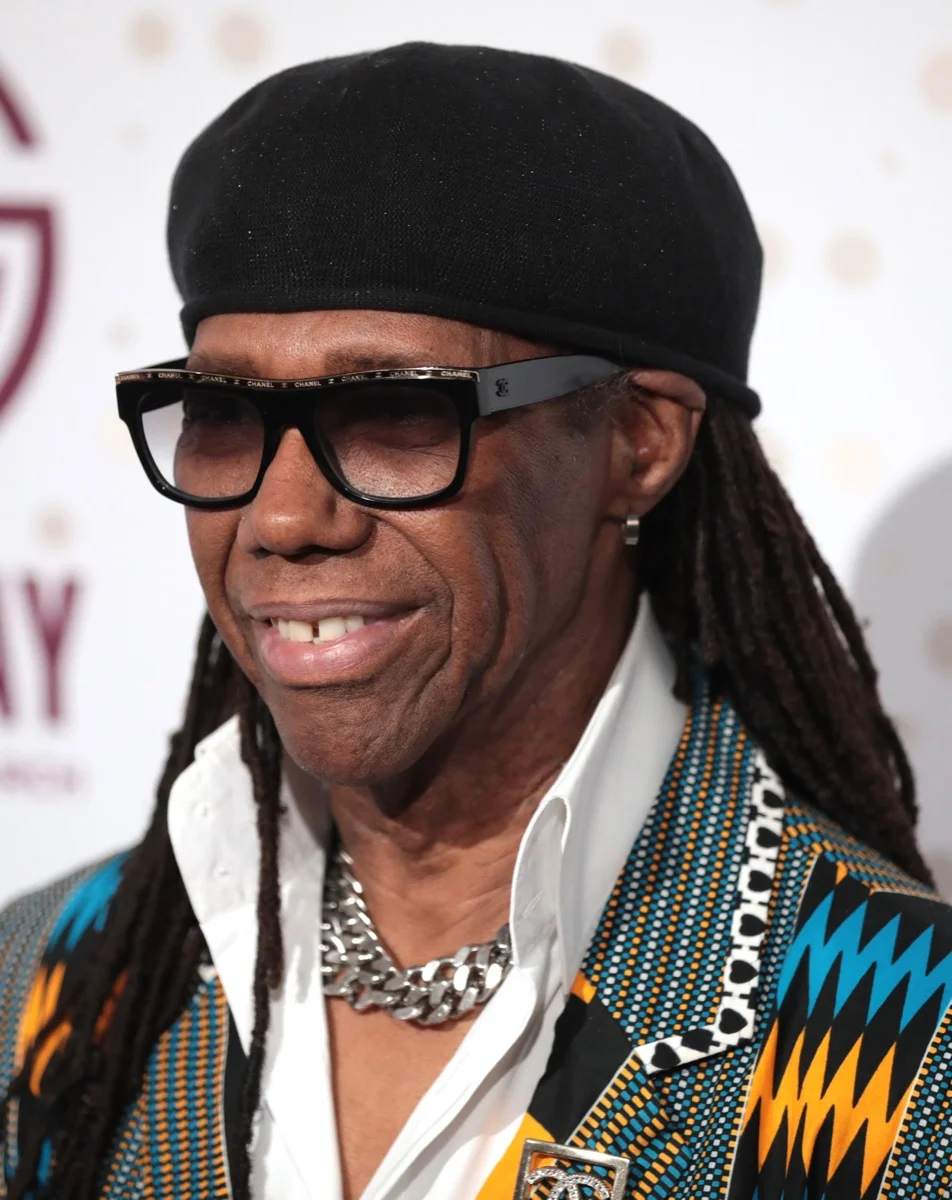
Nile Rodgers — £2,500 · Premium Tone
At £2,500 · Premium, Nile Rodgers's rhythmic and deeply groovy tone is more accessible than most players expect. Rooted in the era that defined hard rock and blues-rock, their sound — Nile Rodgers of Chic co-produced and played rhythm guitar on some of the most commercially successful records ever made — his "Hitmaker" Stratocaster and the "chucking" rhythm technique he perfected appear on records by David Bowie, Madonna, Daft Punk and Diana Ross. — starts with Fender Player Stratocaster and Fender Deluxe Reverb (Reissue), totalling ~£2495. That combination captures the defining characteristics without the premium price tag.
Build Nile Rodgers's £2,500 · Premium Rig
5 pieces · Total ~$3,169
What guitar does Nile Rodgers use?
Nile Rodgers is primarily associated with strat style guitars. At a £2,500 budget, Fender Player Stratocaster delivers the essential tonal character.
What to Buy
£2,500 · Premium — Complete Gear List
Can't find one? See alternatives:
Why This Rig Works
How Nile Rodgers's gear choices create the signature tone
Fender Player Stratocaster
Where the Squier approximates the Strat voice, the Player Strat *is* the Strat voice. Noticeably more articulate and dynamic, responding to every nuance of pick attack.
- WahWilson Effects MkII Wah
- CompressionEmpress Effects Compressor
- ReverbStrymon Flint
Fender Deluxe Reverb (Reissue)
The Fender Deluxe Reverb (Reissue) converts the guitar signal into audible sound and adds its own tonal character — EQ shaping, natural gain, and the overall feel of the final tone.
The Combined Tone
Fender Stratocaster "Hitmaker" (1960s, maple neck) into a clean DI or small clean amp. Almost no effects — the tone is pure Strat into a clean signal. The music is entirely in the right hand. The "chucking" technique: downstroke with muted release on the upbeat, creating a syncopated percussive pattern.
Tone Tips
Getting the Sound Right
- The Fender Deluxe Reverb (Reissue) stays cleaner longer than a Marshall-style amp — push it with a low-gain overdrive (gain at 2–3, level up) rather than cranking its own gain. Set treble at 6, bass at 4, and let the guitar's volume knob handle the dynamics.
- The "chucking" technique: play a downstroke chord, then immediately release the fretting pressure on the upbeat to create a muted "ch" sound — not a full up-strum, but a dampened scratch
- No sustain in funk rhythm — every chord rings for only a fraction of its theoretical value. Mute immediately after the attack
- Practice with a metronome and record yourself — funk rhythm is extremely unforgiving of rhythmic sloppiness. Even a few milliseconds of inconsistency disrupts the groove
- The 'Hitmaker' Strat's tone comes primarily from the right-hand technique, not the specific instrument — any Strat in the neck-middle pickup position played with the same rhythmic precision will approximate the sound. The guitar is a consistent tool; the playing is the differentiator
- Jazz chord voicings (major sixth, major seventh, ninth) in funk contexts replace the power chords and triads used by most rock and funk players — this harmonic sophistication gives 'Le Freak,' 'Good Times,' and 'Let's Dance' their depth. Chord vocabulary from a jazz harmony textbook is directly applicable
- Leave silence around every chord hit — the rests between stabs are musically equal to the stabs themselves. Most players add too many hits when attempting funk rhythm. Play the part, identify every chord stab, then remove half of them and listen to the result
Avoid These Pitfalls
Common Mistakes When Chasing This Tone
- Leaving the wah pedal engaged but stationary between rocking it — a cocked wah (fixed position, not moving) acts as a midrange filter that changes the core tone. Either rock it expressively or bypass it completely; a cocked wah changes the sound in ways that are often unintended
- Setting the compressor ratio too high with single coils — above 4:1, the compressor eliminates the natural pick attack dynamics that give single-coil playing its expressiveness. The compressor should even out the extremes, not remove all variation
- Compression before a drive pedal at high settings — heavy compression before overdrive removes the pick attack that drive pedals respond to. The overdrive then has a flat, lifeless character.
- Leaving the wah in a fixed position (cocked) between uses — a cocked wah acts as a midrange filter and changes the tone. If not using the wah expressively, take it out of the chain.
- Using a high-gain distortion pedal into a clean amp — classic rock tone is amp saturation, not pedal clipping. The harmonic content and feel are completely different.
Budget Alternatives
Same Tone, Different Budget
FAQ
Nile Rodgers Tone — Common Questions
Nile Rodgers is primarily associated with strat style guitars. At a £2,500 budget, Fender Player Stratocaster delivers the essential tonal character.
Nile Rodgers's amp is clean fender voiced — clean to moderate gain. At the £2,500 level, Fender Deluxe Reverb (Reissue) is the closest match.
The £2,500 tier uses Nile Rodgers's actual gear choices or direct equivalents. Total: £2,495. The tonal step up from £1,000 is real but diminishing — worth it for regular performers and studio work.
Nile Rodgers's essential pedals include Compression, Wah. At the £2,500 tier: Wilson Effects MkII Wah, Empress Effects Compressor, Strymon Flint. Compression is the most important pedal — the others add nuance.
Nile Rodgers's tone is defined by funky, percussive, staccato-chords. The combination of strat guitar and clean fender amp creates a sound that is immediately recognisable.
Nile Rodgers's gain approach is very clean — minimal distortion even at volume. The tone comes from the amp's natural warmth. At £2,500, this is replicated through Fender Deluxe Reverb (Reissue) paired with Wilson Effects MkII Wah.
Nile Rodgers — £2,500 · Premium Complete Rig
~£2495Guitar
Fender Player Stratocaster
Wah
Wilson Effects MkII Wah
Compression
Empress Effects Compressor
Amp
Fender Deluxe Reverb (Reissue)
Reverb
Strymon Flint
Tone Match
Closest Real-World Tone Match
If you like Nile Rodgers's tone, these players use a similar approach — same gear philosophy, comparable sound characteristics.
Related Tones