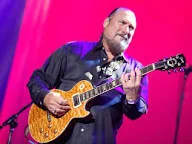
Steve Cropper — £2,500 · Premium Tone
The £2,500 · Premium build for Steve Cropper's emotive and richly toned sound opens with Fender Player Telecaster — the tonal foundation that defines the character. Into Fender '65 Twin Reverb paired with Boss RV-6 Reverb, the rig comes to ~£2497 and delivers the essential elements. Steve Cropper is the definition of "less is more" — the Stax Records guitarist whose Telecaster fills on "In the Midnight Hour," "Knock on Wood" and "Sittin' On The Dock of the Bay" are among the most perfectly placed notes in recorded music.
Build Steve Cropper's £2,500 · Premium Rig
3 pieces · Total ~$3,171
What guitar does Steve Cropper use?
Steve Cropper is primarily associated with tele style guitars. At a £2,500 budget, Fender Player Telecaster delivers the essential tonal character.
What to Buy
£2,500 · Premium — Complete Gear List
Can't find one? See alternatives:
Why This Rig Works
How Steve Cropper's gear choices create the signature tone
Fender Player Telecaster
Where the Squier approximates the Tele voice, the Player Telecaster *is* the Tele voice. Noticeably more articulate and dynamic, with the bridge pickup delivering the iconic snap and cut that defines the instrument.
Boss RV-6 Reverb
Boss RV-6 Reverb — reverb coloring added to the signal.
Fender '65 Twin Reverb
The Fender '65 Twin Reverb converts the guitar signal into audible sound and adds its own tonal character — EQ shaping, natural gain, and the overall feel of the final tone.
The Combined Tone
Fender Telecaster into a small clean Fender amp. No effects, no overdrive. The tone is bright, clean and punchy — pure Telecaster bridge pickup into a clean amp. The art is in restraint: playing the right note at the right moment in the right register to complement the vocal without competing with it.
Tone Tips
Getting the Sound Right
- The Fender '65 Twin Reverb stays cleaner longer than a Marshall-style amp — push it with a low-gain overdrive (gain at 2–3, level up) rather than cranking its own gain. Set treble at 6, bass at 4, and let the guitar's volume knob handle the dynamics.
- Restraint is the entire technique — the correct note played at the correct moment in the correct register. Do not play when you can serve the song by not playing
- Fill the spaces after the vocal line — Croppers fills are call-and-response with the vocalist. Wait for the lyric to end, then fill the gap
- Record yourself playing along to Stax tracks — the feel is different from rock or jazz. It is slightly behind the beat, relaxed and groove-focused
- The Telecaster bridge pickup used clean into a Fender Bassman is the correct starting point — Cropper's defining tone is the clear, articulate twang of the Tele bridge pickup. No overdrive, no effects. Any EQ should add treble, not reduce it. The brightness is essential for the rhythm parts to cut in the Stax ensemble
- Answering the vocal rather than playing continuously is the primary technique — in Memphis soul guitar, fills happen in the spaces between lyric phrases. Study 'Knock on Wood' and 'Sittin' on the Dock of the Bay': every guitar phrase occurs after the vocal lands, creating a conversation
- Chord stabs on the backbeat (beats 2 and 4) require very light fret-hand contact — the muted 'chunk' comes from placing the fretting fingers against the strings without pressing to the fretboard, then strumming. Too much pressure produces an actual chord tone; too little produces no sound. The contact must be intermediate
Avoid These Pitfalls
Common Mistakes When Chasing This Tone
- Treating the bridge pickup like a "normal" guitar bridge pickup — Telecaster bridge pickups are intentionally bright and biting. Trying to warm them up with EQ fights the design. Lean into the twang.
- Adding a high-gain distortion pedal to a Fender clean amp — the character of Fender tone is the headroom and sparkle. A high-gain pedal into a Fender sounds like a wrong-matched combination.
- Expecting a clean tone to cover all playing dynamics — clean tone requires picking technique to do all the work. Lazy picking dynamics become very audible on a clean signal.
- Using a high-gain distortion pedal into a clean amp — classic rock tone is amp saturation, not pedal clipping. The harmonic content and feel are completely different.
- Not accounting for amp volume — most classic rock tones require the amp at substantial volume to achieve natural power-tube saturation. At bedroom levels the tone is flat and harsh.
Budget Alternatives
Same Tone, Different Budget
FAQ
Steve Cropper Tone — Common Questions
Steve Cropper is primarily associated with tele style guitars. At a £2,500 budget, Fender Player Telecaster delivers the essential tonal character.
Steve Cropper's amp is clean fender voiced — clean to moderate gain. At the £2,500 level, Fender '65 Twin Reverb is the closest match.
The £2,500 tier uses Steve Cropper's actual gear choices or direct equivalents. Total: £2,497. The tonal step up from £1,000 is real but diminishing — worth it for regular performers and studio work.
Steve Cropper's tone is defined by stax-soul, chord-stabs, tele-twang. The combination of tele guitar and clean fender amp creates a sound that is immediately recognisable.
Steve Cropper's gain approach is very clean — minimal distortion even at volume. The tone comes from the amp's natural warmth. At £2,500, this is replicated through Fender '65 Twin Reverb paired with Boss RV-6 Reverb.
Steve Cropper — £2,500 · Premium Complete Rig
~£2497Guitar
Fender Player Telecaster
Amp
Fender '65 Twin Reverb
Reverb
Boss RV-6 Reverb
Tone Match
Closest Real-World Tone Match
If you like Steve Cropper's tone, these players use a similar approach — same gear philosophy, comparable sound characteristics.
Related Tones