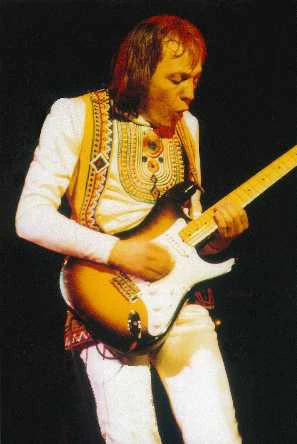
Robin Trower — £500 · Sweet Spot Tone
Robin Trower took the Hendrix Stratocaster blueprint and pushed it further into psychedelic, heavily modulated blues-rock territory. His Uni-Vibe-soaked tone, slow-roasting vibrato and technique of playing behind the beat with a heavy right-hand touch created some of the most atmospheric and hypnotic rock of the 1970s. Replicating that raw and emotionally charged sound at the £500 · Sweet Spot mark means Squier Classic Vibe 60s Stratocaster into Boss Katana 50 MkII. The effects — Joyo Vintage Overdrive — add the finishing texture. This build totals ~£477 and captures the core character — the sweet spot — enough to get genuinely close to the sound without breaking the bank.
Build Robin Trower's £500 · Sweet Spot Rig
3 pieces · Total ~£477
What guitar does Robin Trower use?
Robin Trower is primarily associated with strat style guitars. At a £500 budget, Squier Classic Vibe 60s Stratocaster delivers the essential tonal character.
What to Buy
£500 · Sweet Spot — Complete Gear List
Why This Rig Works
How Robin Trower's gear choices create the signature tone
Squier Classic Vibe 60s Stratocaster
The alnico V pickups are the real deal — they deliver genuine Strat chime, quack and warmth that responds naturally to pick attack. An ideal foundation for Hendrix, Mayer, Gilmour or SRV tones.
Joyo Vintage Overdrive
Joyo Vintage Overdrive — overdrive coloring added to the signal.
Boss Katana 50 MkII
Its 'Brown' amp character at low gain is an excellent approximation of the Fender-style clarity that Hendrix, Mayer, Gilmour and SRV all relied on. Built-in effects mean you're a few knob turns away from the right tone.
The Combined Tone
Fender Stratocaster (various) into a Marshall Super Bass or Hiwatt with a Uni-Vibe pedal running throughout. The Uni-Vibe imparts a slow, rotating, almost tremolo-like depth; combined with Trower's thick, physical pick attack and Hendrix-influenced chord voicings, the result is dense and enveloping.
Tone Tips
Getting the Sound Right
- Uni-Vibe is always on — set speed to medium-slow (around 3Hz) for the signature depth
- Play slightly behind the beat with a heavy, deliberate pick attack
- Bridge pickup for the cutting, nasal quality; neck for the thicker, warmer tone
- Hendrix-style thumb-over chord voicings on the low strings add range to chord work
- Amp at moderate gain — the Uni-Vibe adds apparent warmth; don't fight it with more gain
- Trower's vibrato is slow and wide, covering nearly a full semitone in each oscillation
- Listen to "Bridge of Sighs" for the defining Uni-Vibe tone that made his reputation
- Large interval jumps in solos — Trower doesn't solo up and down scale positions linearly
Avoid These Pitfalls
Common Mistakes When Chasing This Tone
- Setting the TS9 gain above 5 into a clean amp — at high gain settings the TS becomes a distortion pedal that colours the tone heavily. Below 4, it's a boost and focus pedal. Single coils into a TS above 5 gets nasal and harsh
- Leaving the wah pedal engaged but stationary between rocking it — a cocked wah (fixed position, not moving) acts as a midrange filter that changes the core tone. Either rock it expressively or bypass it completely; a cocked wah changes the sound in ways that are often unintended
- Leaving the guitar volume at 10 — single coil brightness at full volume can be harsh. Rolling back to 8-9 tames the top end without killing output.
- Scooping the mids on a Marshall-style amp — the upper midrange emphasis is what makes British amps cut through. Mid-scoop EQ sounds good alone but disappears in a band mix.
- Using too much gain on the drive pedal — pedal-driven tone works best with the amp providing some character and the pedal adding focus and saturation, not replacing the amp entirely.
- Not setting delay to song tempo — a delay that doesn't match the song tempo creates a rhythmic clash that builds and becomes increasingly obvious. Tap the tempo every time.
- Ignoring the guitar volume knob — rolling back to 6-7 is your rhythm setting; 10 is for leads. Most players leave it at 10 and miss the entire dynamic vocabulary.
- Using a humbucker where single coils are needed — the quack, string definition, and high-frequency air of single coils cannot be EQ'd into a humbucker
Budget Alternatives
Same Tone, Different Budget
FAQ
Robin Trower Tone — Common Questions
Robin Trower is primarily associated with strat style guitars. At a £500 budget, Squier Classic Vibe 60s Stratocaster delivers the essential tonal character.
Robin Trower's amp is british crunch voiced — clean to moderate gain. At the £500 level, Boss Katana 50 MkII is the closest match.
Yes — £500 covers a real guitar and amp in the right tonal family. This rig totals £477 and captures the essential character. The guitar and amp account for 80% of the tone; pedals are secondary at this budget.
Robin Trower's essential pedals include Modulation, Delay, Overdrive. At the £500 tier: Joyo Vintage Overdrive. Modulation is the most important pedal — the others add nuance.
Robin Trower's tone is defined by hendrix-influenced, uni-vibe-tone, bluesy-psychedelic. The combination of strat guitar and british crunch amp creates a sound that is immediately recognisable.
Robin Trower's gain approach is pedal-driven — distortion pedals into a relatively clean amp. The pedal defines the distortion character. At £500, this is replicated through Boss Katana 50 MkII paired with Joyo Vintage Overdrive.
Robin Trower — £500 · Sweet Spot Complete Rig
~£477Guitar
Squier Classic Vibe 60s Stratocaster
Overdrive
Joyo Vintage Overdrive
Amp
Boss Katana 50 MkII
Tone Match
Closest Real-World Tone Match
If you like Robin Trower's tone, these players use a similar approach — same gear philosophy, comparable sound characteristics.
Related Tones