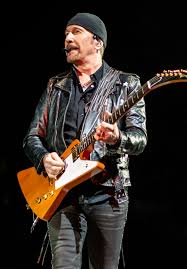
The Edge — £1,000 · Pro-Level Tone
The £1,000 · Pro-Level build for The Edge's powerful and driving sound opens with Epiphone ES-339 — the tonal foundation that defines the character. Into Boss Katana 100 MkII paired with Walrus Audio Fundamental Delay, the rig comes to ~£997 and delivers the essential elements. The Edge of U2 created a guitar vocabulary based almost entirely on dotted-eighth note delay — turning single notes and sparse chords into cascading, rhythmic patterns that feel like lead guitar and rhythm guitar simultaneously.
Build The Edge's £1,000 · Pro-Level Rig
3 pieces · Total ~£997
What guitar does The Edge use?
The Edge is primarily associated with semi hollow style guitars. At a £1,000 budget, Epiphone ES-339 delivers the essential tonal character.
What to Buy
£1,000 · Pro-Level — Complete Gear List
Why This Rig Works
How The Edge's gear choices create the signature tone
Epiphone ES-339
The Epiphone ES-339 provides the tonal foundation for the entire rig — its character shapes everything that follows.
Walrus Audio Fundamental Delay
Walrus Audio Fundamental Delay — delay coloring added to the signal.
Boss Katana 100 MkII
The extra headroom lets you push the clean channel harder before it breaks up, essential for loud-amp technique. More speaker excursion gives a fuller, more three-dimensional clean.
The Combined Tone
Fender Strat or Gibson Explorer into a Vox AC30, with a TC Electronic 2290 or Korg SDD-3000 delay set to a dotted eighth note. The amp tone itself is relatively clean and chimey — all the "music" comes from the delay interacting with the tempo. A Memory Man adds warmer analog echoes on some tracks.
Tone Tips
Getting the Sound Right
- The dotted eighth note delay is everything — set delay time to (60,000 ÷ BPM) × 0.75ms and the guitar practically plays itself
- Less gain than you think — The Edge's amp is relatively clean. The chime and harmonic density come from the AC30 and the delay, not distortion
- Single notes and partial chords sound like full arrangements through the delay — you do not need complex chords. A single string can sound orchestral
- Feedback level (Repeats) at 3-4 — enough for 3-5 echoes before dying away. Too much feedback creates mud; too little sounds dry
- Volume swell into the delay — pick very quietly and let the repeated notes swell up. This creates the "shimmer without attack" characteristic of songs like "Where the Streets Have No Name"
- The AC30 Top Boost channel at 7-8 provides the chime — the class-A power amp compression is essential. Do not substitute a different amp and expect the same result
- Tune to standard E — unlike many classic rock artists, The Edge almost always plays in standard tuning. The complexity comes from the delay, not the tuning
- Use a Strat or single-coil guitar — the chime of the AC30 requires the brightness of single coils. Humbuckers muffle the high-frequency sparkle
Avoid These Pitfalls
Common Mistakes When Chasing This Tone
- Using the same amp EQ as for a solid-body guitar — semi-hollow guitars have natural warmth that makes amp bass and treble settings behave differently. Start flat and adjust from there.
- Using a high-gain distortion pedal instead of amp gain — British crunch amps have a specific harmonic character when driven from their own gain stage. A pedal changes this character.
- Clean amp at too low a volume — even a clean amp provides warmth and tonal character that the pedal sits in. An amp at minimum volume has no character for the pedal to interact with.
- Too many repeats at high mix — more than 3 repeats makes the delay effect accumulate and overwhelm the dry guitar signal. Keep it to 2-3 repeats at a subtle mix level.
- Over-warming the tone — punk guitar benefits from brightness. Too much warmth (low treble, high bass) makes the tone muddy and slow-sounding.
- Complex pedal rigs — punk is deliberately simple. A rack of effects and a complex setup contradicts the genre's philosophy and requires attention that should go on the performance.
Budget Alternatives
Same Tone, Different Budget
FAQ
The Edge Tone — Common Questions
The Edge is primarily associated with semi hollow style guitars. At a £1,000 budget, Epiphone ES-339 delivers the essential tonal character.
The Edge's amp is british crunch voiced — clean to moderate gain. At the £1,000 level, Boss Katana 100 MkII is the closest match.
The £1,000 tier adds noticeably better build quality and tonal nuance over the £500 rig. This build totals £997 with Epiphone ES-339, Boss Katana 100 MkII, 1 effect. This is the tier where the tone becomes genuinely convincing for gigging and recording.
The Edge's essential pedals include Delay, Modulation, Reverb. At the £1,000 tier: Walrus Audio Fundamental Delay. Delay is the most important pedal — the others add nuance.
The Edge's tone is defined by dotted-eighth-delay, ambient-chime, iconic-u2-tone. The combination of semi hollow guitar and british crunch amp creates a sound that is immediately recognisable.
The Edge's gain approach is pedal-driven — distortion pedals into a relatively clean amp. The pedal defines the distortion character. At £1,000, this is replicated through Boss Katana 100 MkII paired with Walrus Audio Fundamental Delay.
The Edge — £1,000 · Pro-Level Complete Rig
~£997Guitar
Epiphone ES-339
Amp
Boss Katana 100 MkII
Delay
Walrus Audio Fundamental Delay
Tone Match
Closest Real-World Tone Match
If you like The Edge's tone, these players use a similar approach — same gear philosophy, comparable sound characteristics.
Related Tones