Song Rig
Crawlin' King Snake
John Lee Hooker · Crawlin' King Snake (single) · 1949
Tone Overview
What Makes This Sound Unique
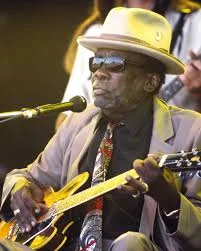
One of John Lee's earliest recordings — the tone is almost acoustic-adjacent, with barely enough amplification to separate it from an acoustic guitar played through a tin can. The rawness is the point: this is delta blues in the process of becoming electric blues.
Signal Chain
- 1Early electric archtop guitar (likely DeArmond-equipped acoustic)
- 2Very small early amplifier (5–10W)
Amp Settings
Minimum gain — just enough amplification to be recorded. The dynamic range is enormous by modern standards; quiet passages are barely audible above the noise floor while hard strums cut through dramatically.
Technique
How to Play It
Repetitive, almost trance-like picking pattern in A minor — John Lee plays with the forward momentum of someone who cannot stop, which gives the song its hypnotic quality. No fills or ornamentation; just the pattern and the voice.
Budget Alternative
Achievable With
Archtop or semi-hollow guitar → very small amp (5W Champ) with all controls at 5 → no effects. The lo-fi character of the early recordings is part of their emotional impact.
Your Gear
Adapt to My Amp
More from John Lee Hooker
Other Song Rigs
Boom Boom
Boom Boom (single) · 1961
The most recognisable boogie guitar tone in blues history — John Lee's Gibson se…
View rig →I'm in the Mood
I'm in the Mood (single) · 1951
An early recording that captures John Lee's raw, unpolished electric style — a s…
View rig →Boogie Chillen
Modern Records Singles · 1948
The most important John Lee Hooker recording — the 1948 electric boogie that def…
View rig →Dimples
Vee-Jay Records Singles · 1956
Hooker's most catchy and commercial blues — a driving rhythm that became a stapl…
View rig →One Bourbon, One Scotch, One Beer
Mojo Boogie · 1966
Hooker's most recognisable standard — a slow, heavy blues that has been covered …
View rig →