Song Rig
Dimples
John Lee Hooker · Vee-Jay Records Singles · 1956
Tone Overview
What Makes This Sound Unique
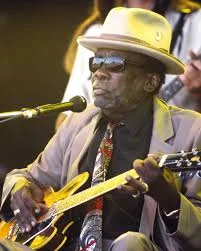
Hooker's most catchy and commercial blues — a driving rhythm that became a staple of the British Invasion bands. The Vee-Jay Records sound is cleaner than the early Modern Records recordings, with better microphone placement and studio technique capturing more of the guitar's natural tone.
Signal Chain
- 1Gibson electric (1950s model)
- 2Small amp (Vee-Jay studio setup)
Amp Settings
The Vee-Jay recordings are slightly cleaner and more polished than the Modern Records era — Hooker's guitar tone became more defined as studio technology improved through the 1950s.
Technique
How to Play It
Stop-time blues rhythm — Dimples uses the stop-time technique where the full band stops and only the guitar and voice play for two beats, then the full band re-enters. Hooker places this pause at key lyrical moments for maximum impact.
Budget Alternative
Achievable With
Any electric guitar → small amp at moderate volume → practice stop-time rhythm: play the riff, pause the full beat (lift both hands), re-enter precisely on beat 1 of the next bar. The ensemble discipline required for stop-time is demanding.
Your Gear
Adapt to My Amp
More from John Lee Hooker
Other Song Rigs
Boom Boom
Boom Boom (single) · 1961
The most recognisable boogie guitar tone in blues history — John Lee's Gibson se…
View rig →I'm in the Mood
I'm in the Mood (single) · 1951
An early recording that captures John Lee's raw, unpolished electric style — a s…
View rig →Crawlin' King Snake
Crawlin' King Snake (single) · 1949
One of John Lee's earliest recordings — the tone is almost acoustic-adjacent, wi…
View rig →Boogie Chillen
Modern Records Singles · 1948
The most important John Lee Hooker recording — the 1948 electric boogie that def…
View rig →One Bourbon, One Scotch, One Beer
Mojo Boogie · 1966
Hooker's most recognisable standard — a slow, heavy blues that has been covered …
View rig →