Song Rig
One Bourbon, One Scotch, One Beer
John Lee Hooker · Mojo Boogie · 1966
Tone Overview
What Makes This Sound Unique
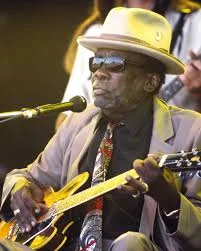
Hooker's most recognisable standard — a slow, heavy blues that has been covered by George Thorogood (who brought it to mass attention), but the Hooker original has a raw, direct quality that the covers cannot match. The guitar is warm, slightly distorted, and the performance is deeply casual and confident.
Signal Chain
- 1Gibson ES-335 or similar semi-hollow
- 2Fender amp (pushed to natural breakup)
Amp Settings
Warm, full, and slightly broken up — the 1966 recording period shows Hooker with a more controlled, rounded tone than the raw 1948 recordings. The semi-hollow guitar adds acoustic resonance to the electric signal.
Technique
How to Play It
Extreme rhythmic freedom — Hooker's blues timing is deliberately loose, bending and stretching bar lengths to emphasise lyrics and feelings rather than maintaining strict 12-bar form. Each verse may have slightly different numbers of beats.
Budget Alternative
Achievable With
ES-335 or any semi-hollow → Fender Blues Deluxe at natural breakup → spring reverb → practice playing WITHOUT counting strict bar lengths: follow the lyrical phrasing instead of the metre.
Your Gear
Adapt to My Amp
More from John Lee Hooker
Other Song Rigs
Boom Boom
Boom Boom (single) · 1961
The most recognisable boogie guitar tone in blues history — John Lee's Gibson se…
View rig →I'm in the Mood
I'm in the Mood (single) · 1951
An early recording that captures John Lee's raw, unpolished electric style — a s…
View rig →Crawlin' King Snake
Crawlin' King Snake (single) · 1949
One of John Lee's earliest recordings — the tone is almost acoustic-adjacent, wi…
View rig →Boogie Chillen
Modern Records Singles · 1948
The most important John Lee Hooker recording — the 1948 electric boogie that def…
View rig →Dimples
Vee-Jay Records Singles · 1956
Hooker's most catchy and commercial blues — a driving rhythm that became a stapl…
View rig →