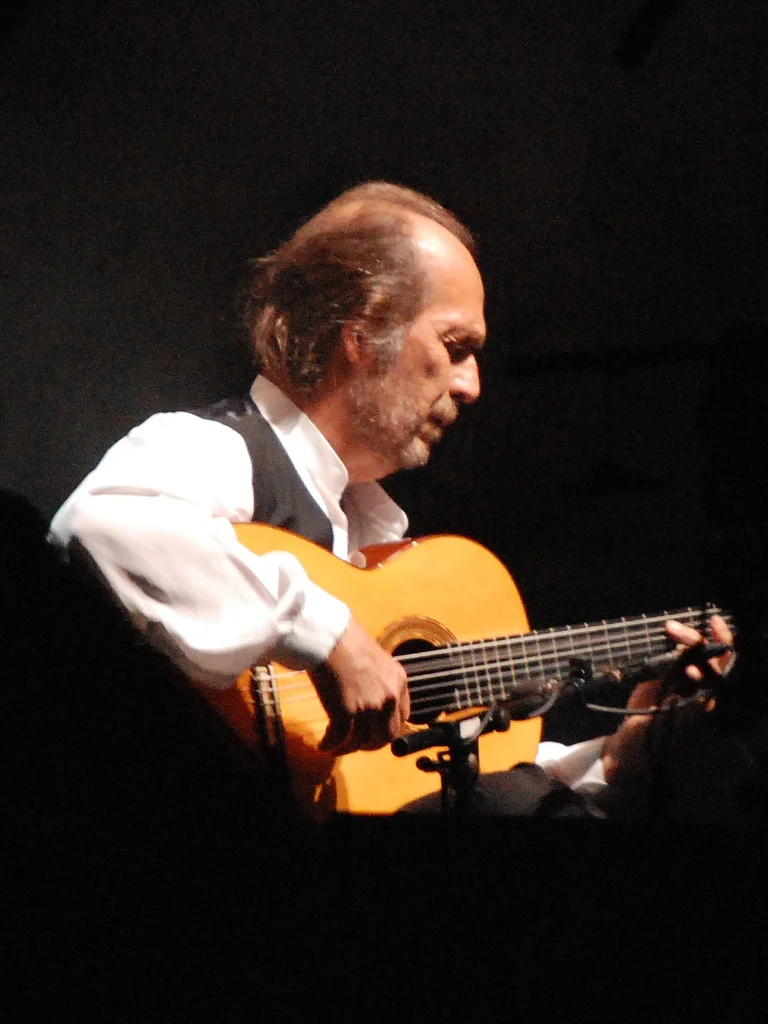
Song Rig
Almoraima
Paco de Lucía · Almoraima · 1976
Tone Overview
What Makes This Sound Unique
The title track of Paco's breakthrough solo album — a showcase of the formal flamenco palos (song forms) rather than the pop-accessible rumba of Entre Dos Aguas. The tone is drier and more traditional than the crossover material, with the flamenco guitar's rapid decay and low sustain emphasising the percussive nature of the playing.
Signal Chain
- 1José Ramírez flamenco guitar
- 2Concert acoustic (amplified later with discreet microphone)
Amp Settings
Dry acoustic — traditional flamenco never uses amplification in the classical context. The rapid decay of the flamenco guitar body means each note dies quickly, which is used as a rhythmic tool (the silence after a rasgueado is as important as the notes).
Technique
How to Play It
Picado (single-note scale runs with rest stroke) — Paco's picado technique uses the index and middle fingers of the right hand alternately, with each finger using a rest stroke (where the picking finger comes to rest against the adjacent string after plucking). This produces maximum volume and note definition.
Budget Alternative
Achievable With
Flamenco guitar → rest-stroke alternating index-middle finger technique → practice picado scales very slowly with rest strokes on each note until the technique is fully consistent, then increase speed.
Your Gear
Adapt to My Amp
More from Paco de Lucía
Other Song Rigs
Entre Dos Aguas
Entre Dos Aguas · 1976
The song that made flamenco a pop phenomenon — a rumba-flamenco hybrid that reac…
View rig →Río Ancho
Siroco · 1987
Paco's mature fusion period — Siroco added jazz and world music influences to hi…
View rig →Fuente y Caudal
Fuente y Caudal · 1973
The album that introduced flamenco to a global audience — de Lucía's entirely ac…
View rig →Mediterranean Sundance / Rio Ancho (Live)
Friday Night in San Francisco · 1981
The most celebrated live acoustic guitar album ever recorded — de Lucía alongsid…
View rig →Zyryab
Zyryab · 1990
De Lucía's electric-amplified era — he began using a small amplifier for larger …
View rig →