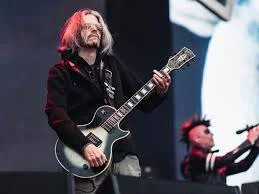
Sound Like Adam Jones
Getting Adam Jones's layered and compositionally bold sound is within reach at any budget. Adam Jones of Tool creates guitar parts that function more like orchestral sections than standard rock guitar — odd time signatures, detuned riffs that breathe like drones, and a vocabulary entirely his own built on texture and space. The guides below cover the full range — from the £200 entry point to the £2,500 premium build. Compare tiers and choose the level that suits you.
Quick Answer
To sound like Adam Jones, start with a Epiphone Les Paul Standard into a Boss Katana 50 MkII, with a Boss DS-1 Distortion as your key effect.
Tone Analysis
Adam Jones's Guitar Tone — In Depth
Tone Philosophy
Adam Jones' guitar work in Tool serves the compositional vision of one of the most compositionally ambitious bands in rock. His playing is never about individual display — it is entirely in service of the collective sound, which means the complex time signatures, dynamic range, and tonal precision of his playing must be understood in that context.
The Signature Sound
The Undertow, Aenima, and Lateralus era tone is a Gibson Les Paul or a Cort EVH model through a Mesa/Boogie Dual Rectifier and a Marshall, with specific EQ curves designed to complement Danny Carey's drum sound. The specific mid-forward character of his rhythm tone cuts through Carey's compressed, deep-mix drums without competing with them.
Key Gear
His primary guitar has been a Gibson Les Paul Custom and a Cort EVH-2 model. Mesa/Boogie Dual Rectifier amplifiers are primary. Various Boss effects and routing systems appear in his live setup.
Playing Approach
Jones' rhythm work in odd time signatures (5/8, 7/8, 11/8) requires internalising rhythmic structures that most rock guitarists never encounter. His playing reflects years of careful compositional work rather than improvisation.
Legacy
Tool's influence on progressive metal is complete. Jones' guitar approach — subordinating individual display to collective composition at the highest technical level — is the model for progressive metal guitar playing.
Budget Comparison
Pick Your Budget Level
£500 · Sweet Spot
~£527
- GuitarEpiphone Les Paul Standard
- DistortionBoss DS-1 Distortion
- AmpBoss Katana 50 MkII
£1,000 · Pro-Level
~£996
- GuitarEpiphone Les Paul Special
- EQBoss EQ-200 Graphic EQ
- DistortionProCo RAT2
- AmpBlackstar HT Stage 60 MkII
£2,500 · Premium
~£2455
- GuitarGibson Les Paul Junior
- EQEmpress ParaEQ
- DistortionFriedman BE-OD Deluxe
- AmpMarshall DSL40CR
- DelayStrymon El Capistan
Shop Now
Buy the Key Gear — £500 Sweet Spot
Guitar, amp and essential effects for the authentic Adam Jones sound. The guitar and amp together account for 80% of the tone.
Complete the Rig
Essentials Every Guitarist Needs
These aren't exciting — but every rig needs them. Buy once, sorted forever.
Tone Profile
Adam Jones's Sound
Gibson Les Paul (various) into a Diezel VH4 or Marshall head, tuned down to Eb or D. The tone is dense and saturated with a mid-forward character — not scooped. An MXR Phase 90 runs almost constantly on slower songs. The attack is mid-tempo and deliberate; Tool riffs are never rushed.
Modeling Amps
Get Adam Jones's Tone on Your Modeler
Targeting Mesa/Boogie (Dual Rectifier / Mark series). Use these amp models and IRs as your starting point — dial in from there using the knob settings above.
Cali Rectifire Modern for modern heavy; Ch1 for clean/crunch
Bass at 7+, treble restrained — Mesa preamp is very active
Song Match
Which Adam Jones Songs Suit Your Amp
Tone Match
Closest Real-World Tone Match
If you like Adam Jones's tone, these players use a similar approach — same gear philosophy, comparable sound characteristics.
Weekly Tone Tips
One setting, one artist insight, one gear pick. No noise.