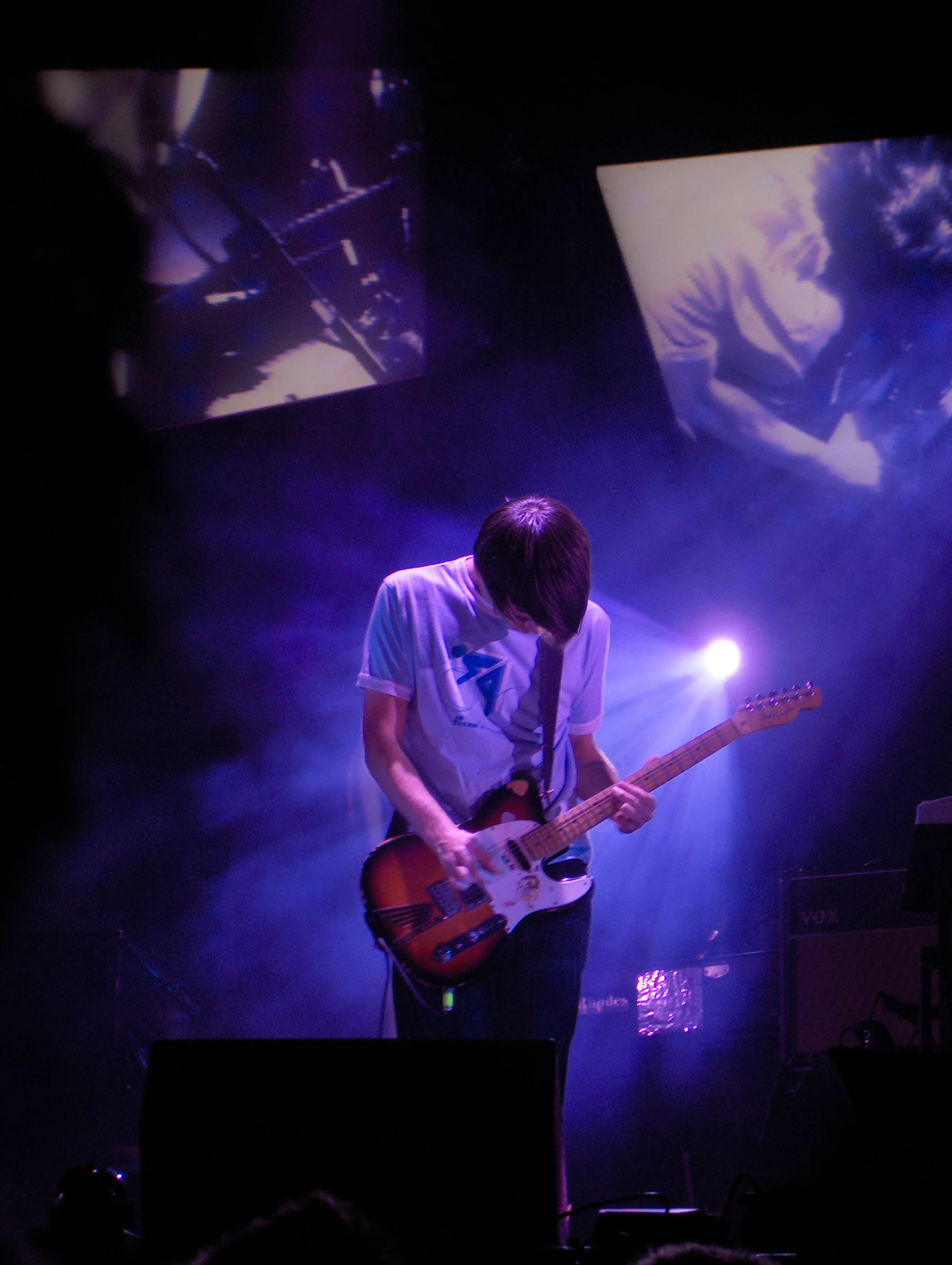
Sound Like Jonny Greenwood
Getting Jonny Greenwood's experimental and textural sound is within reach at any budget. Jonny Greenwood of Radiohead is one of rock music's most creative guitarists — his approach draws from noise, classical music and jazz, building textures that are often unrecognisable as conventional guitar playing. The guides below cover the full range — from the £200 entry point to the £2,500 premium build. Compare tiers and choose the level that suits you.
Quick Answer
To sound like Jonny Greenwood, start with a Squier Classic Vibe 60s Telecaster into a Boss Katana 50 MkII, with a Boss SD-1 Super Overdrive as your key effect.
Tone Analysis
Jonny Greenwood's Guitar Tone — In Depth
Tone Philosophy
Jonny Greenwood treats the guitar as a component in a larger electronic music system rather than as a traditional instrument. His Radiohead work — particularly from The Bends onward — shows a systematic exploration of what a guitar can do when processed, layered, and treated as sound-source material rather than melody instrument.
The Signature Sound
The Radiohead tone ranges from the clean Telecaster chording of The Bends to the processed, almost unrecognisable guitar treatments of Kid A and Amnesiac. Street Spirit's arpeggio pattern and Just's angular riff are among the most immediately recognisable Radiohead guitar sounds. A Mesa/Boogie Dual Rectifier and Fender Twin provide different gain characters for different contexts.
Key Gear
He uses a Fender Telecaster Plus and various modified instruments. A Boss Distortion DS-1, Electro-Harmonix Big Muff, and Korg Kaoss Pad appear at different stages of his career. His live and studio setups have evolved significantly across Radiohead's discography.
Playing Approach
Greenwood's approach to guitar within the Radiohead context involves conscious restraint and willingness to function as a texture element rather than as a lead voice. His chord voicings are unconventional; his rhythm parts often function as atmospheric texture.
Legacy
Radiohead's influence on alternative and art rock is immense. Greenwood's evolution from conventional rock guitarist to experimental sound designer while maintaining emotional connection is a model for how guitar can evolve in a contemporary context.
Budget Comparison
Pick Your Budget Level
£500 · Sweet Spot
~£497
- GuitarSquier Classic Vibe 60s Telecaster
- OverdriveBoss SD-1 Super Overdrive
- AmpBoss Katana 50 MkII
£1,000 · Pro-Level
~£1,046
- GuitarFender Player Telecaster
- AmpVox AC15C1
- PitchDigiTech Whammy 5
£2,500 · Premium
~£2494
- GuitarFender Player Telecaster
- OverdriveKing Tone Duellist OD
- ModulationWalrus Audio Julia
- AmpMarshall DSL40CR
- DelayWalrus Audio Fundamental Delay
- ReverbWalrus Audio Fundamental Reverb
Shop Now
Buy the Key Gear — £500 Sweet Spot
Guitar, amp and essential effects for the authentic Jonny Greenwood sound. The guitar and amp together account for 80% of the tone.
Complete the Rig
Essentials Every Guitarist Needs
These aren't exciting — but every rig needs them. Buy once, sorted forever.
Tone Profile
Jonny Greenwood's Sound
Fender Telecaster, Gretsch Country Gentleman or vintage guitar into a Vox AC30 or Fender Twin, with extensive effects including DigiTech Whammy, EHX POG and various modulation. The tone varies dramatically — from jangly clean on "High and Dry" to the screaming whammy bar of "Just" to the orchestral noise of "National Anthem."
Modeling Amps
Get Jonny Greenwood's Tone on Your Modeler
Targeting Fender (Twin Reverb / Deluxe Reverb). Use these amp models and IRs as your starting point — dial in from there using the knob settings above.
Set volume high for natural breakup; add a TS-style drive in front for lead
Bright switch on for sparkle; use a clean boost for lead push
Song Match
Which Jonny Greenwood Songs Suit Your Amp
Tone Match
Closest Real-World Tone Match
If you like Jonny Greenwood's tone, these players use a similar approach — same gear philosophy, comparable sound characteristics.
Weekly Tone Tips
One setting, one artist insight, one gear pick. No noise.