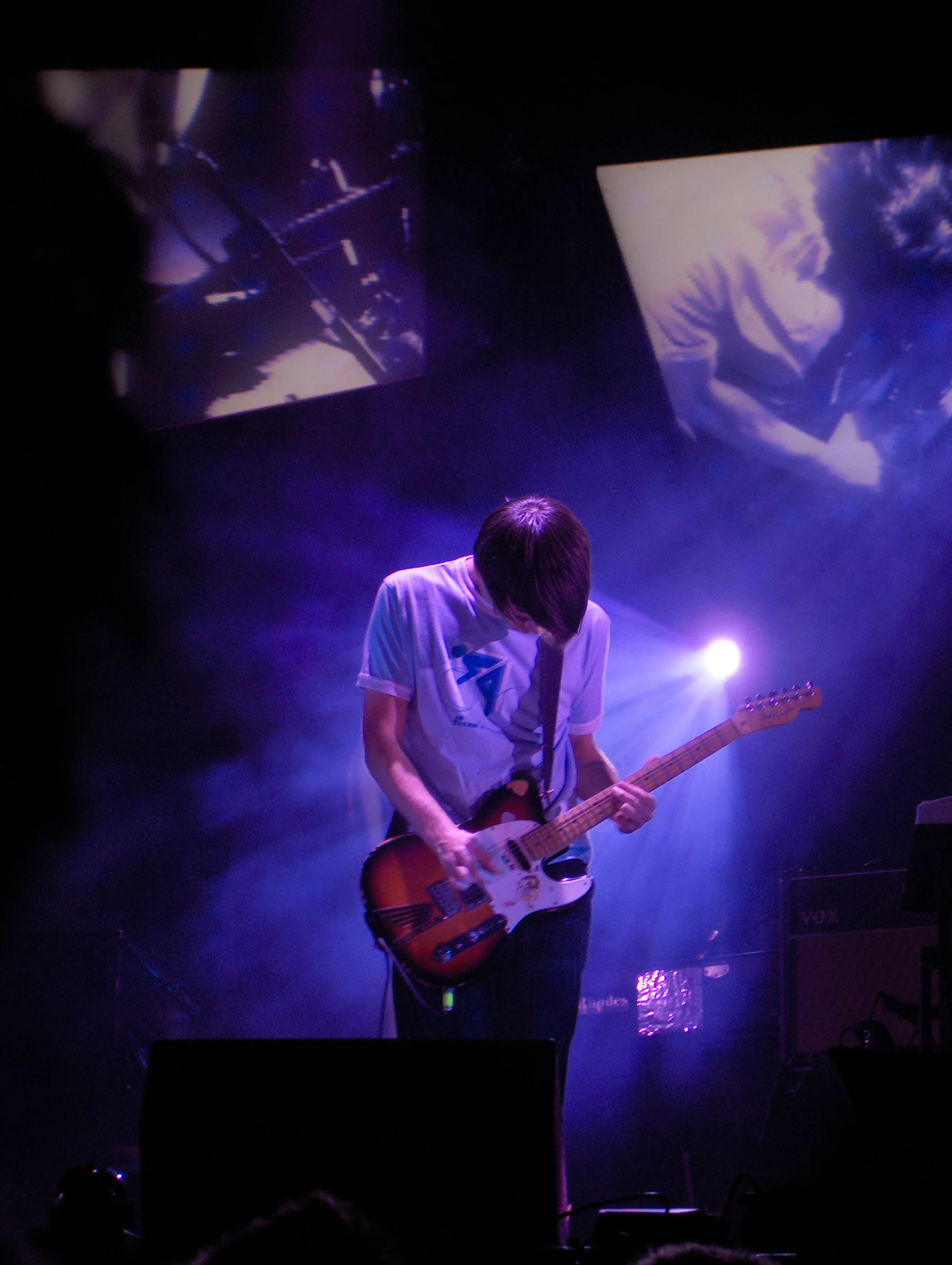
Jonny Greenwood — £2,500 · Premium Tone
At £2,500 · Premium, Jonny Greenwood's experimental and textural tone is more accessible than most players expect. Rooted in an era of reinvention, grunge, and raw expression, their sound — Jonny Greenwood of Radiohead is one of rock music's most creative guitarists — his approach draws from noise, classical music and jazz, building textures that are often unrecognisable as conventional guitar playing. — starts with Fender Player Telecaster and Marshall DSL40CR, totalling ~£2494. That combination captures the defining characteristics without the premium price tag.
Build Jonny Greenwood's £2,500 · Premium Rig
6 pieces · Total ~$3,167
What guitar does Jonny Greenwood use?
Jonny Greenwood is primarily associated with tele style guitars. At a £2,500 budget, Fender Player Telecaster delivers the essential tonal character.
What to Buy
£2,500 · Premium — Complete Gear List
Can't find one? See alternatives:
Why This Rig Works
How Jonny Greenwood's gear choices create the signature tone
Fender Player Telecaster
Where the Squier approximates the Tele voice, the Player Telecaster *is* the Tele voice. Noticeably more articulate and dynamic, with the bridge pickup delivering the iconic snap and cut that defines the instrument.
- OverdriveKing Tone Duellist OD
- ModulationWalrus Audio Julia
- DelayWalrus Audio Fundamental Delay
- ReverbWalrus Audio Fundamental Reverb
Marshall DSL40CR
The Marshall DSL40CR converts the guitar signal into audible sound and adds its own tonal character — EQ shaping, natural gain, and the overall feel of the final tone.
The Combined Tone
Fender Telecaster, Gretsch Country Gentleman or vintage guitar into a Vox AC30 or Fender Twin, with extensive effects including DigiTech Whammy, EHX POG and various modulation. The tone varies dramatically — from jangly clean on "High and Dry" to the screaming whammy bar of "Just" to the orchestral noise of "National Anthem."
Tone Tips
Getting the Sound Right
- The Marshall DSL40CR delivers power-tube saturation at master volume 6–7 — this compression and sag is what separates amp-driven tone from pedal tone. Set the master first, then dial back the channel gain to taste rather than the other way around.
- The Whammy pedal is central to the "Just" and "Planet Telex" guitar sounds — set to octave up or two octaves up, it creates the screaming harmonics
- Jangly clean is equally important — "High and Dry" and "Fake Plastic Trees" use clean Telecaster into AC30. Contrast between clean and extreme is the Radiohead guitar vocabulary
- Layering guitar and orchestral elements is a Greenwood strength — in solo orchestral work, he understands how guitars interact with string instruments
- Noise is composed, not spontaneous — the feedback and distortion are controlled and placed intentionally, not random
- Do not try to copy Radiohead by sound; copy by intention — understand why each guitar choice was made and apply that decision-making to your own playing
- The Big Muff's sustain knob at 7-8 is usually the sweet spot with single coils — above 8 the sustain compresses the single-coil dynamics so much that the string noise and attack character disappear
- Keep treble below 6 on the Twin Reverb with single coils — the natural brightness of both together can become shrill. The sweet spot is around 5-6 treble, 6-7 bass, 5-6 middle, which gives the chimey quality without harshness
Avoid These Pitfalls
Common Mistakes When Chasing This Tone
- Running the Big Muff into an already-driven amp channel — fuzz into a driven amp creates uncontrolled intermodulation that sounds chaotic rather than musical. The Big Muff works best into a clean or barely-clean amp
- Setting the Big Muff tone control at noon or above — this position is where the Big Muff's scooped mid character becomes harsh and cutting. The musical range is 9 o'clock to 11 o'clock on most units
- Setting gain too high on the overdrive pedal — most overdrive pedals are most useful at gain settings of 2-5, where they add character without dominating the tone. High gain settings on an OD pedal become a distortion, not an overdrive.
- Ignoring alternative tunings — many of the most iconic riffs and chord voicings in the genre are impossible in standard tuning.
- Homogenising the tone — playing at the same volume and gain level throughout removes the compositional impact of the loud-quiet dynamic.
Budget Alternatives
Same Tone, Different Budget
FAQ
Jonny Greenwood Tone — Common Questions
Jonny Greenwood is primarily associated with tele style guitars. At a £2,500 budget, Fender Player Telecaster delivers the essential tonal character.
Jonny Greenwood's amp is british crunch voiced — clean to moderate gain. At the £2,500 level, Marshall DSL40CR is the closest match.
The £2,500 tier uses Jonny Greenwood's actual gear choices or direct equivalents. Total: £2,494. The tonal step up from £1,000 is real but diminishing — worth it for regular performers and studio work.
Jonny Greenwood's essential pedals include Overdrive, Modulation, Delay, Reverb. At the £2,500 tier: King Tone Duellist OD, Walrus Audio Julia, Walrus Audio Fundamental Delay. Overdrive is the most important pedal — the others add nuance.
Jonny Greenwood's tone is defined by experimental, textural, angular. The combination of tele guitar and british crunch amp creates a sound that is immediately recognisable.
Jonny Greenwood's gain approach is pedal-driven — distortion pedals into a relatively clean amp. The pedal defines the distortion character. At £2,500, this is replicated through Marshall DSL40CR paired with King Tone Duellist OD.
Jonny Greenwood — £2,500 · Premium Complete Rig
~£2494Guitar
Fender Player Telecaster
Overdrive
King Tone Duellist OD
Modulation
Walrus Audio Julia
Amp
Marshall DSL40CR
Delay
Walrus Audio Fundamental Delay
Reverb
Walrus Audio Fundamental Reverb
Tone Match
Closest Real-World Tone Match
If you like Jonny Greenwood's tone, these players use a similar approach — same gear philosophy, comparable sound characteristics.
Related Tones