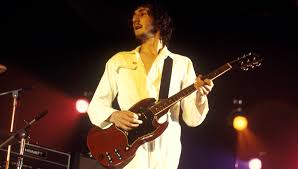
How to Sound Like Pete Townshend
If you've tried to cop Pete Townshend's powerful and driving tone and not quite got there, the answer is almost always in the signal chain order. Gibson SG Special or Hamer guitar into Marshall Super Lead stacks at maximum volume. Very high amp gain from sheer volume, not pedals. Townshend's open-chord rock voicings and windmill strumming create percussive attacks that cut through even the loudest drum kit. Feedback is a compositional tool. This guide starts from scratch with Epiphone SG Special and works through every stage — no assumptions, just the path to the sound.
Based on the £500 rig · Total: ~£477
To sound like Pete Townshend, you need a Epiphone SG Special (guitar), a Boss Katana 100 MkII (amp), and a Boss GE-7 Graphic EQ (key effect). Follow these 4 steps: Choose your guitar: Epiphone SG Special; Dial in your amp: Boss Katana 100 MkII; Add essential effects: Boss GE-7 Graphic EQ; Fine-tune your tone. Total budget: ~£477.
⚡ Quick Answer
Windmill strumming: lock elbow and rotate the full arm from the shoulder — dramatic arc
Step-by-Step Guide
Building Pete Townshend's Tone
- 1
Step 1 — Choose your guitar: Epiphone SG Special
The foundation of Pete Townshend's powerful and driving sound is the guitar. For this budget build, a Epiphone SG Special provides the right tonal character — the pickup configuration and body resonance both point in the right direction.
- 2
Step 2 — Dial in your amp: Boss Katana 100 MkII
The amp is where much of Pete Townshend's character lives. A Boss Katana 100 MkII at this budget level gives you the clean headroom or natural breakup needed to start shaping the tone. Set the gain and EQ to match the characteristic sound before adding any effects.
- 3
Step 3 — Add essential effects: Boss GE-7 Graphic EQ
The effects chain completes the picture. For Pete Townshend's sound, Boss GE-7 Graphic EQ is the most important addition — it provides the tonal signature that defines the style.
- 4
Step 4 — Fine-tune your tone
Windmill strumming: lock elbow and rotate the full arm from the shoulder — dramatic arc Power chords with open top strings ring beneath — creates a fuller sound than muted power chords
£500 Reference Rig
Complete Parts List
Why This Rig Works
How Pete Townshend's gear choices create the signature tone
Epiphone SG Special
The SG body is lighter and more upper-fret accessible than a Les Paul, with a snappier attack. The humbuckers deliver the essential dark, punchy character needed for AC/DC and Black Sabbath tones.
Boss GE-7 Graphic EQ
Boss GE-7 Graphic EQ — eq coloring added to the signal.
Boss Katana 100 MkII
The extra headroom lets you push the clean channel harder before it breaks up, essential for loud-amp technique. More speaker excursion gives a fuller, more three-dimensional clean.
The Combined Tone
Gibson SG Special or Hamer guitar into Marshall Super Lead stacks at maximum volume. Very high amp gain from sheer volume, not pedals. Townshend's open-chord rock voicings and windmill strumming create percussive attacks that cut through even the loudest drum kit. Feedback is a compositional tool.
Tone Science
Why This Combination Works
The Epiphone SG Special's humbucking pickups produce a warmer, thicker output with more midrange presence and higher output than single coils. This drives the amp harder and creates the fat, sustaining quality associated with this style.
The Boss Katana 100 MkII digitally models classic amp circuits — the key is selecting the right model and keeping the gain at a level that matches the original's dynamics. The tone is in the model selection more than the physical amp topology.
Reference Listening
Songs to Study Before Buying
Listen to these specific tracks to hear the target tone before you shop. Each song demonstrates a different aspect of the rig.
My Generation— My Generation
Early Rickenbacker into Marshall — the raw feedback and sustain that created power pop.
Baba O'Riley— Who's Next
Les Paul into Marshall Hiwatt — more controlled power chords, the peak Pete tone.
Won't Get Fooled Again— Who's Next
Full-frequency chord crashes — windmill technique demonstrated against the keyboard wash.
Avoid These Pitfalls
Common Mistakes to Avoid
- ✗
Scooping mids on the Marshall Super Lead with humbuckers — the mid-forward character of British amps with humbuckers is the central sound of classic rock. A mid scoop removes the fundamental voice of the combination
- ✗
Adding too much bass on the amp — the lightweight SG body has natural mid-forward resonance. Adding bass makes the tone muddy rather than heavier.
- ✗
Using a high-gain distortion pedal instead of amp gain — British crunch amps have a specific harmonic character when driven from their own gain stage. A pedal changes this character.
- ✗
Playing at bedroom volume expecting amp-driven tone — the power-tube saturation that defines this gain structure only occurs when the amp is working at substantial output. This is not replicable at low volumes.
- ✗
No noise gate at high gain — self-noise at high gain levels is constant and distracting. A gate is not optional for this style.
- ✗
Setting gain to maximum — above 8 on most amp channels, note separation degrades and riffs lose definition. The loudness feels greater but the clarity goes down.
Pete Townshend — £500 · Sweet Spot Complete Rig
~£477Guitar
Epiphone SG Special
EQ
Boss GE-7 Graphic EQ
Amp
Boss Katana 100 MkII
Tone Match
Similar Players to Pete Townshend
If you like Pete Townshend's tone, these players use a similar approach — same gear philosophy, comparable sound characteristics.
Related Guides
Similar Players
FAQ
How to Sound Like Pete Townshend — Common Questions
The guitar body type (sg) and amp character (british) are non-negotiable. Technique — specifically windmill-strumming — accounts for 30% of the sound.
Yes. Pete Townshend's exact gear (Epiphone SG Special, Boss Katana 100 MkII) is one path, but any guitar and amp in the same tonal family will work. The tone is defined by pickup type, amp voicing, and gain structure — not the brand on the headstock.
The gear side is immediate — the right setup delivers the signature tone from day one. The technique side (vibrato, pick dynamics, phrasing) takes 6-18 months to develop meaningfully. Most players underestimate how much Pete Townshend's actual playing style contributes to the sound.