Sound Like Jimmy Page
Jimmy Page stands as one of rock's most enduring tonal references — powerful and driving by nature and endlessly studied. Jimmy Page harnessed the full dynamic range of a Gibson Les Paul through a Marshall stack — from gentle, acoustic-influenced picking to howling feedback and studio-layered orchestration. His tone captured both raw power and deliberate delicacy. These complete rig guides at four budget levels show exactly what gear it takes to get there.
Quick Answer
To sound like Jimmy Page, start with a Epiphone Les Paul Standard into a Boss Katana 50 MkII.
Tone Analysis
Jimmy Page's Guitar Tone — In Depth
Tone Philosophy
Jimmy Page built Led Zeppelin's sonic world from a position of studio control as much as from performance. As producer and arranger, he understood that tone is not just about equipment but about how sounds interact with each other in an arrangement. His approach combined the British blues tradition, American country finger-picking, Eastern modal influences, and orchestral layering into a guitar language that no single source fully explains.
The Signature Sound
The most recognised Page tone — the Whole Lotta Love riff, the Since I've Been Loving You lead, the Heartbreaker solo — is a 1959 Gibson Les Paul Standard through a Marshall Super Lead. The Les Paul's PAF humbuckers with a Super Lead at working volume creates a specific kind of saturated warmth with exceptional clarity at the top end. The violin bow on Kashmir and the Theremin-influenced solos represent a parallel sonic vocabulary built on texture rather than melody.
Key Gear
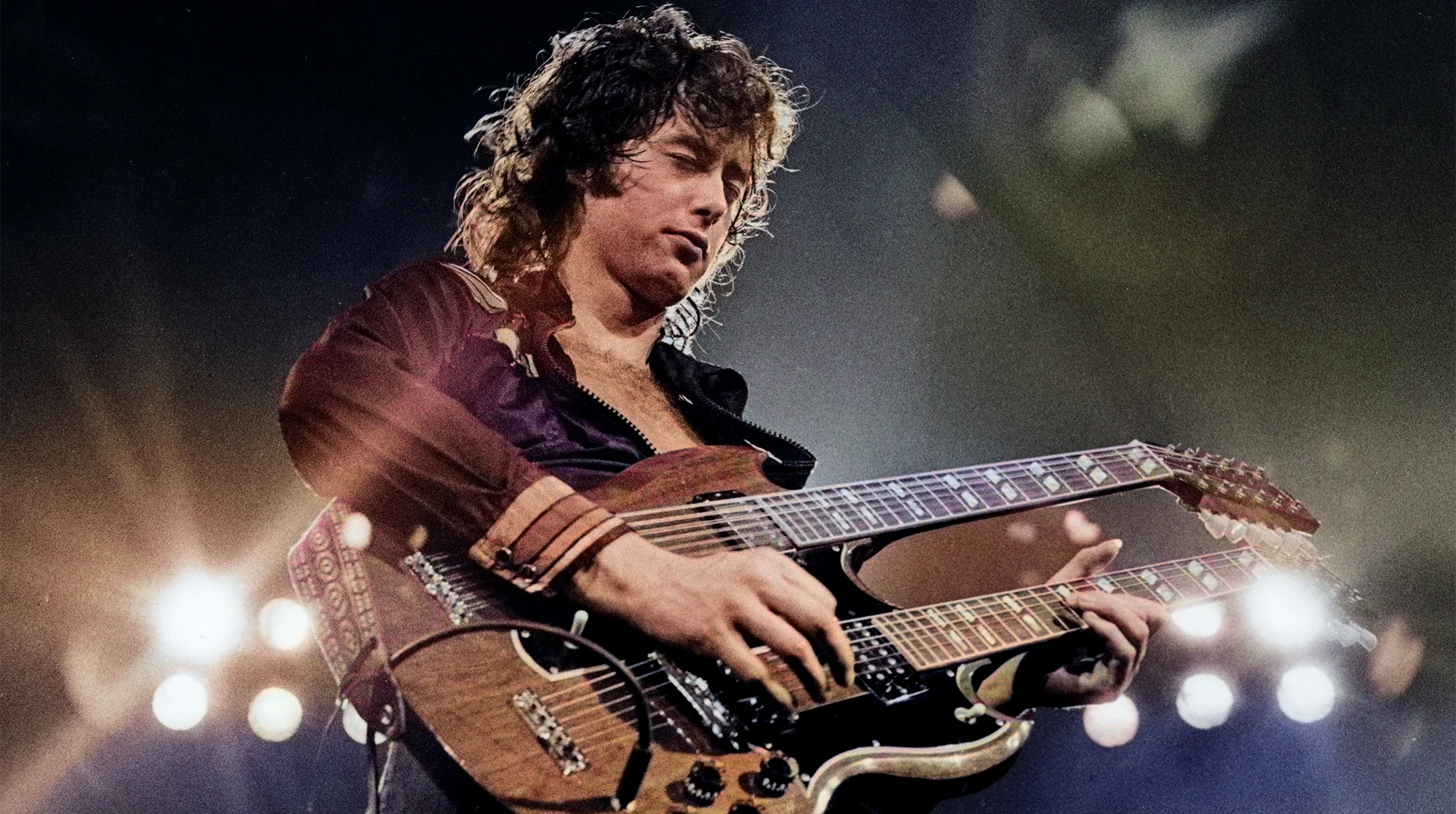
His stage rigs varied considerably across Led Zeppelin's career. The 1958 and 1959 Les Paul Standards were primary throughout. A custom-built 1971 Gibson EDS-1275 double-neck was used for the acoustic-electric requirements of Stairway to Heaven live. Amplifiers included Marshall Super Leads and a Vox AC30. The Echoplex tape delay was used for the feedback-loop textures heard on Whole Lotta Love and Heartbreaker.
Playing Approach
Page was a professional session guitarist before forming Led Zeppelin, which gave him unusual versatility — he could produce country, jazz, folk, and blues tones on demand. His use of the bow on electric guitar, his open-tuned acoustic work (Rain Song, Bron-Y-Aur Stomp), and his studio layering techniques were all outside conventional rock guitar practice. His right-hand technique sometimes used a cello bow to sustain notes indefinitely.
Legacy
Led Zeppelin's influence on hard rock, heavy metal, and blues-rock is foundational. Page's combination of riff writing, lead playing, and studio production defined what a rock guitarist could be — not just a performer but an architect of sonic environments. His experiments with alternate tunings, orchestral arrangements, and studio processing anticipated approaches that became standard in the following decades.
Budget Comparison
Pick Your Budget Level
£500 · Sweet Spot
~£478
£1,000 · Pro-Level
~£886
- GuitarEpiphone Les Paul Standard
- AmpMarshall DSL20CR
- OverdriveBoss Blues Driver BD-2
- ModulationMXR M101 Phase 90
£2,500 · Premium
~£2493
- GuitarGibson Les Paul Junior
- WahWilson Effects MkII Wah
- BoostPaul Cochrane Timmy
- EQBoss GE-7 Graphic EQ
- OverdriveBoss Blues Driver BD-2
- AmpMarshall DSL40CR
- DelayWalrus Audio Fundamental Delay
Shop Now
Buy the Key Gear — £500 Sweet Spot
Guitar, amp and essential effects for the authentic Jimmy Page sound. The guitar and amp together account for 80% of the tone.
Complete the Rig
Essentials Every Guitarist Needs
These aren't exciting — but every rig needs them. Buy once, sorted forever.
Tone Profile
Jimmy Page's Sound
Thick, saggy Les Paul humbucker into a modified Marshall Super Lead — the combination delivers natural amp saturation with explosive transients and singing sustain. Page ran his Marshall loud with the guitar's volume knob as the main control; tone ranged from clean jazz voicings (volume at 4) to full-bore crunch (volume at 10).
Modeling Amps
Get Jimmy Page's Tone on Your Modeler
Targeting Marshall (Plexi / JCM800). Use these amp models and IRs as your starting point — dial in from there using the knob settings above.
Low master, drive at 6–7 for Plexi crunch; Brit 2204 for JCM800 lead
Keep presence at 5, let the amp breathe — avoid over-EQing
Song Match
Which Jimmy Page Songs Suit Your Amp
Tone Match
Closest Real-World Tone Match
If you like Jimmy Page's tone, these players use a similar approach — same gear philosophy, comparable sound characteristics.
Weekly Tone Tips
One setting, one artist insight, one gear pick. No noise.