BluesChicago Blues1950s–present
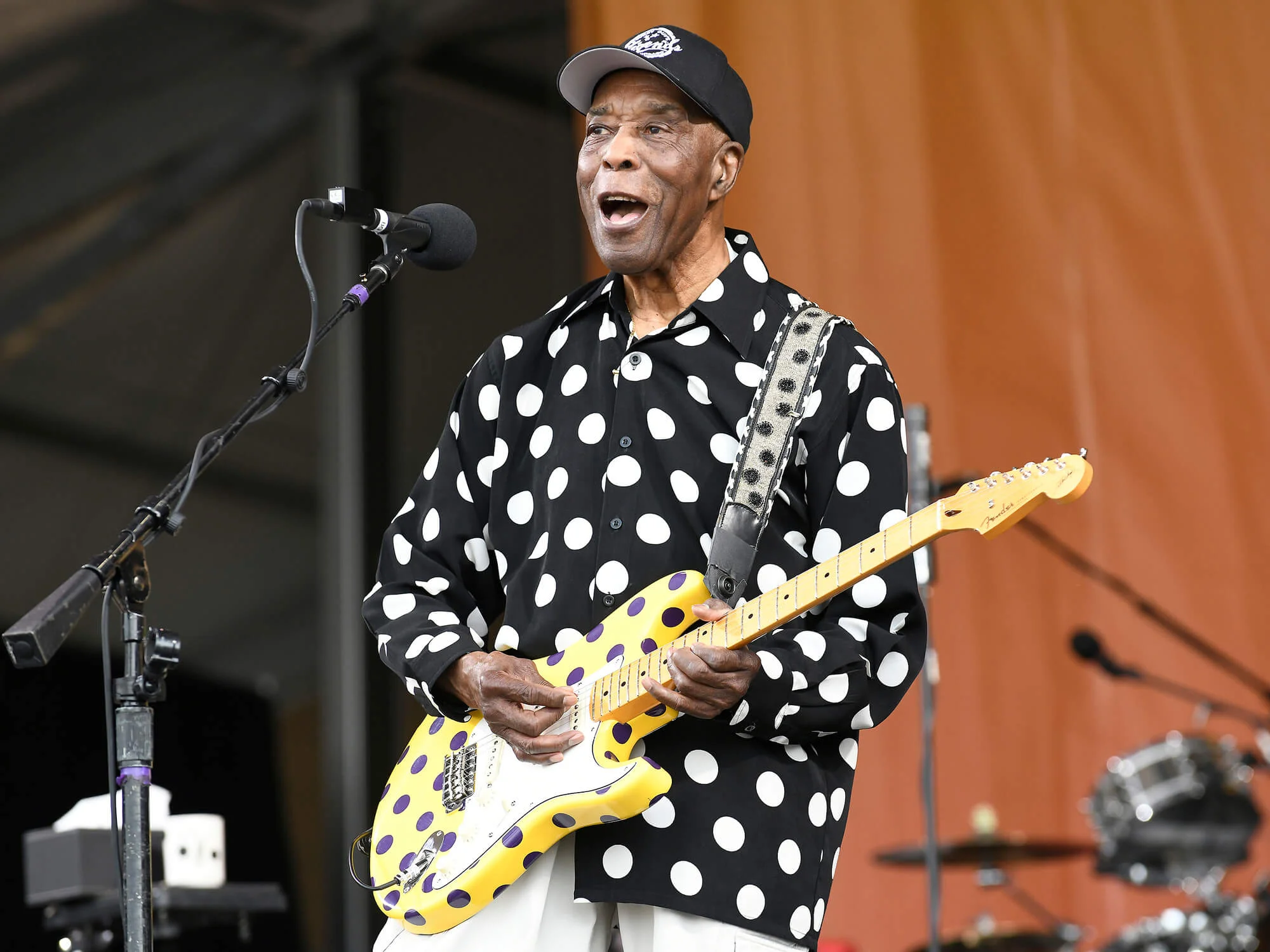
Buddy Guy — £1,000 · Pro-Level Rig
Fender Stratocaster (polka-dot, with middle pickup or bridge) into a Fender Super Reverb (4×10) or Bassman. Clean to barely-breaking-up amp; all dirt comes from the guitar's physical attack and occasional use of a Boss DS-1. Guy's technique involves extreme bends — sometimes 3 whole steps — and dramatic use of the entire fretboard.
Signal Path
Signal Chain
Full signal path
GuitarPlayer Strat
AmpBlues Jr
Full Gear List
£1,000 · Pro-Level — Complete Rig
Tone Tips
Getting the Sound Right
- Extreme string bends: Guy bends 2–3 whole steps — use .009s and build finger strength gradually
- Play up the neck (above the 12th fret) more than most blues players — high register wails
- Amp barely breaking up: single coil bite on the edge of clean is the foundation
- Walk away from the amp during solos for feedback — then come back for different feedback notes
- Dramatic range: whisper-quiet phrases immediately followed by screaming high-register attacks
- Right-hand muting varies throughout a phrase — Guy creates internal dynamics mid-sentence
- Chicago shuffle rhythm: learn the Albert Collins stop-time groove that underpins the style
- BB King influence: use single-note lines with intent, not busy pentatonic runs
Avoid These Pitfalls
Common Mistakes When Chasing This Tone
- Setting the TS9 gain above 5 into a clean amp — at high gain settings the TS becomes a distortion pedal that colours the tone heavily. Below 4, it's a boost and focus pedal. Single coils into a TS above 5 gets nasal and harsh
- Leaving the wah pedal engaged but stationary between rocking it — a cocked wah (fixed position, not moving) acts as a midrange filter that changes the core tone. Either rock it expressively or bypass it completely; a cocked wah changes the sound in ways that are often unintended
- Leaving the guitar volume at 10 — single coil brightness at full volume can be harsh. Rolling back to 8-9 tames the top end without killing output.
- Using a distortion pedal instead of pushing the amp — vintage-voiced amps create better overdrive by being pushed hard than by a pedal circuit. Let the amp do the work.
- Setting the boost level too high relative to the base tone — a boost for solos should raise the presence of the guitar, not cause a volume jump that overwhelms the mix. Level matching matters.
- Setting gain too high on the overdrive pedal — most overdrive pedals are most useful at gain settings of 2-5, where they add character without dominating the tone. High gain settings on an OD pedal become a distortion, not an overdrive.
- Moving the wah too fast — wah is a filter effect that needs time to sweep through its range musically. Fast rocking produces a quacking sound; musical use is slower and more deliberate.
- Using a large amp at low volume — the character of this style comes from a small amp working hard. A 100W amp at 2 doesn't give the same result as a 15W amp at 8.
Tone Profile
Buddy Guy's Sound
Fender Stratocaster (polka-dot, with middle pickup or bridge) into a Fender Super Reverb (4×10) or Bassman. Clean to barely-breaking-up amp; all dirt comes from the guitar's physical attack and occasional use of a Boss DS-1. Guy's technique involves extreme bends — sometimes 3 whole steps — and dramatic use of the entire fretboard.