BluesTexas Blues1950s–1970s
Freddie King — £1,000 · Pro-Level Rig
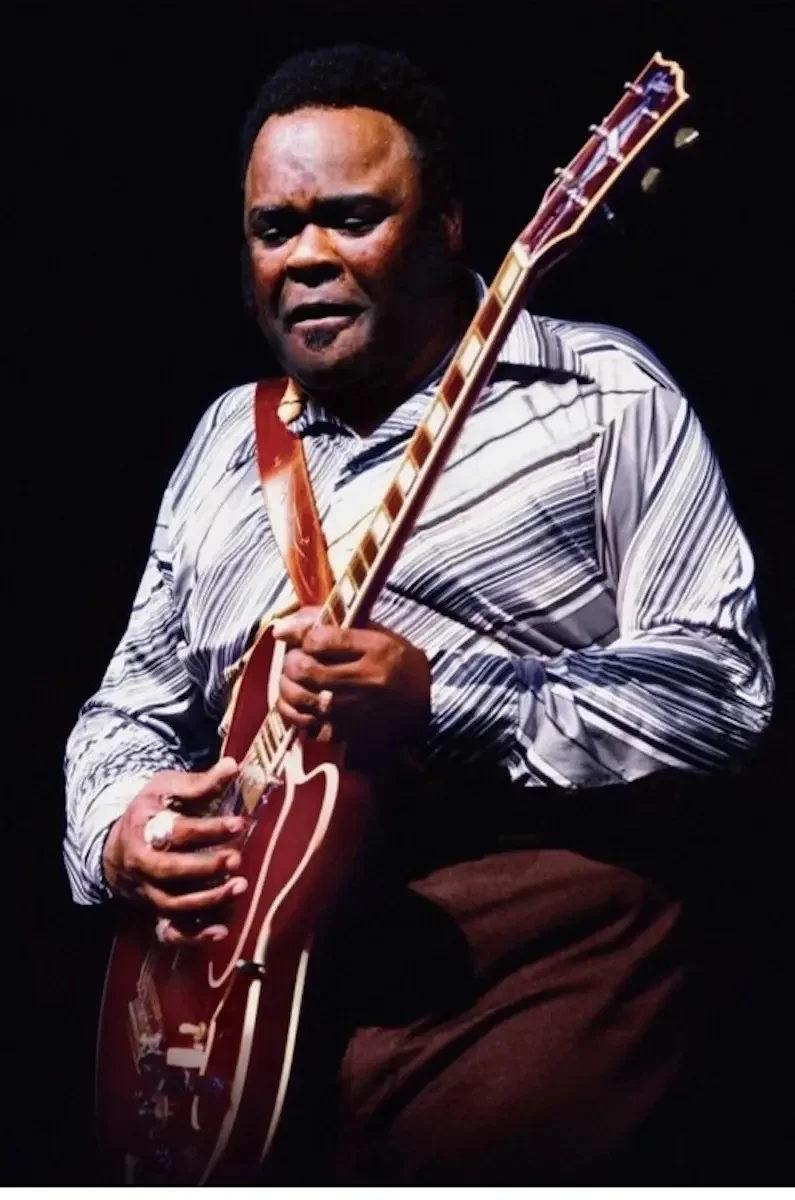
Gibson ES-335 or 345 through a small Fender amplifier (Bassman, Super). Bright, forward and punchy. The fingerpick technique (plastic thumb pick + metal steel fingerpick on the index finger) creates a sharper, more percussive attack than a normal plectrum — notes have a bright initial transient followed by warm sustain.
Signal Path
Signal Chain
Full signal path
GuitarEpiphone ES-335
EQMXR EQ
AmpBlues Jr
Full Gear List
£1,000 · Pro-Level — Complete Rig

●●● Pro-Level$570

Tone Tips
Getting the Sound Right
- Thumb pick + metal fingerpick combination: practise until the attack feels natural
- Bright pickup selector position (bridge or middle-bridge on ES-335)
- Texas shuffle rhythm: triplet-feel 12-bar blues with strong ghost notes on the snare beats
- Fast pentatonic runs with clear note articulation — each note must ring cleanly at tempo
- Uptempos: Freddie played many blues standards significantly faster than the Chicago norm
- Double-stop bends on the 2nd and 3rd strings (Albert King style but more percussive)
- Study "Have You Ever Loved a Woman" (recorded by Clapton on Blues Breakers) for the influence
- Clean Fender amp pushed hard at volume — natural breakup from the 6L6 power tubes
Avoid These Pitfalls
Common Mistakes When Chasing This Tone
- Using the same amp EQ as for a solid-body guitar — semi-hollow guitars have natural warmth that makes amp bass and treble settings behave differently. Start flat and adjust from there.
- Playing a vintage-voiced amp at low volume — the warmth and bloom of these amps comes from the power tubes working. At low volume the tone is flat and uninspiring compared to the amp's potential.
- Playing at bedroom volume expecting amp-driven tone — the power-tube saturation that defines this gain structure only occurs when the amp is working at substantial output. This is not replicable at low volumes.
- Setting gain too high on the overdrive pedal — most overdrive pedals are most useful at gain settings of 2-5, where they add character without dominating the tone. High gain settings on an OD pedal become a distortion, not an overdrive.
- Picking too delicately — the style requires aggressive, forceful playing that physically drives the strings. Restraint produces flat, uninteresting tone.
- Using light strings (9s or 10s) — the reduced string tension and output produces a thinner sound that can't be EQ'd to match the heaviness of 11s or 13s.
Tone Profile
Freddie King's Sound
Gibson ES-335 or 345 through a small Fender amplifier (Bassman, Super). Bright, forward and punchy. The fingerpick technique (plastic thumb pick + metal steel fingerpick on the index finger) creates a sharper, more percussive attack than a normal plectrum — notes have a bright initial transient followed by warm sustain.