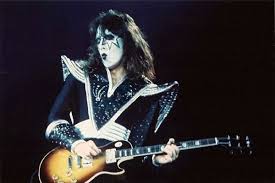
Ace Frehley — £500 · Sweet Spot Tone
The £500 · Sweet Spot build for Ace Frehley's heavy and assertive sound opens with Epiphone Les Paul Standard — the tonal foundation that defines the character. Into Boss Katana 50 MkII paired with Joyo Vintage Overdrive, the rig comes to ~£507 and delivers the essential elements. Ace Frehley of KISS was the "Space Ace" — his Les Paul into Marshall tone and bluesy, pentatonic lead style defined classic hard rock guitar for a generation. More technically bluesy than metal, more musical than his flamboyant stage persona suggested.
Build Ace Frehley's £500 · Sweet Spot Rig
3 pieces · Total ~£507
What guitar does Ace Frehley use?
Ace Frehley is primarily associated with lp style guitars. At a £500 budget, Epiphone Les Paul Standard delivers the essential tonal character.
What to Buy
£500 · Sweet Spot — Complete Gear List
Why This Rig Works
How Ace Frehley's gear choices create the signature tone
Epiphone Les Paul Standard
The set-neck construction and ProBucker humbuckers deliver the sustain, thickness and mid-forward push of the genuine article. Bridge pickup into a crunch amp is the authentic hard rock formula.
Joyo Vintage Overdrive
Joyo Vintage Overdrive — overdrive coloring added to the signal.
Boss Katana 50 MkII
Its 'Brown' amp character at low gain is an excellent approximation of the Fender-style clarity that Hendrix, Mayer, Gilmour and SRV all relied on. Built-in effects mean you're a few knob turns away from the right tone.
The Combined Tone
Gibson Les Paul (various) into a Marshall Super Lead 100W at moderate gain. The tone is warm, mid-heavy Les Paul crunch — not extreme metal gain. Ace's leads are pentatonic blues-rock, fast enough to be exciting but always melodic and accessible. A light chorus or delay on some recordings adds depth.
Tone Tips
Getting the Sound Right
- The tone is mid-forward Marshall crunch, not extreme metal — Ace played Les Paul through a warm Marshall on medium gain. Modern metal high-gain settings are wrong for this style
- Les Paul bridge pickup for the main solo tone — the humbucker warmth and sustain are characteristic
- Pentatonic minor in the blues-rock tradition — most leads are purely pentatonic minor, with occasional major pentatonic inflections for the "happy" passing notes
- The "Shock Me" solo uses controlled feedback as a note — aim the headstock at the amp speaker and find the resonant frequency for the desired pitch
- Moderate pick attack — not aggressive or heavy. Ace's playing is expressive rather than forceful
- Study "Detroit Rock City," "Deuce," and "Love Gun" for the rhythm guitar approach — simple, driving rhythms with Les Paul body and weight
- Vibrato is blues-influenced, medium speed and width — not the very fast metal vibrato or the very slow classical vibrato
- The overall approach is "accessible blues-rock with showmanship" — the technical level is intentionally within reach of most players
Avoid These Pitfalls
Common Mistakes When Chasing This Tone
- Scooping mids on the JCM800 with humbuckers — the mid-forward character of British amps with humbuckers is the central sound of classic rock. A mid scoop removes the fundamental voice of the combination
- Setting the amp bass too high — the inherent warmth of mahogany means you need less bass EQ than with a Strat. Starting at 5 rather than 7 prevents low-end mud.
- Using a high-gain distortion pedal instead of amp gain — British crunch amps have a specific harmonic character when driven from their own gain stage. A pedal changes this character.
- Playing at bedroom volume expecting amp-driven tone — the power-tube saturation that defines this gain structure only occurs when the amp is working at substantial output. This is not replicable at low volumes.
- Setting gain too high on the overdrive pedal — most overdrive pedals are most useful at gain settings of 2-5, where they add character without dominating the tone. High gain settings on an OD pedal become a distortion, not an overdrive.
- Not setting delay to song tempo — a delay that doesn't match the song tempo creates a rhythmic clash that builds and becomes increasingly obvious. Tap the tempo every time.
- Scooping mids to "sound heavier" — a guitar with mids removed disappears under bass and drums. Metal tone cuts through a mix, and that requires midrange.
- Using single-coil pickups — the lack of output and mid-frequency push makes it impossible to achieve the tightness needed for high-gain rhythm playing.
Budget Alternatives
Same Tone, Different Budget
FAQ
Ace Frehley Tone — Common Questions
Ace Frehley is primarily associated with lp style guitars. At a £500 budget, Epiphone Les Paul Standard delivers the essential tonal character.
Ace Frehley's amp is british crunch voiced — the amp running hot, providing natural tube saturation. At the £500 level, Boss Katana 50 MkII is the closest match.
Yes — £500 covers a real guitar and amp in the right tonal family. This rig totals £507 and captures the essential character. The guitar and amp account for 80% of the tone; pedals are secondary at this budget.
Ace Frehley's essential pedals include Overdrive, Delay, Reverb. At the £500 tier: Joyo Vintage Overdrive. Overdrive is the most important pedal — the others add nuance.
Ace Frehley's tone is defined by hard-rock, smoking-lead, arena-rock. The combination of lp guitar and british crunch amp creates a sound that is immediately recognisable.
Ace Frehley's gain approach is amp-driven — natural tube saturation from pushing the amp hard, not from distortion pedals. At £500, this is replicated through Boss Katana 50 MkII paired with Joyo Vintage Overdrive.
Ace Frehley — £500 · Sweet Spot Complete Rig
~£507Guitar
Epiphone Les Paul Standard
Overdrive
Joyo Vintage Overdrive
Amp
Boss Katana 50 MkII
Tone Match
Closest Real-World Tone Match
If you like Ace Frehley's tone, these players use a similar approach — same gear philosophy, comparable sound characteristics.
Related Tones