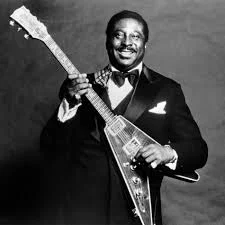
Albert King — £500 · Sweet Spot Tone
Albert King's soulful and deeply expressive tone took shape during the dawn of rock and roll and remains one of the most sought-after sounds on guitar. Albert King was left-handed but played a right-handed guitar upside down and unstrung in reverse — meaning his bends went downward rather than upward. This physical quirk gave his string bends a unique, scooped sound that seemed to pull notes down toward the floor, influencing SRV, Hendrix and virtually every blues player who heard it. At the £500 · Sweet Spot mark — the sweet spot — enough to get genuinely close to the sound without breaking the bank — the build centres on a Epiphone Explorer running through a Boss Katana 50 MkII, totalling ~£448.
Build Albert King's £500 · Sweet Spot Rig
2 pieces · Total ~$569
What guitar does Albert King use?
Albert King is primarily associated with explorer style guitars. At a £500 budget, Epiphone Explorer delivers the essential tonal character.
What to Buy
£500 · Sweet Spot — Complete Gear List
Why This Rig Works
How Albert King's gear choices create the signature tone
Epiphone Explorer
The Epiphone Explorer provides the tonal foundation for the entire rig — its character shapes everything that follows.
Boss Katana 50 MkII
Its 'Brown' amp character at low gain is an excellent approximation of the Fender-style clarity that Hendrix, Mayer, Gilmour and SRV all relied on. Built-in effects mean you're a few knob turns away from the right tone.
The Combined Tone
Gibson Flying V (played upside down) into a Fender Super Reverb or Acoustic 360 bass amp. The upside-down string configuration means the wound strings are on top — bends go downward toward the floor. The tone is warm, thick and mid-forward with a distinctively wide, slow vibrato that seems to groan rather than shimmer.
Tone Tips
Getting the Sound Right
- On the Boss Katana 50 MkII: use the Brown channel — the closest model to a Marshall-voiced preamp at this price. Set character to 8, gain to 5. For Albert King's lead volume jump, use the Boost mode rather than adding a separate boost pedal.
- Albert's bends go downward (pulling the string toward the floor) — practise this specifically
- His neck position (thumb over the top) adds a warmer tone from dampening the neck resonance
- Wide, slow vibrato after bends — the note groans rather than shimmers
- Minor pentatonic in the Albert King "box" (high-register minor pentatonic) is his home
- Play behind the beat with heavy attack — the groove is in the delayed delivery
Avoid These Pitfalls
Common Mistakes When Chasing This Tone
- Expecting the same access to lower frets as on a conventional guitar — explorer and V shapes limit lower-body contact, which changes the natural picking position. Allow for this in technique.
- Using a distortion pedal instead of pushing the amp — vintage-voiced amps create better overdrive by being pushed hard than by a pedal circuit. Let the amp do the work.
- Adding compression to fix flat clean tone — a flat, lifeless clean tone usually means the amp gain or presence is wrong, not that compression is needed. Compression on a flat tone just makes it louder.
- Ignoring the guitar volume knob — rolling back to 6-7 is your rhythm setting; 10 is for leads. Most players leave it at 10 and miss the entire dynamic vocabulary.
- Using a humbucker where single coils are needed — the quack, string definition, and high-frequency air of single coils cannot be EQ'd into a humbucker
Budget Alternatives
Same Tone, Different Budget
FAQ
Albert King Tone — Common Questions
Albert King is primarily associated with explorer style guitars. At a £500 budget, Epiphone Explorer delivers the essential tonal character.
Albert King's amp is vintage blues voiced — clean to moderate gain. At the £500 level, Boss Katana 50 MkII is the closest match.
Yes — £500 covers a real guitar and amp in the right tonal family. This rig totals £448 and captures the essential character. The guitar and amp account for 80% of the tone; pedals are secondary at this budget.
Albert King's tone is defined by flying-v, string-bending, soulful-blues. The combination of explorer guitar and vintage blues amp creates a sound that is immediately recognisable.
Albert King's gain approach is very clean — minimal distortion even at volume. The tone comes from the amp's natural warmth. At £500, this is replicated through Boss Katana 50 MkII.
Albert King — £500 · Sweet Spot Complete Rig
~£448Guitar
Epiphone Explorer
Amp
Boss Katana 50 MkII
Tone Match
Closest Real-World Tone Match
If you like Albert King's tone, these players use a similar approach — same gear philosophy, comparable sound characteristics.
Related Tones