Alex Hall — £2,500 · Premium Tone
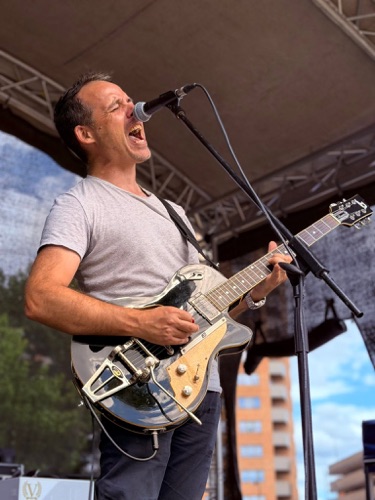
Alex Hall's distinctive and influential tone took shape during a defining era for electric guitar and remains one of the most sought-after sounds on guitar. Alex Hall is the guitarist and vocalist of Light for Vandals. His rig pairs Duesenberg offset guitars with British-voiced boutique amps, keeping the amp near edge-of-breakup and building gain, texture and dynamics almost entirely through the pedalboard. At the £2,500 · Premium mark — a premium build targeting the most accurate recreation possible — the build centres on a Fender Player Telecaster running through a Victory RK50, with Friedman BE-OD Deluxe and Strymon Ola Chorus completing the signal chain, totalling ~£2485.
Build Alex Hall's £2,500 · Premium Rig
5 pieces · Total ~$3,156
What guitar does Alex Hall use?
Alex Hall uses a alternative rock-oriented guitar. At the £2,500 tier, Fender Player Telecaster covers the fundamentals.
What to Buy
£2,500 · Premium — Complete Gear List
Can't find one? See alternatives:
Why This Rig Works
How Alex Hall's gear choices create the signature tone
Fender Player Telecaster
Where the Squier approximates the Tele voice, the Player Telecaster *is* the Tele voice. Noticeably more articulate and dynamic, with the bridge pickup delivering the iconic snap and cut that defines the instrument.
- DistortionFriedman BE-OD Deluxe
- ChorusStrymon Ola Chorus
- DelayBoss DD-8 Digital Delay
Victory RK50
The Victory RK50 converts the guitar signal into audible sound and adds its own tonal character — EQ shaping, natural gain, and the overall feel of the final tone.
The Combined Tone
Duesenberg into a Victory or Zinky amp kept clean-to-crunchy, with drive built in stages — a transparent Klone-style boost for low-gain push, a Rothwell Hellbender for grittier crunch when a section needs it. A Greer Fish Press keeps picking dynamics even ahead of the drive stages, a Boss GE-7 shapes or corrects the amp's voicing room to room, and a Red Witch Violetta plus the HX Stomp handle delay, modulation and any texture the amp and pedals alone can't cover. A Digitech Drop is on hand for down-tuned sections without a guitar change, and a Vox wah stays in reach for expressive lead lines.
Tone Tips
Getting the Sound Right
- At the £2,500 tier the Fender Player Telecaster has enough tonal character to reward small adjustments — pickup height, tone knob position (start at 7, not 10), and pick gauge all interact with the amp in ways that are clearly audible at this quality level.
- Keep the amp near edge-of-breakup and let pedals build the gain in stages, rather than relying on one high-gain channel
- Run a transparent Klone-style boost for low-gain push before reaching for a dedicated distortion — it adds volume and clarity without changing the amp's character
- A graphic EQ (Boss GE-7) is as useful as a room-correction tool as it is a boost — small notches or lifts compensate for how different stages and rooms change an amp's voicing
- A multi-effects unit like the HX Stomp is most useful for the effects you'd otherwise need several pedals for — modulation, ambience and time-based textures — while drive and dynamics stay on dedicated analog pedals
- Keep a pitch-drop pedal (Digitech Drop) on the board for down-tuned sections rather than swapping guitars mid-set
- A compressor before the your amp evens out single-coil picking dynamics for techniques like chicken-picking — set the attack to medium (not fast) so the initial pick click still passes through before compression engages
Avoid These Pitfalls
Common Mistakes When Chasing This Tone
- Leaving the wah pedal engaged but stationary between rocking it — a cocked wah (fixed position, not moving) acts as a midrange filter that changes the core tone. Either rock it expressively or bypass it completely; a cocked wah changes the sound in ways that are often unintended
- Placing a high-ratio compressor before a drive pedal — heavy compression removes the pick attack variation that the drive pedal responds to. The result is a flat, lifeless driven tone that has no feel
- Over-compressing the clean tone — alt-rock clean guitar has natural dynamic variation. Heavy compression turns it into a flat, featureless sound.
- Using too much distortion for the heavy sections — the aggressive quality of alt-rock overdrive often comes from fuzz and Big Muff-style pedals into clean amps, not from high-gain metal tones.
- Ignoring alternative tunings — many of the most iconic riffs and chord voicings in the genre are impossible in standard tuning.
Budget Alternatives
Same Tone, Different Budget
FAQ
Alex Hall Tone — Common Questions
Alex Hall uses a alternative rock-oriented guitar. At the £2,500 tier, Fender Player Telecaster covers the fundamentals.
Alex Hall's amp tone suits the alternative rock genre approach. At £2,500, Victory RK50 provides authentic results.
The £2,500 tier uses Alex Hall's actual gear choices or direct equivalents. Total: £2,485. The tonal step up from £1,000 is real but diminishing — worth it for regular performers and studio work.
Duesenberg into a Victory or Zinky amp kept clean-to-crunchy, with drive built in stages — a transparent Klone-style boost for low-gain push, a Rothwell Hellbender for grittier crunch when a section needs it. This character comes from the guitar pickup type, amp voicing, and playing technique working together.
Alex Hall — £2,500 · Premium Complete Rig
~£2485Guitar
Fender Player Telecaster
Distortion
Friedman BE-OD Deluxe
Chorus
Strymon Ola Chorus
Amp
Victory RK50
Delay
Boss DD-8 Digital Delay
Tone Match
Closest Real-World Tone Match
If you like Alex Hall's tone, these players use a similar approach — same gear philosophy, comparable sound characteristics.