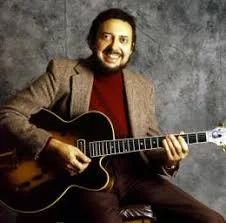
Barney Kessel — £1,000 · Pro-Level Tone
At £1,000 · Pro-Level, Barney Kessel's nuanced and harmonically sophisticated tone is more accessible than most players expect. Rooted in the dawn of rock and roll, their sound — Barney Kessel was one of the most commercially versatile jazz guitarists in history — equally at home recording bebop albums, playing on Elvis Presley and Ray Charles sessions as one of the legendary Wrecking Crew, and performing solo jazz concerts worldwide. — starts with Gibson ES-335 (used) and Fender Blues Junior IV, totalling ~£1,010. That combination captures the defining characteristics without the premium price tag.
Build Barney Kessel's £1,000 · Pro-Level Rig
3 pieces · Total ~$1,116
What guitar does Kessel use?
Kessel is primarily associated with hollow style guitars. At a £1,000 budget, Gibson ES-335 (used) delivers the essential tonal character.
What to Buy
£1,000 · Pro-Level — Complete Gear List
Can't find one? See alternatives:
Why This Rig Works
How Barney Kessel's gear choices create the signature tone
Gibson ES-335 (used)
The Gibson ES-335 (used) provides the tonal foundation for the entire rig — its character shapes everything that follows.
D'Addario EXL115 Jazz Medium 11–49
D'Addario EXL115 Jazz Medium 11–49 — strings coloring added to the signal.
Fender Blues Junior IV
This is where the magic happens for Mayer and SRV tones. The EL84 power section breaks up beautifully when pushed, and the bright, clean headroom is exactly what Tube Screamer boost tones are built on.
The Combined Tone
Barney Kessel's tone is polished, articulate and clean — built around his signature Gibson Barney Kessel model or an ES-350, running into a clean amplifier with no effects. His sound is brighter than many jazz contemporaries, with a crisper attack that cuts through ensembles and busy pop arrangements. He used both neck and bridge pickups depending on context: neck for ballads, bridge for rhythm playing in pop sessions. The clarity is important — as a session player, his parts had to be heard on the first take.
Tone Tips
Getting the Sound Right
- The Fender Blues Junior IV stays cleaner longer than a Marshall-style amp — push it with a low-gain overdrive (gain at 2–3, level up) rather than cranking its own gain. Set treble at 6, bass at 4, and let the guitar's volume knob handle the dynamics.
- Use the bridge pickup for session comping — cuts through dense arrangements
- Switch to neck pickup for ballads and melody work
- Keep the amp clean and bright — Barney valued clarity and attack over warmth
- Jazz bebop vocabulary on a Gibson ES-330 or ES-175 — Kessel's hollow archtop gave the warm, full projection needed in acoustic jazz and amplified Los Angeles studio sessions, and the semi-hollow body resonance contributes harmonic richness no solidbody can replicate
- Single-coil pickup combined with a warm, slightly rounded tone-knob setting gives the precise articulation without the muddy thickness of a full humbucking pickup — aim for a bright-but-round character by keeping treble moderate and mids slightly boosted
- Study 'Easy Like' and the complete 'Poll Winners' album with Shelly Manne and Ray Brown — these recordings document the California bebop chamber jazz context that shaped the full range of Kessel's harmonic and rhythmic vocabulary
Avoid These Pitfalls
Common Mistakes When Chasing This Tone
- Using high-gain distortion — hollowbody guitars are designed for clean and light-drive use. High gain causes uncontrollable acoustic resonance that the pickup amplifies as noise.
- Using the amp's volume at less than 4 — boutique clean amps are designed to be played at certain output levels. At very low volumes the tone is compressed and flat compared to full-level operation.
- Expecting a clean tone to cover all playing dynamics — clean tone requires picking technique to do all the work. Lazy picking dynamics become very audible on a clean signal.
- Keeping the tone knob at 10 — full treble on a jazz guitar gives a nasal, honky quality that sounds nothing like the warm round jazz ideal.
- Using round-wound strings — they are brighter, last longer, and have more sustain, but they also sound more "electric" and less woody than flat-wounds for jazz.
Budget Alternatives
Same Tone, Different Budget
FAQ
Barney Kessel Tone — Common Questions
Kessel is primarily associated with hollow style guitars. At a £1,000 budget, Gibson ES-335 (used) delivers the essential tonal character.
Kessel's amp is boutique clean voiced — clean to moderate gain. At the £1,000 level, Fender Blues Junior IV is the closest match.
The £1,000 tier adds noticeably better build quality and tonal nuance over the £500 rig. This build totals £879 with Gibson ES-335 (used), Fender Blues Junior IV, 1 effect. This is the tier where the tone becomes genuinely convincing for gigging and recording.
Kessel's tone is defined by bebop, swinging, hollow-body. The combination of hollow guitar and boutique clean amp creates a sound that is immediately recognisable.
Kessel's gain approach is very clean — minimal distortion even at volume. The tone comes from the amp's natural warmth. At £1,000, this is replicated through Fender Blues Junior IV paired with D'Addario EXL115 Jazz Medium 11–49.
Barney Kessel — £1,000 · Pro-Level Complete Rig
~£1,010Guitar
Gibson ES-335 (used)
Amp
Fender Blues Junior IV
Strings
D'Addario EXL115 Jazz Medium 11–49
Tone Match
Closest Real-World Tone Match
If you like Barney Kessel's tone, these players use a similar approach — same gear philosophy, comparable sound characteristics.
Related Tones