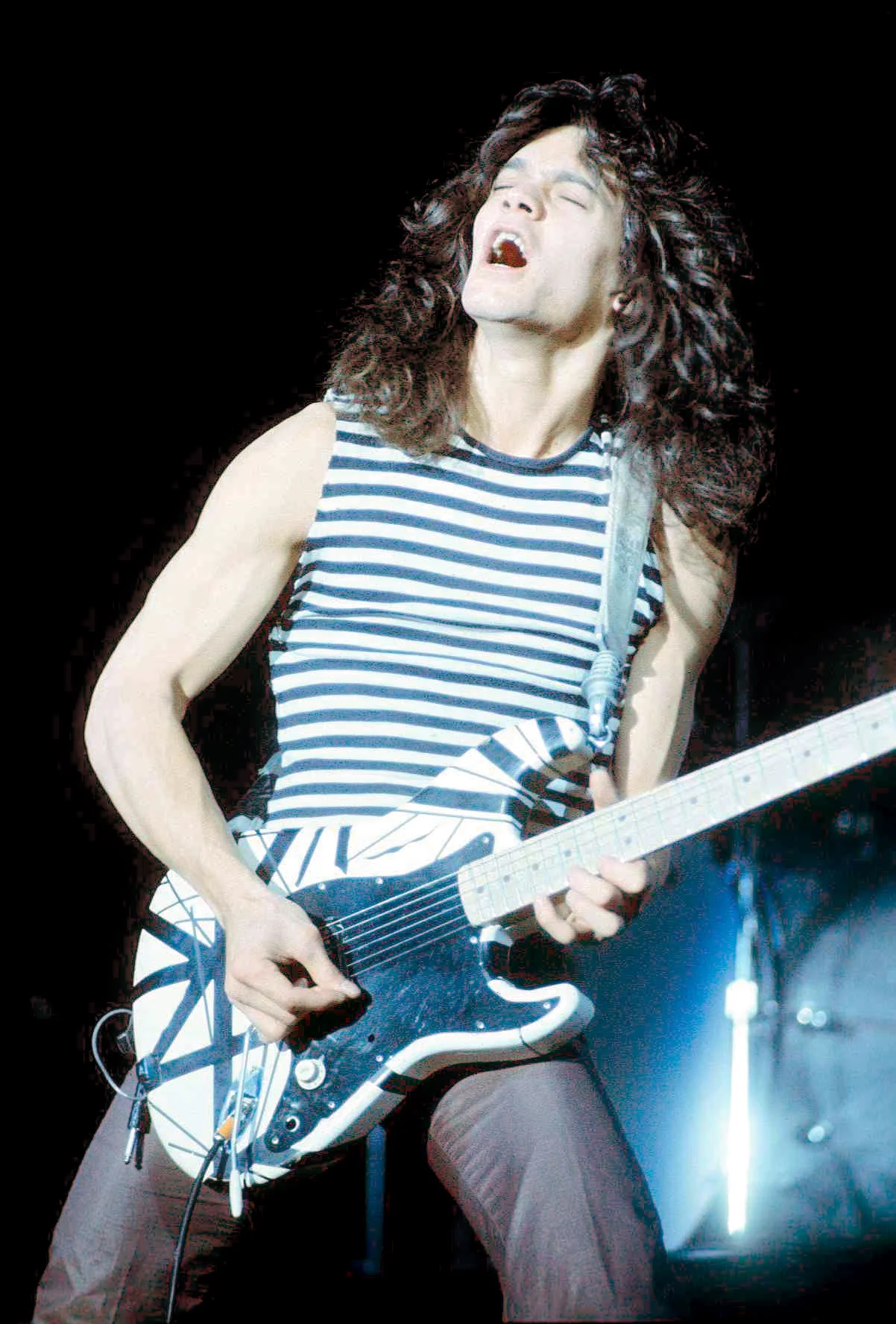
Eddie Van Halen — £1,000 · Pro-Level Tone
Eddie Van Halen's "brown sound" reset the entire guitar world's expectations — a humbucker-loaded Frankenstrat through a modified Marshall Plexi, delivering warm, full saturation rather than harsh gain. His two-handed tapping, explosive picking attack and whammy bar technique defined an era. Replicating that heavy and assertive sound at the £1,000 · Pro-Level mark means EVH Wolfgang Standard into Boss Katana 100 MkII. The effects — MXR M101 Phase 90 — add the finishing texture. This build totals ~£1007 and captures the core character — a serious investment that brings you within touching distance of the real thing.
Build Eddie Van Halen's £1,000 · Pro-Level Rig
3 pieces · Total ~$1,279
What guitar does Eddie Van Halen use?
Eddie Van Halen is primarily associated with superstrat style guitars. At a £1,000 budget, EVH Wolfgang Standard delivers the essential tonal character.
What to Buy
£1,000 · Pro-Level — Complete Gear List
Can't find one? See alternatives:
Why This Rig Works
How Eddie Van Halen's gear choices create the signature tone
EVH Wolfgang Standard
The EVH Wolfgang Standard provides the tonal foundation for the entire rig — its character shapes everything that follows.
MXR M101 Phase 90
MXR M101 Phase 90 — phaser coloring added to the signal.
Boss Katana 100 MkII
The extra headroom lets you push the clean channel harder before it breaks up, essential for loud-amp technique. More speaker excursion gives a fuller, more three-dimensional clean.
The Combined Tone
Single humbucker (bridge) into a modified Marshall Super Lead — the combination is surprisingly warm and full, not harsh. Van Halen's amp was dialled with the gain relatively moderate; the volume and pickup output did the heavy lifting. A Phase 90 adds subtle movement; an Echoplex served as a preamp boost and added a touch of slapback warmth.
Tone Tips
Getting the Sound Right
- On the Boss Katana 100 MkII: use the Brown channel — the closest model to a Marshall-voiced preamp at this price. Set character to 8, gain to 5. For Eddie Van Halen's lead volume jump, use the Boost mode rather than adding a separate boost pedal.
- Bridge humbucker only — single coils or neck pickups won't give the right saturation
- Pick with the edge of the plectrum at a slight angle for articulated, aggressive attack
- Whammy bar for vibrato throughout, not just dramatic dive bombs
- Phase 90 runs in front of the amp — adds movement without changing pitch
- EVH's amp was surprisingly clean on the dial; the saturation came from volume and pickup output
- MXR Flanger in its "through-zero" setting for the iconic flanged intro of Unchained
Avoid These Pitfalls
Common Mistakes When Chasing This Tone
- Running the EVH 5150's gain channel at maximum — above 8 on most high-gain channels, palm mutes lose note separation and become an indistinct wall. The target is the minimum gain for the target saturation, not maximum
- Setting amp gain to maximum — superstrats with high-output humbuckers already drive the amp aggressively. Gain at 8-9 into a high-gain channel gives muddy intermodulation, not more power.
- Not setting delay to song tempo — a delay that doesn't match the song tempo creates a rhythmic clash that builds and becomes increasingly obvious. Tap the tempo every time.
- Forgetting to dial the tone at band volume — EQ settings that work in a quiet room often need adjustment when competing with drums and bass. Mid frequencies in particular need upward adjustment.
- No noise gate at high gain — self-noise at high gain levels is constant and distracting. A gate is not optional for this style.
Budget Alternatives
Same Tone, Different Budget
FAQ
Eddie Van Halen Tone — Common Questions
Eddie Van Halen is primarily associated with superstrat style guitars. At a £1,000 budget, EVH Wolfgang Standard delivers the essential tonal character.
Eddie Van Halen's amp is british crunch voiced — the amp running hot, providing natural tube saturation. At the £1,000 level, Boss Katana 100 MkII is the closest match.
The £1,000 tier adds noticeably better build quality and tonal nuance over the £500 rig. This build totals £1,007 with EVH Wolfgang Standard, Boss Katana 100 MkII, 1 effect. This is the tier where the tone becomes genuinely convincing for gigging and recording.
Eddie Van Halen's essential pedals include Modulation, Delay. At the £1,000 tier: MXR M101 Phase 90. Modulation is the most important pedal — the others add nuance.
Eddie Van Halen's tone is defined by brown-sound, warm-crunch, explosive. The combination of superstrat guitar and british crunch amp creates a sound that is immediately recognisable.
Eddie Van Halen's gain approach is amp-driven — natural tube saturation from pushing the amp hard, not from distortion pedals. At £1,000, this is replicated through Boss Katana 100 MkII paired with MXR M101 Phase 90.
Eddie Van Halen — £1,000 · Pro-Level Complete Rig
~£1007Guitar
EVH Wolfgang Standard
Amp
Boss Katana 100 MkII
Phaser
MXR M101 Phase 90
Tone Match
Closest Real-World Tone Match
If you like Eddie Van Halen's tone, these players use a similar approach — same gear philosophy, comparable sound characteristics.
Related Tones