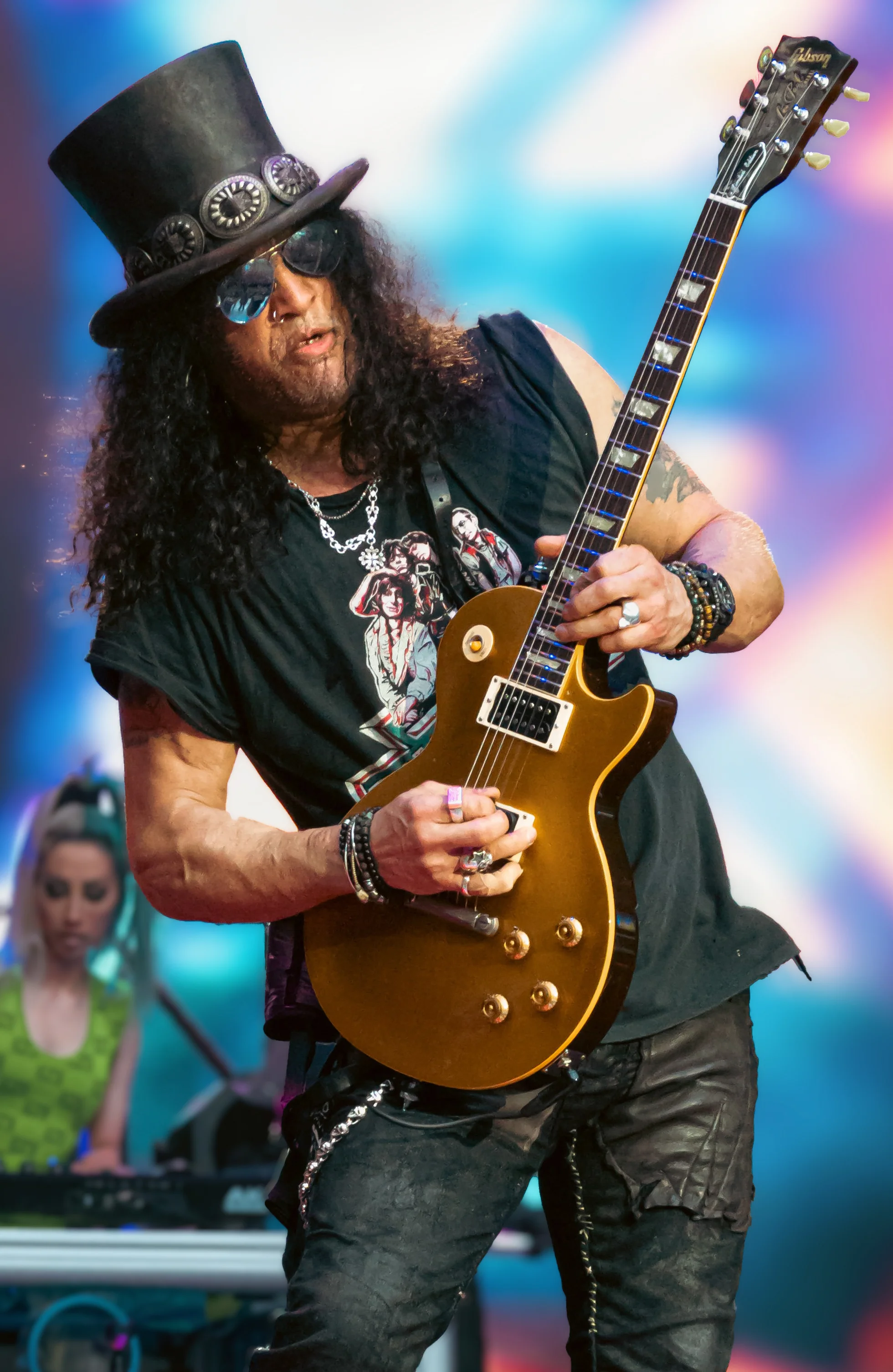
Slash — £1,000 · Pro-Level Tone
The £1,000 · Pro-Level build for Slash's heavy and assertive sound opens with Epiphone Les Paul Standard — the tonal foundation that defines the character. Into Marshall DSL20CR paired with Boss DS-1 Distortion and MXR M108S 10-Band EQ, the rig comes to ~£819 and delivers the essential elements. Slash's tone is the gold standard of hard rock — a Les Paul into a Marshall, saturated with crunch and singing with natural sustain. Raw, aggressive and always musical.
Build Slash's £1,000 · Pro-Level Rig
4 pieces · Total ~$1,120
What guitar does Slash use?
Slash is primarily associated with lp style guitars. At a £1,000 budget, Epiphone Les Paul Standard delivers the essential tonal character.
What to Buy
£1,000 · Pro-Level — Complete Gear List
Can't find one? See alternatives:
Why This Rig Works
How Slash's gear choices create the signature tone
Epiphone Les Paul Standard
The set-neck construction and ProBucker humbuckers deliver the sustain, thickness and mid-forward push of the genuine article. Bridge pickup into a crunch amp is the authentic hard rock formula.
- Crunch Boxraw transistor crunch and rock aggression
- Tone Sculptorten-band surgical frequency sculpting
Marshall DSL20CR
The DSL's crunch channel captures the classic JCM800-era Marshall sound that Slash and Frusciante are built on. At 20 watts you can push the power amp hard enough to get natural tube saturation without needing ear protection.
The Combined Tone
Humbucker-loaded Les Paul into a cranked Marshall — thick midrange saturation, singing sustain and a warm but aggressive attack. No scooped mids: Slash's tone is all about that mid-forward Marshall crunch.
Tone Tips
Getting the Sound Right
- The Marshall DSL20CR delivers power-tube saturation at master volume 6–7 — this compression and sag is what separates amp-driven tone from pedal tone. Set the master first, then dial back the channel gain to taste rather than the other way around.
- Use the Les Paul bridge pickup for the classic Slash crunch
- Crank the amp — Marshall distortion comes from the amp, not pedals
- Use the wah expressively for solos, parked for rhythm texture
- Tune to Eb standard (half step down) — Slash plays in Eb, which adds warmth to the Les Paul and makes heavy strings more comfortable
- Hold the pick almost perpendicular to the strings at a slight angle — the firm, angled attack gives Slash's notes their distinctive initial "thwack" before the sustain blooms
- Don't scoop the mids on the Marshall even though it's tempting — Slash's cut in a band mix comes from the mid-forward voicing, not scooped highs and lows
Avoid These Pitfalls
Common Mistakes When Chasing This Tone
- Scooping mids on the JCM800 with humbuckers — the mid-forward character of British amps with humbuckers is the central sound of classic rock. A mid scoop removes the fundamental voice of the combination
- Leaving the wah pedal engaged but stationary between rocking it — a cocked wah (fixed position, not moving) acts as a midrange filter that changes the core tone. Either rock it expressively or bypass it completely; a cocked wah changes the sound in ways that are often unintended
- Playing at bedroom volume expecting amp-driven tone — the power-tube saturation that defines this gain structure only occurs when the amp is working at substantial output. This is not replicable at low volumes.
- Setting gain too high on the overdrive pedal — most overdrive pedals are most useful at gain settings of 2-5, where they add character without dominating the tone. High gain settings on an OD pedal become a distortion, not an overdrive.
- Leaving the wah in a fixed position (cocked) between uses — a cocked wah acts as a midrange filter and changes the tone. If not using the wah expressively, take it out of the chain.
Budget Alternatives
Same Tone, Different Budget
FAQ
Slash Tone — Common Questions
Slash is primarily associated with lp style guitars. At a £1,000 budget, Epiphone Les Paul Standard delivers the essential tonal character.
Slash's amp is british crunch voiced — the amp running hot, providing natural tube saturation. At the £1,000 level, Marshall DSL20CR is the closest match.
The £1,000 tier adds noticeably better build quality and tonal nuance over the £500 rig. This build totals £882 with Epiphone Les Paul Standard, Marshall DSL20CR, 2 effects. This is the tier where the tone becomes genuinely convincing for gigging and recording.
Slash's essential pedals include Overdrive, Wah. At the £1,000 tier: Boss DS-1 Distortion, MXR M108S 10-Band EQ. Overdrive is the most important pedal — the others add nuance.
Slash's tone is defined by les-paul-driven, marshall-crunch, bluesy-hard-rock. The combination of lp guitar and british crunch amp creates a sound that is immediately recognisable.
Slash's gain approach is amp-driven — natural tube saturation from pushing the amp hard, not from distortion pedals. At £1,000, this is replicated through Marshall DSL20CR paired with Boss DS-1 Distortion.
Slash — £1,000 · Pro-Level Complete Rig
~£819Guitar
Epiphone Les Paul Standard
Amp
Marshall DSL20CR
Distortion
Boss DS-1 Distortion
EQ
MXR M108S 10-Band EQ
Tone Match
Closest Real-World Tone Match
If you like Slash's tone, these players use a similar approach — same gear philosophy, comparable sound characteristics.
Related Tones