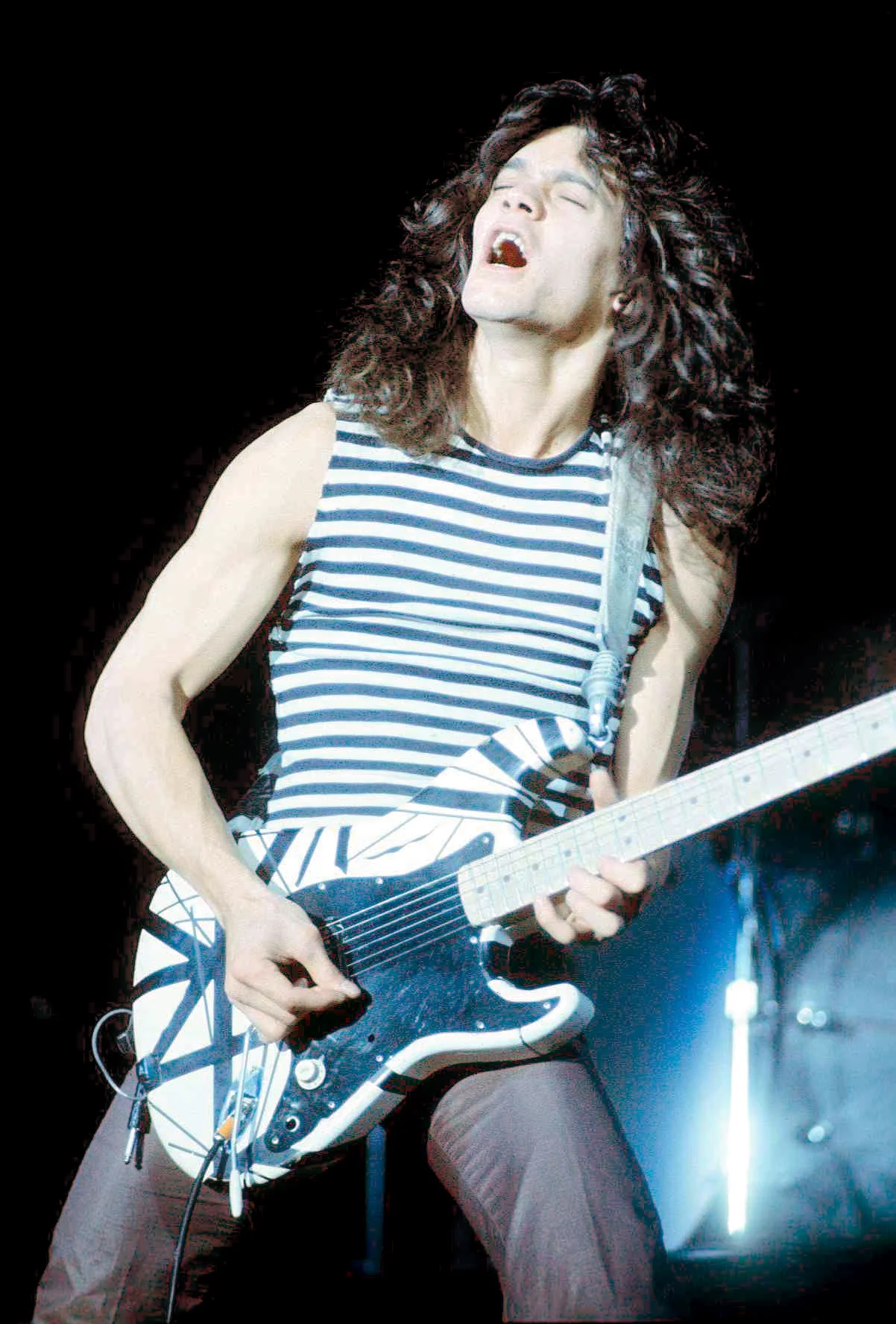
Eddie Van Halen — £2,500 · Premium Tone
Eddie Van Halen's "brown sound" reset the entire guitar world's expectations — a humbucker-loaded Frankenstrat through a modified Marshall Plexi, delivering warm, full saturation rather than harsh gain. His two-handed tapping, explosive picking attack and whammy bar technique defined an era. Replicating that heavy and assertive sound at the £2,500 · Premium mark means Ibanez RG550 Genesis Collection into Marshall DSL100H. The effects — MXR M101 Phase 90, Walrus Audio Fundamental Delay — add the finishing texture. This build totals ~£2476 and captures the core character — a premium build targeting the most accurate recreation possible.
Build Eddie Van Halen's £2,500 · Premium Rig
4 pieces · Total ~$3,145
What guitar does Eddie Van Halen use?
Eddie Van Halen is primarily associated with superstrat style guitars. At a £2,500 budget, Ibanez RG550 Genesis Collection delivers the essential tonal character.
What to Buy
£2,500 · Premium — Complete Gear List
Can't find one? See alternatives:
Why This Rig Works
How Eddie Van Halen's gear choices create the signature tone
Ibanez RG550 Genesis Collection
The Ibanez RG550 Genesis Collection provides the tonal foundation for the entire rig — its character shapes everything that follows.
- ModulationMXR M101 Phase 90
- DelayWalrus Audio Fundamental Delay
Marshall DSL100H
The Marshall DSL100H converts the guitar signal into audible sound and adds its own tonal character — EQ shaping, natural gain, and the overall feel of the final tone.
The Combined Tone
Single humbucker (bridge) into a modified Marshall Super Lead — the combination is surprisingly warm and full, not harsh. Van Halen's amp was dialled with the gain relatively moderate; the volume and pickup output did the heavy lifting. A Phase 90 adds subtle movement; an Echoplex served as a preamp boost and added a touch of slapback warmth.
Tone Tips
Getting the Sound Right
- The Marshall DSL100H delivers power-tube saturation at master volume 6–7 — this compression and sag is what separates amp-driven tone from pedal tone. Set the master first, then dial back the channel gain to taste rather than the other way around.
- Bridge humbucker only — single coils or neck pickups won't give the right saturation
- Pick with the edge of the plectrum at a slight angle for articulated, aggressive attack
- Harmonics are everywhere — practise artificial harmonics and pick-harmonics at various positions
- Right-hand tapping requires the pick to be held between the teeth or ring and little fingers while the index or middle finger hammers and pulls off at the 12th-15th fret — practice the three-note tapping pattern (tap-hammer-pull) slowly to develop even timing before connecting it to fast passages
- The amp's power tubes are the source of the brown sound, not a pedal — EVH cranked the 100W Marshall into power-amp saturation, which produces a compression and harmonic character that preamp distortion cannot replicate. Use a power attenuator to run the amp hot at reduced output volume
- Whammy bar use requires a floating bridge set up with the arm angling forward — the arm is held loosely in the palm and manipulated during sustained notes. Practice the dive-and-return technique specifically until the guitar returns exactly to pitch after each use
Avoid These Pitfalls
Common Mistakes When Chasing This Tone
- Running the EVH 5150's gain channel at maximum — above 8 on most high-gain channels, palm mutes lose note separation and become an indistinct wall. The target is the minimum gain for the target saturation, not maximum
- Setting amp gain to maximum — superstrats with high-output humbuckers already drive the amp aggressively. Gain at 8-9 into a high-gain channel gives muddy intermodulation, not more power.
- Forgetting to dial the tone at band volume — EQ settings that work in a quiet room often need adjustment when competing with drums and bass. Mid frequencies in particular need upward adjustment.
- No noise gate at high gain — self-noise at high gain levels is constant and distracting. A gate is not optional for this style.
Budget Alternatives
Same Tone, Different Budget
FAQ
Eddie Van Halen Tone — Common Questions
Eddie Van Halen is primarily associated with superstrat style guitars. At a £2,500 budget, Ibanez RG550 Genesis Collection delivers the essential tonal character.
Eddie Van Halen's amp is british crunch voiced — the amp running hot, providing natural tube saturation. At the £2,500 level, Marshall DSL100H is the closest match.
The £2,500 tier uses Eddie Van Halen's actual gear choices or direct equivalents. Total: £2,476. The tonal step up from £1,000 is real but diminishing — worth it for regular performers and studio work.
Eddie Van Halen's essential pedals include Modulation, Delay. At the £2,500 tier: MXR M101 Phase 90, Walrus Audio Fundamental Delay. Modulation is the most important pedal — the others add nuance.
Eddie Van Halen's tone is defined by brown-sound, warm-crunch, explosive. The combination of superstrat guitar and british crunch amp creates a sound that is immediately recognisable.
Eddie Van Halen's gain approach is amp-driven — natural tube saturation from pushing the amp hard, not from distortion pedals. At £2,500, this is replicated through Marshall DSL100H paired with MXR M101 Phase 90.
Eddie Van Halen — £2,500 · Premium Complete Rig
~£2476Guitar
Ibanez RG550 Genesis Collection
Modulation
MXR M101 Phase 90
Amp
Marshall DSL100H
Delay
Walrus Audio Fundamental Delay
Tone Match
Closest Real-World Tone Match
If you like Eddie Van Halen's tone, these players use a similar approach — same gear philosophy, comparable sound characteristics.
Related Tones